Poor technical design in silicone selection is a direct path to high product return rates and damage to your brand’s reputation. For products that come into direct contact with skin, the choice between solid and liquid silicone is not just a minor detail—it defines the customer’s entire experience. A misstep here can result in a product that feels cheap or uncomfortable, leading to market rejection before it ever gains traction.
This guide provides a clear operational framework for making that choice. We will compare liquid and solid silicone across critical performance benchmarks, including molding precision, durability under stress, and heat resistance. We’ll focus heavily on the nuances of hand-feel and texture, then connect these qualities to the underlying manufacturing processes and cost efficiencies for each material.
What is Solid Silicone and Liquid Silicone?
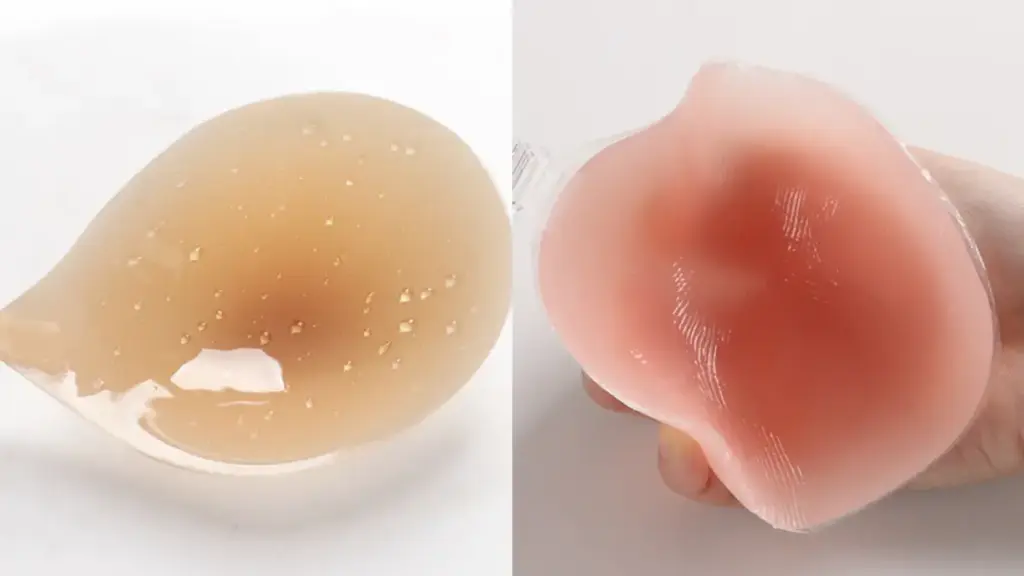
For lingerie brands, the choice starts with the chemical form of the raw material.
What is Solid Silicone?
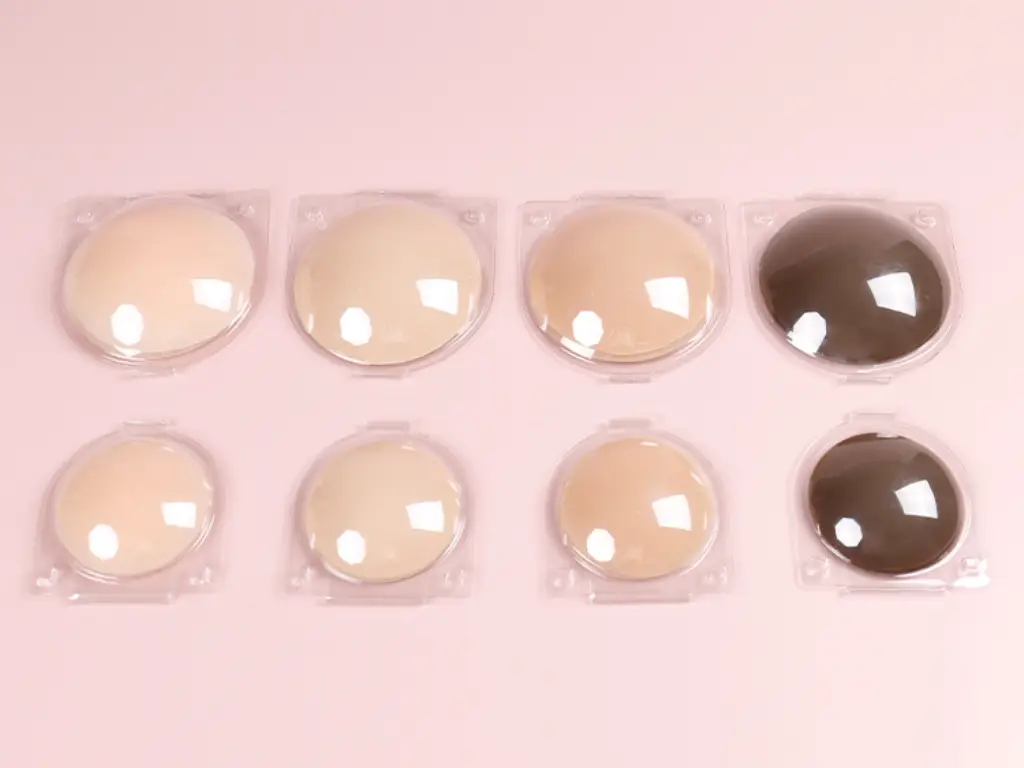
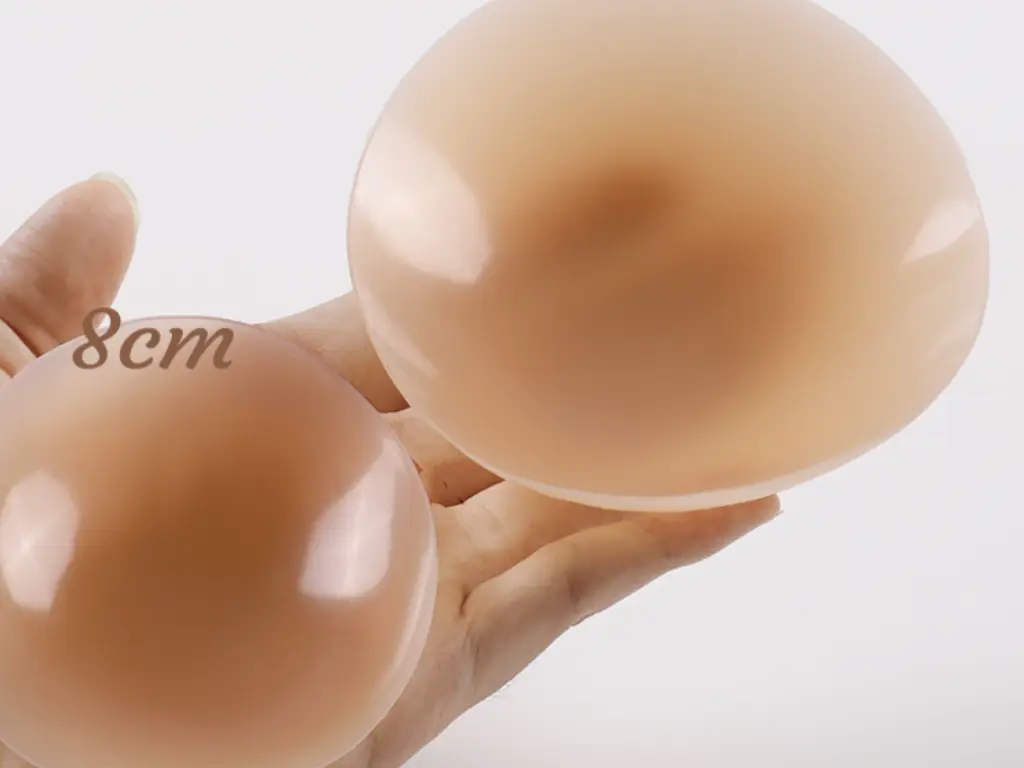
Solid silicone (HCR) is a high-density, clay-like rubber. In nipple cover production, it is manually cut and pressed into heated molds. Because of its thickness, it is excellent for creating “padded” or thicker pasties that offer more coverage and physical protection.
Solid Silicone (Traditional Strength) Manufacturing Workflow: Rubber Refining (Mixing & Pigmenting) → Slicing → Compression Molding → Edge Tearing → Full QC Inspection → Gluing → Film Covering → Packaging.
What is Liquid Silicone?
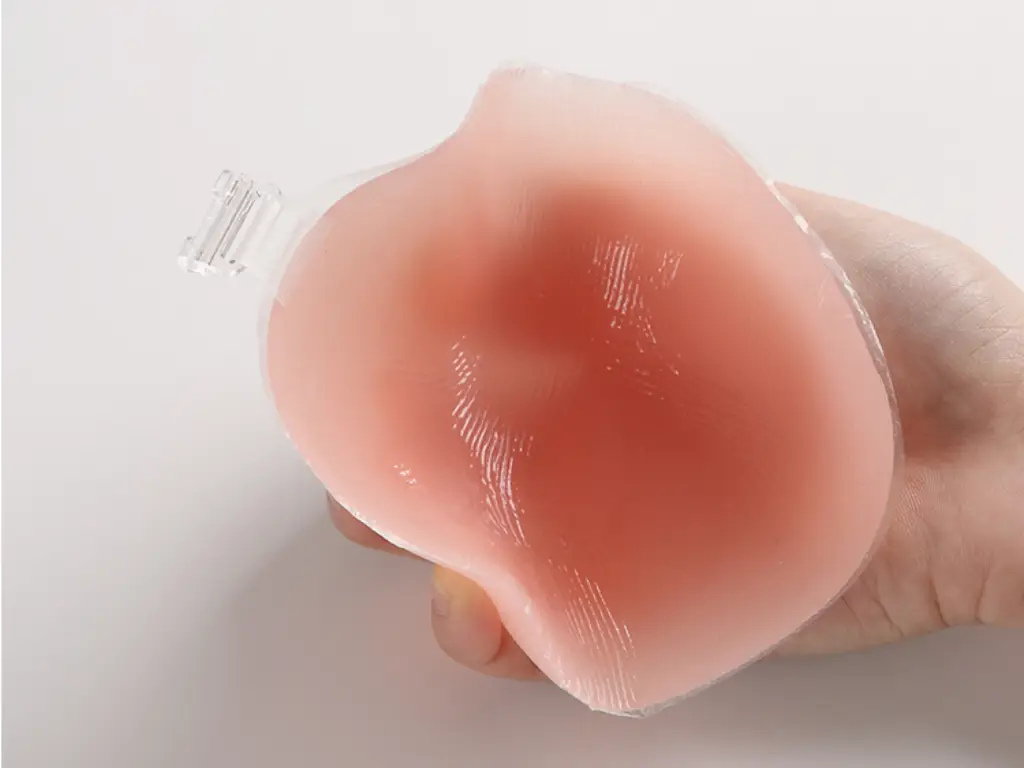
Liquid Silicone Rubber (LSR), no entanto, is a two-part fluid that is injected into a mold with surgical precision. This allows for an ultra-thin “tapered edge” that is nearly impossible to achieve with solid blocks. For a brand, LSR means a more invisible look under silk or tight clothing, while solid silicone provides a cost-effective, durable option for everyday wear.
Liquid Silicone (High Precision) Manufacturing Workflow: TPU Film Cutting → Bag Forming → Material Injection → Sealing → Molding → Trimming → Buckle Fitting → Full QC Inspection → Cleaning → Gluing → Baking → Film Covering → Final QC → Packaging.
| Comparison Feature | Solid Silicone (HCR) | Liquid Silicone (LSR) |
|---|---|---|
| Material State | Firm, putty-like dough | Free-flowing liquid |
| Nipple Cover Edge | Slightly thicker (0.5mm+) | Ultrafino (down to 0.1mm) |
| Skin Transparency | Bom, but can be opaque | Alto (seamlessly blends) |
| Pore Density | Higher (absorbs more oils) | Lower (more hygienic/durable) |
| Melhor para | Budget-friendly daily wear | Prêmio, “invisível” collections |
Performance Breakdown: Which is Better for Silicone Lingerie?
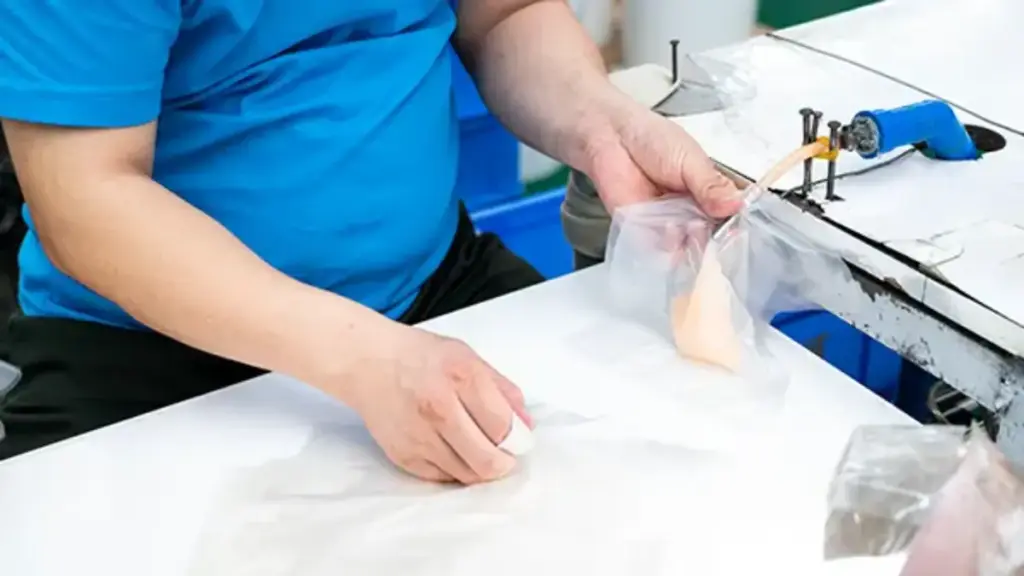
When choosing between solid and liquid silicone, you must consider the end-use environment. A nipple cover is not just a static accessory; it must move, stretch, and remain invisible under various fabrics and body types.
O “Invisível” Edge Gradient
The most significant performance metric for premium lingerie is the edge taper. Because solid silicone is a dense putty, it requires high pressure to flatten. This often leaves a “etapa” or a visible ridge at the edge of the pasty, which creates a noticeable bump under tight silk dresses.
Liquid Silicone Rubber (LSR) flows like honey into the mold’s finest channels. We can engineer LSR covers with edges as thin as 0.1mm. This creates a seamless transition from silicone to skin. If your brand positioning is “The Invisible Bra,” LSR is your only real technical choice.
Elasticity and Mechanical Memory
Think of the difference in “snap.” Solid silicone is tough and durable, making it great for high-impact sports covers or thicker “flexão” inserts. No entanto, it lacks the delicate mechanical memory of liquid silicone.
When a user bends or twists a liquid silicone cover, it returns to its original shape instantly without any surface “stress whitening” (those tiny white cracks you see in cheap rubber). This elasticity ensures that the product hugs the natural curves of the breast, even during movement, without peeling at the corners.
Breathability and Skin Adhesion
While no silicone is truly “respirável” como algodão, the surface energy of LSR is superior. In our laboratory tests, we’ve found that high-purity liquid silicone traps less localized heat against the dermis. This reduces the “sweat pooling” effect that often causes solid silicone pasties to slip off during long summer events.
Dicas profissionais: If you are designing a product for a bridal collection where the user wears the product for 12+ horas, we always recommend an LSR base. The lower porosity of the material means it doesn’t absorb sweat or skin oils as quickly, keeping the adhesive bond stronger for longer.
Differentiate Your Brand with Custom Adhesive Lingerie
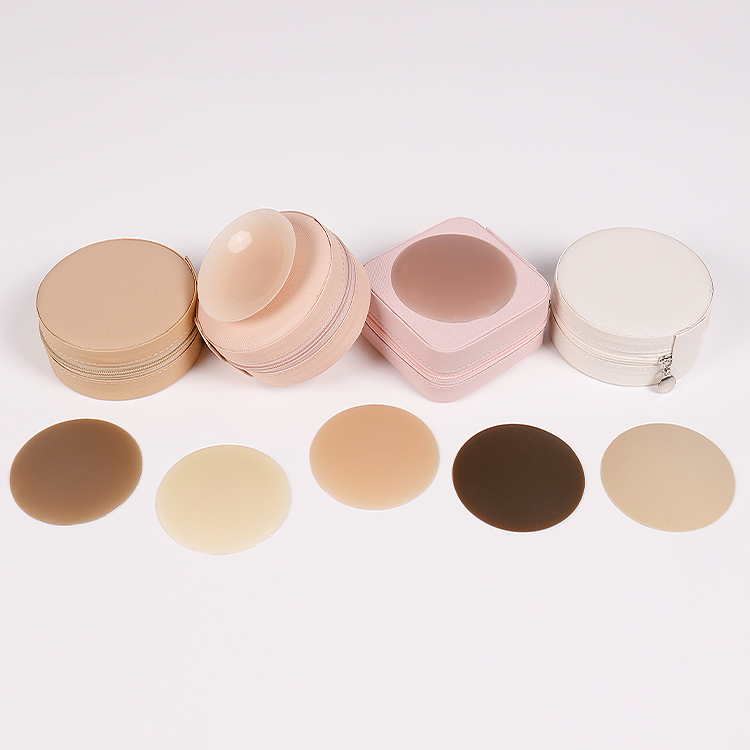
The Economics of Silicone Manufacturing: Is LSR Worth the Investment?
Deciding between solid and liquid silicone is a balance of upfront capital versus long-term ROI. While LSR raw materials carry a 25%–30% price premium, the industrial efficiency of injection molding often leads to a lower “cost per unit” in high-volume runs.
- Tooling Costs: Solid silicone uses compression molds, which are affordable (approx. $3,000–$5,000). LSR requires high-precision injection molds that can exceed $15,000. For small boutique launches, solid silicone is the winner.
- Cycle Time: This is where LSR dominates. A solid silicone pasty takes 3–5 minutes to cure. An LSR injection cycle takes only 40–60 seconds. In a 24-hour production window, LSR yields 4x the output.
- Defect Rates: Manual placement in compression molding leads to a 5%–8% rejection rate due to flash or misalignment. LSR’s automated “closed-loop” system keeps defects under 1%.
For brands scaling beyond 5,000 pares, the speed of LSR and its minimal waste effectively neutralize the higher material costs. You aren’t just buying silicone; you are buying production velocity and consistency.
Hand-Feel and Haptics: Why Liquid Silicone Feels Like a “Second Skin”
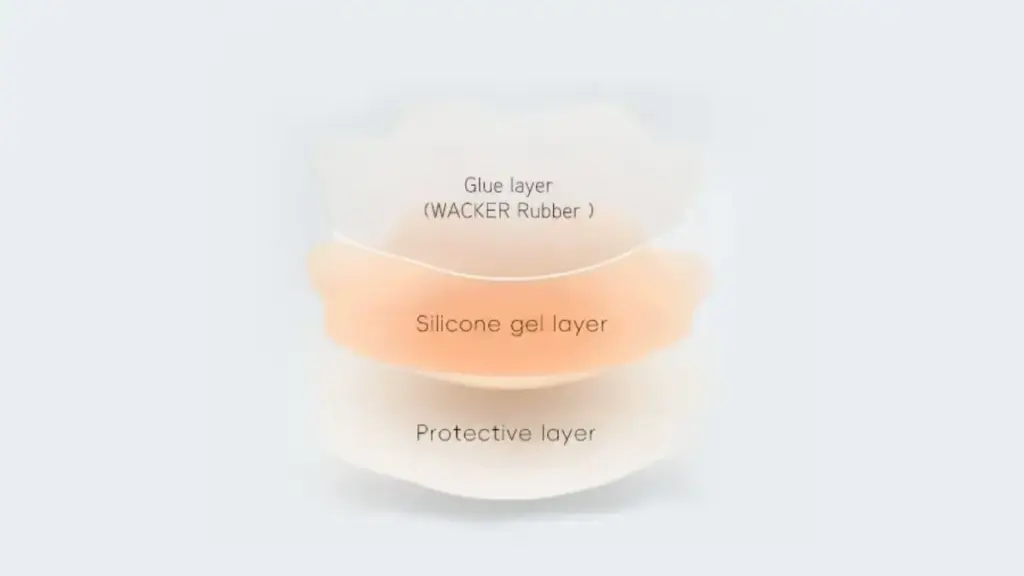
In the premium lingerie market, “touch” is the primary language of quality. When we develop seamless breast petals for international brands, our goal is to achieve a tactile response that mimics human tissue. This is where the technical superiority of liquid silicone creates a clear market advantage.
The Science of “Flesh-Like” Suavidade
Unlike solid silicone, which can feel like a dense rubber eraser, Liquid Silicone Rubber (LSR) possesses a unique molecular fluidity. We measure this using Shore A Hardness. Most standard pasties hover around 30A, but for a true second-skin experience, we calibrate our LSR formulations to a supple 15A or 20A.
This lower durometer allows the material to “flow” and conform to the breast’s natural movement. It doesn’t just sit on top of the skin; it integrates with it. For your customers, this means no more “stiff” outlines visible through lightweight fabrics like silk or satin.
Surface Energy and Friction
A common complaint with cheap, solid silicone is the “arrastar” or sticky friction on the outer surface. High-quality LSR has a naturally lower coefficient of friction. When we process it, the result is a silky, matte finish that feels sophisticated to the touch. This prevents the pasty from shifting or creating static, ensuring the wearer feels secure and unrestricted all day long.
Durability and Longevity: Can Your Customers Reuse Them?
In the adhesive lingerie industry, “sustainability” isn’t just a buzzword; it’s a performance requirement. A common question from procurement managers is whether the choice of silicone affects the product’s lifespan. The answer is a definitive yes. While both materials are technically reusable, their aging profiles are vastly different.
Porosity and Hygiene
Solid silicone has a higher molecular porosity. Think of it like a very dense sponge. Ao longo do tempo, skin oils, suor, and residues from soaps seep into these microscopic pores. This leads to the dreaded “yellowing” effect. After 15–20 wears, a solid silicone pasty often loses its crystal-clear aesthetic and begins to feel slightly tacky or “gummy.”
Em contraste, Liquid Silicone Rubber is non-porous. It acts as a biological shield. Because the surface is so smooth and dense, oils cannot penetrate the material. Com os devidos cuidados, an LSR cover stays transparent and “snappy” para 50+ usos. For brands promising a premium, long-term solution, LSR is the only material that consistently hits those longevity KPIs.
Thermal Stability and Storage
We often test our products under extreme conditions. Solid silicone can become brittle if stored in fluctuating temperatures, especially during international sea freight in hot containers. LSR maintains its mechanical properties from -40°C to 200°C. Whether your inventory is in a humid warehouse or a cold retail storefront, liquid silicone won’t warp or lose its “second-skin” elasticity.
Expert Pro-Tip: If your brand identity centers on “Eco-Luxury,” emphasize the lifespan of LSR. By providing a product that lasts 3x longer than cheap alternatives, you are reducing waste and increasing the lifetime value of your customers.
Technical Quality Checklist: How to Vet Your Manufacturer
As a professional buyer, you shouldn’t rely on brochures alone. When you choose a nipple cover manufacturer, you need to verify their technical claims through hands-on testing. In our Xinke facility, we encourage clients to use these three “litmus tests” to separate medical-grade LSR from cheap industrial blends.
- The Light Test: Hold the sample against a 5000K light source. True liquid silicone is perfectly homogenous. If you see “cloudy” patches or internal grain, the factory is likely using solid silicone fillers to cut costs.
- The Stretch Recovery: Pull the cover to 300% of its size. High-quality LSR, like the Wacker silicone we use at Xinke, will snap back instantly with zero “stress whitening.”
- The Scent Profile: High-purity silicone is odorless. UM “vinegar” or chemical smell indicates poor post-curing, which leads to skin irritation and brand damage.
Conclusão
Your choice between solid and liquid silicone defines your brand’s market tier. Solid silicone is a reliable, budget-friendly entry point for daily wear. No entanto, for a true second-skin experience with seamless breast petals, liquid silicone is unmatched. Its precision and durability reduce return rates and build customer trust.
As a premier nipple cover manufacturer, Xinke offers an industry-leading product range that few competitors can match. We produce both high-end liquid silicone and cost-effective solid silicone, alongside a full catalog of fabric-cup invisible bras and specialized accessories. By combining medical-grade Wacker silicone with versatile manufacturing capabilities, we ensure your brand leads the market across every category.
Contact our experts today to request a custom sample kit and feel the Xinke difference firsthand.
Perguntas frequentes
What is the difference between liquid and solid silicone?
Solid silicone is a firm, putty-like rubber shaped by manual compression. Liquid silicone (LSR) is a two-part fluid injected by high-precision machines. LSR offers superior clarity, thinner edges, and a more skin-like texture for premium products.
Which is better for nipple covers: liquid or solid?
LSR is the professional choice for high-end “invisível” collections due to its ultra-thin tapered edges. Solid silicone is better for budget-friendly, thicker daily-wear pasties that prioritize physical coverage over a seamless appearance.
Is liquid silicone more expensive to manufacture?
Sim. LSR raw materials cost more, and injection molds are significantly more expensive than compression molds. No entanto, for large orders, LSR’s faster production cycles and lower defect rates can reduce the overall cost per unit.
Why does liquid silicone feel more natural?
LSR has a lower viscosity and a “flesh-like” molecular structure. We can formulate it to match human skin’s softness (Shore 15A-20A), ensuring it moves with the body rather than feeling like a stiff rubber layer.
Can solid silicone pasties be reusable?
Sim, both materials are reusable. No entanto, solid silicone is more porous and absorbs skin oils faster, leading to yellowing. LSR is non-porous and maintains its transparency and hygiene for 50+ usa com cuidado adequado.
How to identify high-quality liquid silicone?
High-quality LSR is odorless and remains clear when stretched. Em Xinke, we use EU-certified Wacker silicone to ensure zero “stress whitening.” Any chemical scent or cloudiness indicates low-purity fillers that could irritate your customers’ skin.