SÌ, you can use bandaids as nipple covers for short-term coverage or protection against clothing friction. Tuttavia, bandaids are only a temporary solution because their adhesive may irritate sensitive skin and their shape may remain visible under fitted clothing.
The longer answer to “can you use bandaids as nipple covers” covers how to apply one safely, how long to keep it on, how to take it off without damaging the skin, and when a purpose-made cover is the better choice. This page is general skin-care information rather than medical advice: a persistent rash, discharge or wound should be assessed by a healthcare professional.

Perché le persone mettono i cerotti sui capezzoli?
The reason is usually one of two things: friction or visibility. A bandaid acts as a barrier between the nipple and rough or tight fabric, which is why runners, cyclists and anyone breaking in a new synthetic jacket reach for one when chafing starts. It is also used to hide the nipple line under sheer or form-fitting clothing, where a thicker cover might show through.
Bandaids on nipples work because they are already in the first-aid box, they stick without a primer, and they are thin enough to disappear under a T-shirt. That convenience is also the limit of the method: a bandaid is designed to hold a wound dressing on a hand or a knee, not to sit flat against the most sensitive skin on the chest for a full day under clothing. Where the plan involves sweat, a long day of wear, or an outline under fitted fabric, purpose-made nipple covers for runners and event wear do a better job.
For most people it is a fallback for when nothing else is available, not something to rely on daily.
Come usare i cerotti come copricapezzoli
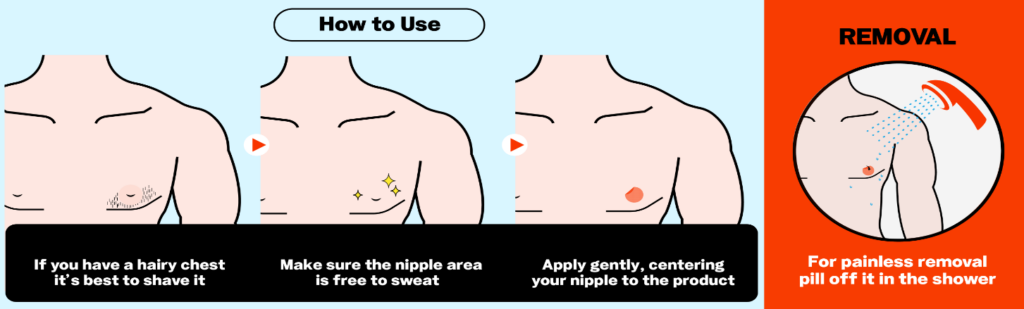
If you have decided to use a bandaid as a temporary nipple cover, how you prepare and apply it decides whether it stays comfortable. Follow the six steps below.
Fare un passo 1: Scegli il cerotto giusto
Pick a width that suits why you are covering up, rather than the largest pad you can find. There is no rule that the bandaid has to cover the whole areola: the pad only needs to sit over the nipple, with the adhesive wings landing on flat skin. For friction protection, a standard bandaid is enough. For coverage under fitted clothing, a wide or jumbo bandaid keeps the pad edge off the areola, where lifting and visible outlines usually start. A hypoallergenic or sensitive-skin bandage is the safer pick for this area, and a matte fabric finish shows less under clothing than a glossy plastic one.
Fare un passo 2: Preparare la pelle
Apply it only to clean, Asciutto, unbroken skin. Wash the area with mild soap and water to remove sweat, body oil and lotion, then pat it completely dry; damp skin stops the adhesive bonding and traps moisture underneath. Do not put cream, oil or moisturizer on first, because these break down the adhesive and make the edges peel.
Fare un passo 3: Applica il cerotto
Peel the backing off without touching the adhesive side. Position the pad over the nipple so the sticky wings land on flat skin, then smooth outward from the centre to remove wrinkles and air pockets, which are what lift at the edge and show through fabric. The bandaid should lie flat without pulling the skin tight: tension makes the edges curl and the adhesive drag every time you move.
Fare un passo 4: Controlla il comfort e la vestibilità
Move around for a few minutes before committing to a full day of wear. Any stinging, itching or burning is the signal to take it off straight away rather than to wait and see whether it settles. Redness that appears within minutes usually means the adhesive or the friction is disagreeing with your skin, not that the bandaid is the wrong size.
Fare un passo 5: Monitorare e sostituire secondo necessità
Check it during the day, especially after sweating. A damp adhesive loses its grip, and a lifting edge lets fabric rub directly on the skin, which is the opposite of what you applied it for. Replace a bandaid whose edges have peeled or whose area has gone damp, washing and drying the skin before reapplying. There is no universal safe wear time, so keep the first use brief, follow the bandage instructions, and take it off as soon as you no longer need it.
Fare un passo 6: Rimuovere e pulire l'area
Remove it slowly rather than pulling it off in one quick yank. Hold the skin taut with one hand and peel the bandaid back on itself, close to and parallel with the skin at a low angle; pulling upward at a steep angle is what lifts surface skin cells along with it. Leftover adhesive comes off with warm soapy water or a little cooking oil on a soft cloth. Pat dry, look for redness, and give the skin a break before putting anything adhesive back on the same spot.
Bandaids vs. Coperture per capezzolo: Che è meglio?
These three options solve the same problem with different materials and different wear limits. The comparison below looks at the things that actually decide the choice: how the adhesive behaves on delicate skin, whether the outline shows, whether it can be reused, and how it holds up to sweat.
| Comparison point | Bandaid | Disposable nipple covers | Reusable silicone nipple covers |
|---|---|---|---|
| How it sticks | Drugstore adhesive, sized for wound dressings | Adhesive backing made for this area | Skin-contact adhesive or self-adhering silicone, depending on the product design |
| Comfort on delicate skin | Short wear only; the adhesive and the edges are the usual cause of irritation | Single wear; thin and light once applied | Soft and cushioning, with no pull at the edges |
| How discreet it looks | The pad can print through fitted fabric and its rectangular shape often shows | Flat and low-profile, the closest to invisible | A round profile can show on very thin fabric; covered shapes stay hidden |
| Reuse and cost | One use then discard; cheapest to start with | One use then discard; sold in pairs | Washed and reused many times; higher upfront cost, lowest cost per wear |
| Sweat and sport | Adhesive loosens with sweat and the edges lift | Grips better than a bandaid but is still single-use | Holds better on dry skin; grip drops on oily or sweaty skin |
| Best suited for | A one-off fix when nothing else is available | Events, sheer or fitted clothing, and runners who need a low profile | Repeated wear; water use only for models designed and tested for it |
A bandaid is the most readily available option, while purpose-made covers generally provide a smoother shape and more application-specific materials. If you need coverage more than once a week, or you are running, the adhesive and the outline are the two things worth comparing.
The two product types Xinke publishes sit on the other two columns of that table: reusable silicone nipple covers E disposable nipple covers and pasties, both listed as stocked categories and open to private label enquiries.
Va bene mettere i cerotti sui piercing al capezzolo??
Avoid covering an unhealed piercing with an ordinary bandaid unless a qualified piercer or healthcare professional has advised it for a specific reason. A healing piercing is an open channel through the skin, and a bandaid over fresh jewellery can trap moisture against the puncture, while removing it can pull on the channel and drag crust or discharge across the site. An aftercare guide from Healthline puts the average nipple piercing at 9 A 12 months to heal, which is a long time for this area to stay clear of adhesive.
If the piercing is still healing and you need coverage for swimming or a shared bath, use a product designed for that situation instead; how to cover a nipple piercing for swimming sets out the options. Once a piercing is fully healed, a reusable silicone cover is the usual way to hide it, choosing a design whose adhesive does not sit directly over the puncture site.
Take any cover off if you notice spreading redness, warmth, rigonfiamento, yellow or green discharge, or pain that does not settle. Those are reasons to speak with your piercer or a healthcare professional rather than to change bandaid brand. Nipple covers and pasties are apparel and discretion products, not medical or wound-care devices, and they should not be used as a dressing over damaged skin.
Nipple Cover Alternatives That Work Better
Three product types replace a bandaid directly: reusable silicone covers, disposable covers and pasties, and pre-shaped adhesive covers used for running. The first two are published on this site as product categories, and the third is the running use case for the same pre-shaped adhesive styles. All of them are open to stock and private label enquiries, with customization documented on the customization page.
Copricapezzoli in silicone
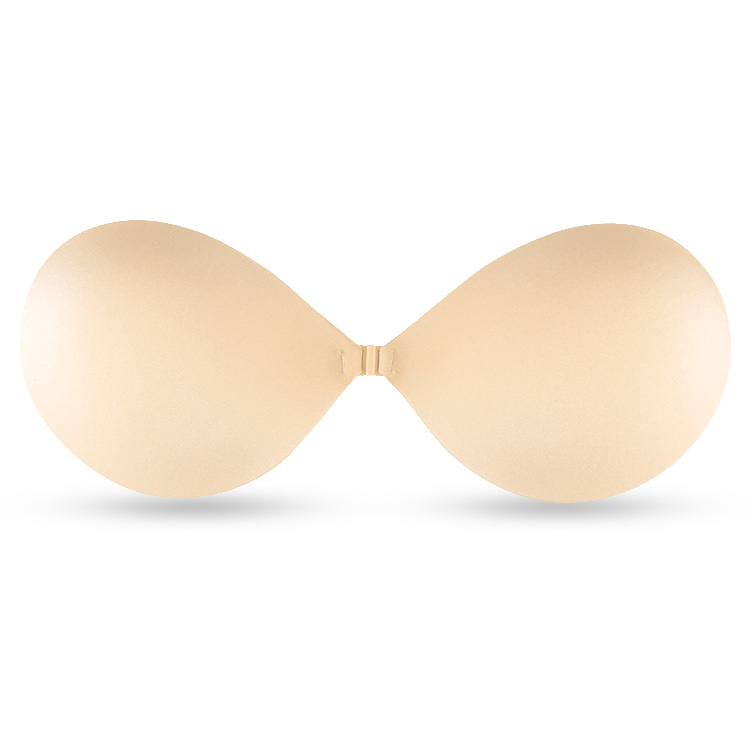
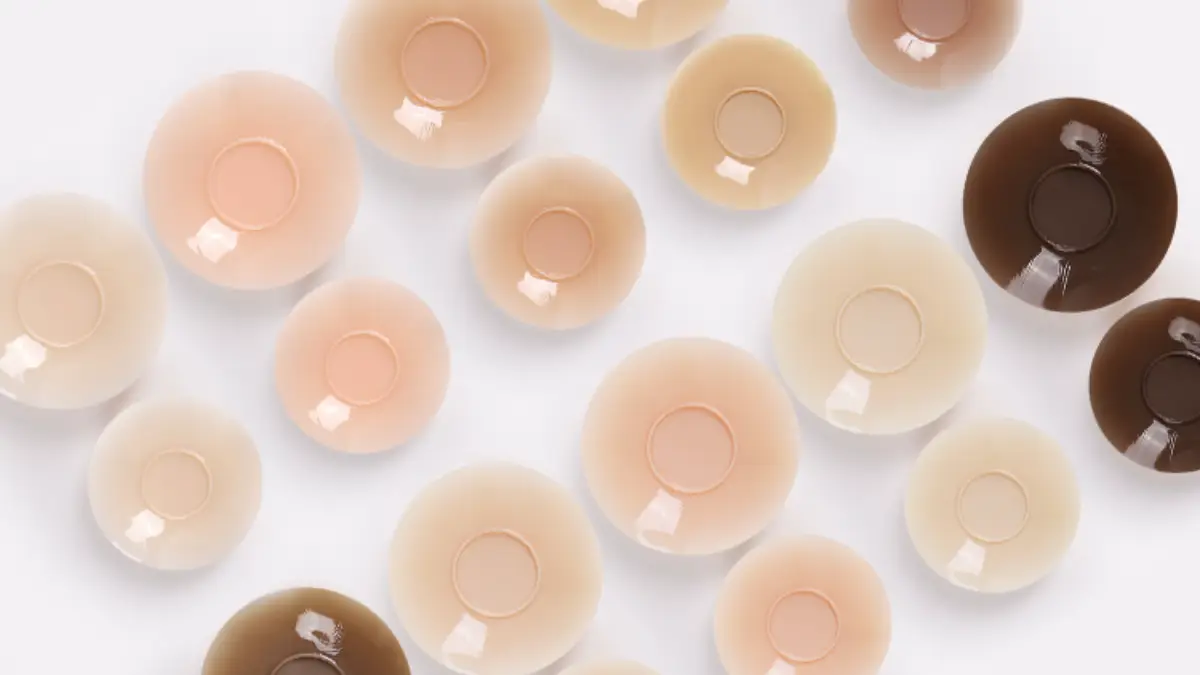
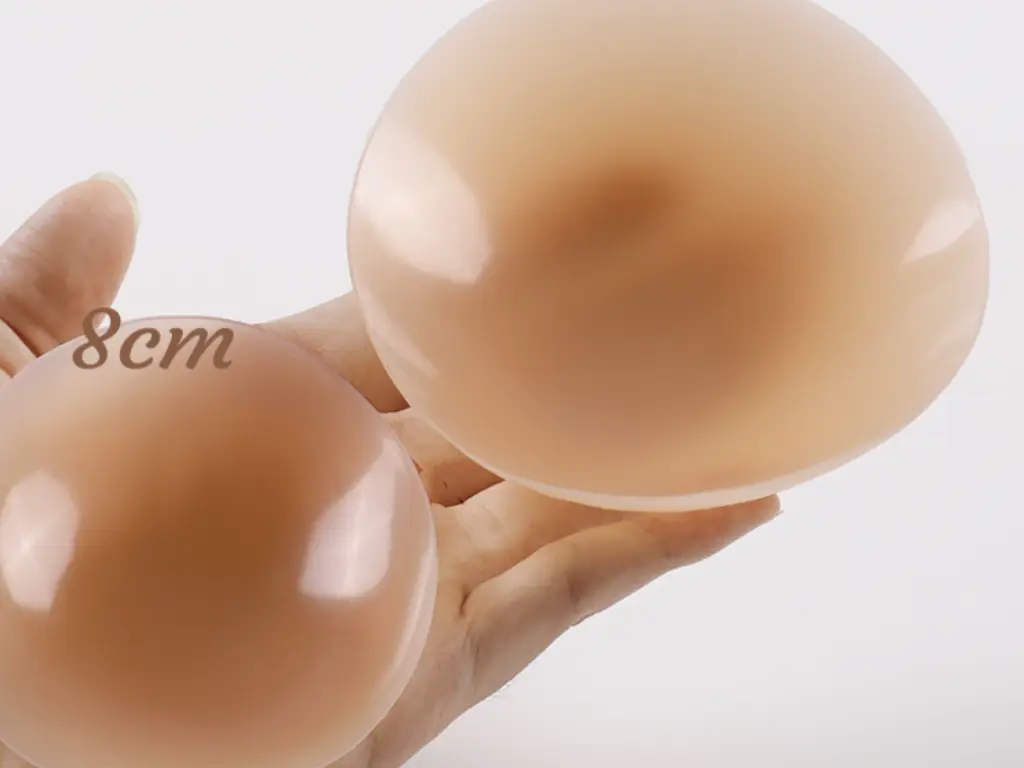
Riutilizzabile coperture per capezzoli in silicone typically use a skin-contact adhesive or self-adhering silicone construction, depending on the product design. Their soft, smooth construction may feel more comfortable than the edges of a standard bandaid, but skin compatibility still depends on the adhesive, the material and individual sensitivity. Some waterproof models may be suitable for swimming when the product instructions specifically allow water use. Grip falls off on oily or sweaty skin, and washing after each use restores it; how to wash nipple covers sets out the routine, and the nipple cover safety guide covers material and skin questions.
Coperture per capezzoli usa e getta
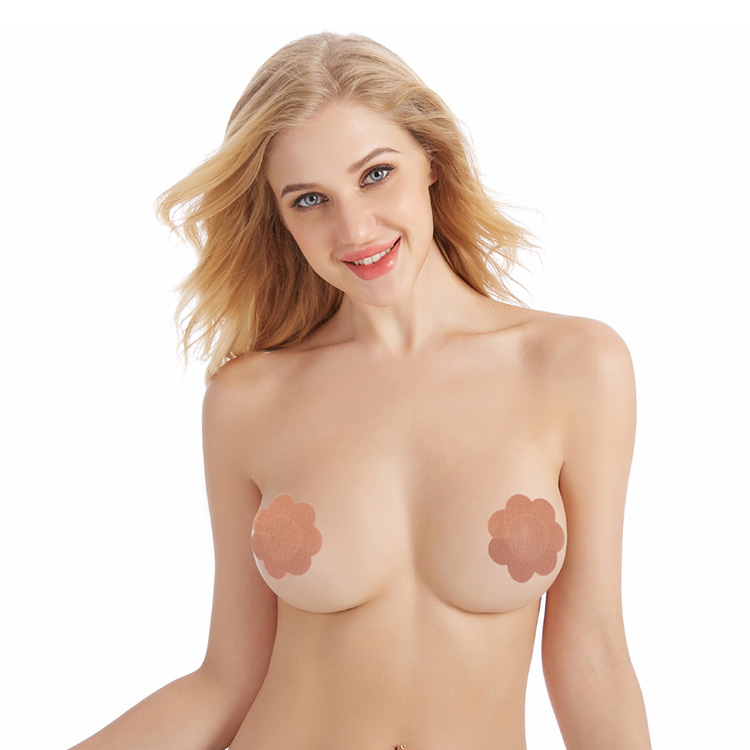
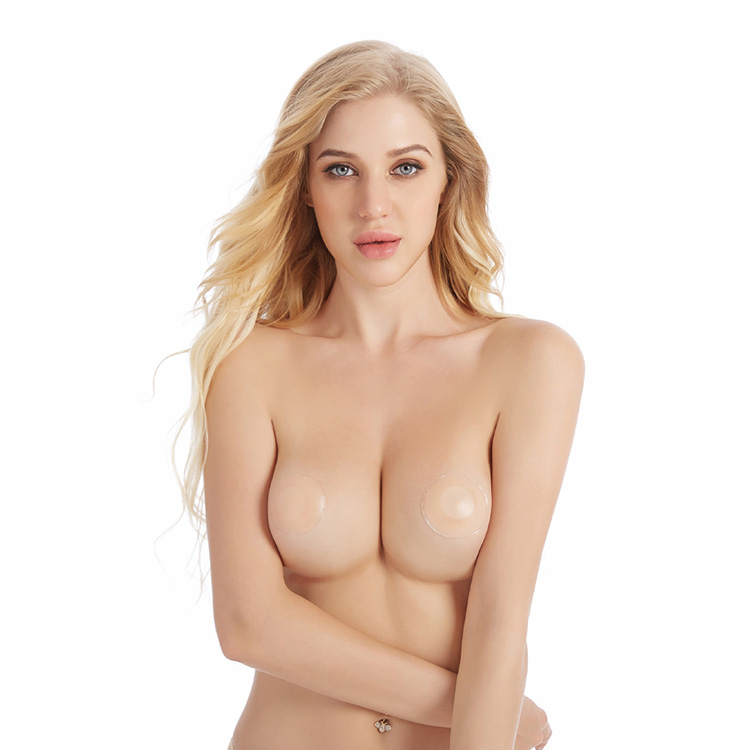
Disposable nipple covers E pasticcini per capezzoli are the low-profile option: poliestere, raso, spandex, non-woven and lace styles, cut to the shape of the areola rather than a straight strip, applied once and discarded. They suit events, sheer fabric and any single long day when reapplying a bandaid is not an option.
Nipple Covers for Runners
Distance running is where a bandaid fails fastest: sweat lifts the adhesive, the edges curl, and the fabric then rubs exactly where you were trying to protect it. Pre-shaped copricapezzoli per corridori are cut to sit flat under a moving shirt and to hold through a long session, and that article explains the chafe mechanics behind the choice. Runners who prefer tape usually reach for a purpose-made body tape rather than ordinary adhesive tape.
Cotton pads, nipple creams and balms, sports tape and better-fitting clothing all have a place: a cream or balm reduces friction without anything sticking to the skin, and a soft, well-fitting bra or base layer removes the cause instead of treating the symptom. None of them give you coverage under sheer fabric, so they sit here as support rather than as equivalents to a cover.
Suggerimenti extra per proteggere i capezzoli

Alongside how you cover them, these habits reduce how often you need to:
- Choose soft fabrics that manage moisture well. Cotton may feel comfortable for everyday wear, while moisture-wicking sports fabrics can reduce prolonged dampness during exercise.
- Keep skin conditioned, but not greasy, when you plan to stick something on it. Dry, cracked skin chafes easily, while moisturizer applied before an adhesive cover stops it bonding.
- Check the fit of your bra or base layer. Rough seams, a band that shifts and a cup that wrinkles all create the rubbing that turns into soreness.
- Wash sports clothing after every run. Salt left in fabric is abrasive and keeps irritating the same spot.
- Rest the skin between adhesive applications, and rotate where covers and straps sit if you train daily.
Pensieri finali
A bandaid will cover you in a pinch: put it on clean, Asciutto, unbroken skin, keep the first use brief, take it off the moment it stings, itches or becomes damp, and peel it back slowly at a low angle. It stays a temporary answer, because the adhesive and the pad shape are the same two things that cause irritation and show through fitted clothing.
When coverage becomes a regular need rather than a one-off emergency, a made-for-the-job cover solves both problems at once. If you are sourcing them for a brand, quantità di ordine minimo, materiale, size range, adhesive type and packaging are all discussed per model, and the private label nipple cover manufacturer guide sets out what to ask before you commit.
Domande frequenti
Can I use bandaids as nipple covers?
SÌ, as a temporary measure. A bandaid gives immediate coverage and blocks fabric friction, but the adhesive is the most common cause of irritation on this area. Treat it as a one-off fix rather than a daily routine, and use the comparison table above to see how the three options differ.
How long can I leave bandaids on my nipples?
There is no universal safe wear time. Keep the first use brief, follow the bandage instructions, and remove it immediately if the skin stings, itches, becomes damp or develops redness, because a lifting edge lets fabric rub directly on the nipple and trapped moisture softens the skin underneath. Repeated itching, redness or a rash where the adhesive sat follows the pattern of contact dermatitis.
How do I remove bandaids without irritating the skin?
Peel slowly at a low angle instead of pulling straight up. Hold the skin taut with one hand and fold the bandaid back on itself so the adhesive releases parallel to the skin. Warm soapy water, or a little cooking oil on a soft cloth, lifts leftover residue without scrubbing. Pat the area dry, check for redness, and leave it uncovered before applying anything sticky again.
Can I use bandaids on my nipples while running?
For a short run in an emergency, SÌ. For training or distance, no: sweat breaks the bond, the edges curl, and the lifting adhesive then concentrates friction on the very spot you were protecting. Runners get steadier results from pre-shaped covers or a body tape made for skin contact, which is the case set out in why male runners need nipple covers. Sore or bleeding nipples after a long run are usually a chafe problem, and a cover that stays put is the first thing to change.
Are silicone nipple covers better than bandaids?
For repeated wear, usually yes: the same cover can be washed and used again instead of being replaced daily, and it cushions against fabric. Whether it suits your skin still depends on the adhesive and material used by that model. The table above compares all three options, and the sizing and material questions are covered in the complete nipple cover guide.