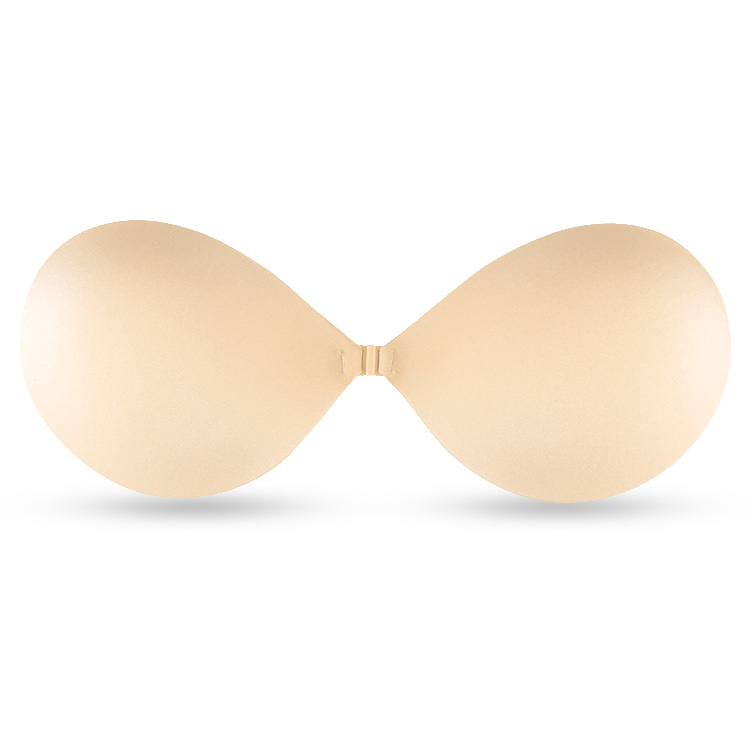
Most lingerie brands search for “private label adhesive bras” and get three different answers from three different suppliers — because the term means something different at every factory. One vendor calls slapping your logo on a stock cup “private label.” Another reserves it for a new packaging program. The distinction matters because each option carries a different bill, a different minimum order, and a different amount of control over what you are actually selling.
What Are the Three Adhesive Bra Sourcing Options?
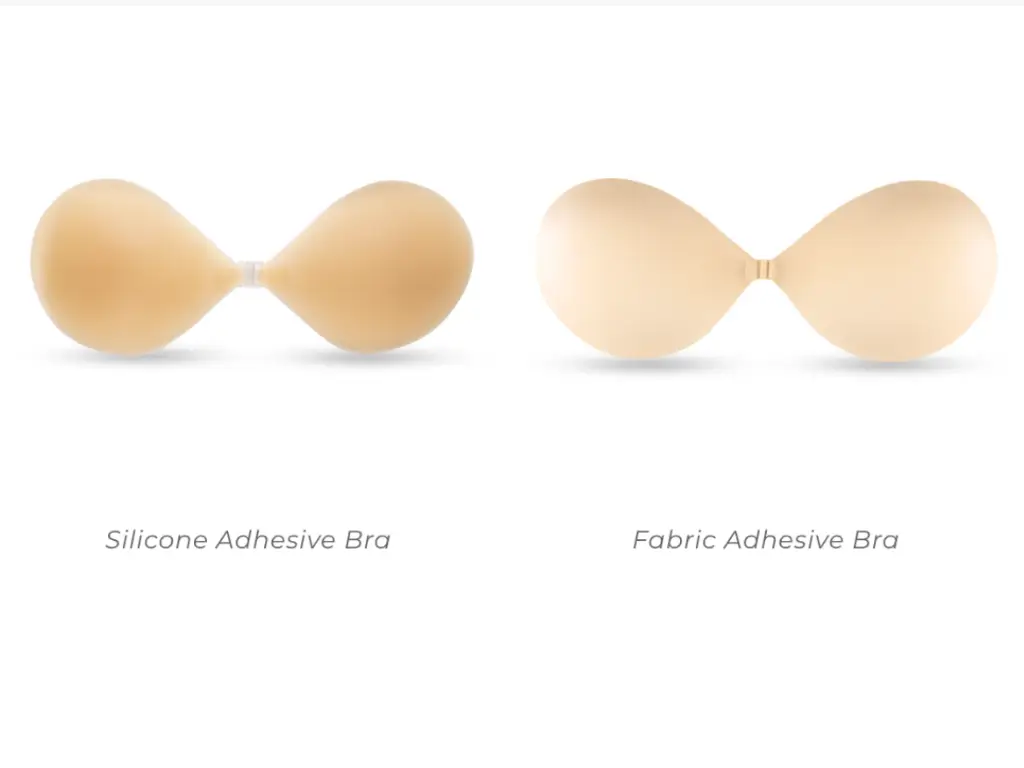
There are three tiers, defined by how much of the product already exists before your brand touches it. The comparison table below is the spine of this article; every section after it explains one column.
| Dimension | Azione | Etichetta privata | Full Custom |
|---|---|---|---|
| Starting product | An existing product used without structural changes. | An existing product supplied with approved branding, confezione, or available option changes. | An existing design may be modified, or a new product may be developed to an agreed specification. |
| Differentiation | Limitato; the same or a similar product may be available to other buyers. | Branding, confezione, and limited product options agreed with the supplier. | Structural differentiation is possible; exclusivity applies only when ownership, use, and non-use terms are agreed in writing. |
| Development work | Usually little or no product-development work. | Artwork, etichettatura, packaging setup, and available color or presentation options. | Specification development, selezione del materiale, tooling assessment, campionamento, and product validation. |
| Upfront cost | Generally the lowest because new product development and tooling are normally not required. | May include artwork, printing plate, etichetta, confezione, or setup fees. | Usually the highest because sampling, tooling, and development fees may apply. |
| Lead-time starting point | Inventory or production confirmation, depending on actual availability. | Commonly artwork, confezione, specification, and deposit confirmation. | Depends on the agreed specification, depositare, tooling, materiali, and sample-approval process. |
The rest of the variables — MOQ, exact lead time and price — depend on the specific supplier and scope, so this guide does not print universal numbers. It gives you the decision logic. For the end-to-end supplier vetting, sampling and logistics behind these tiers, our guide to sourcing silicone bras from China covers the full process; this page stays focused on choosing the right tier for your brand stage.
When Is a Stock Product the Better Choice?
A stock or standard product uses an existing factory specification without structural modification. Some models are available from inventory, while others are produced after order confirmation, so buyers should confirm actual stock availability and dispatch time. The advantage is speed and the lowest entry cost: no development fees and no tooling, and the MOQ is usually the smallest of the three because the factory already produces or holds the run. You should still confirm a physical stock sample before a bulk order — “ready-made” removes development, not inspection.
The trade-off is little product differentiation. The same reggiseno adesivo you sell may be sold by a dozen other sellers, competing on price with identical photos. Stock suits a brand testing demand, filling a gap in an assortment, or launching fast to validate a channel before investing in product. It is the right answer when time-to-market beats exclusivity.
Verdict: choose stock to test demand, not to build a durable brand position.
What Can Be Changed in a Private-Label Order?
Private label starts from an existing product and adds your brand layer. In a typical program you can change the logo, the packaging (box, hangtag, insert card, barcode), and often the color or skin-tone match — without touching the cup geometry or construction. The underlying product stays the same as the factory’s tooling.
Here is where terminology bites. Some suppliers label a color-and-box change “Etichetta privata”; others call anything on existing tooling “OEM”; others use “ODM” when they contribute the design. There is no industry-standard line between the three. So the actual scope — what exactly changes and what stays — has to be written into the quotation, not inferred from the label. Ask the factory to list, line by line, what is being modified.
Private label gives a brand a shelf presence and a story without development cost or a new mold. It is the sweet spot for a seller with proven demand who wants their own branded version of a known-good product.
Verdict: private label gives you a distinct brand presentation, but not automatic product exclusivity — confirm the scope in writing.
When Does a Product Require Full Custom Development?
You need full custom when the change is structural: a new cup shape, different adhesive coverage, a novel construction, a thickness gradient, or an exclusive design no one else carries. Changes to cup geometry, thickness distribution or construction may require new or revised tooling, depending on the existing mold and manufacturing process — confirm the tooling requirement before approving the development scope. That tooling and development step is what separates custom from private label both technically and commercially.
Custom development runs through design sign-off, tooling and one or more sampling rounds before the first production run. That is where development fees, mold costs and longer timelines enter — and where a genuinely differentiated product becomes possible. One correction worth stating plainly: “costume” does not automatically mean “exclusive.” In a full-custom program you may specify the geometry, materiali, thickness and adhesive coverage, but exclusivity does not arise automatically — tooling ownership, design rights, permitted factory use, territory, sales channels and exclusivity period should all be defined separately in writing. Industrial design rights are territorial; depending on the target markets, protection may be pursued through national or regional filings or through the WIPO Hague System, so the registration strategy should be reviewed separately from the manufacturing agreement. Established manufacturers with in-house R&D build custom programs against a client’s drawings, design ideas or physical samples, and some credit mold or sample fees against future orders once volume commits.
The honest caveat: a custom mold is a fixed cost you amortize across units. If you cannot forecast the volume, an exclusive product is an expensive way to learn demand — start with private label, prove it, then move to custom.
Verdict: custom is for brands with proven volume and a real structural reason to differ, not a logo preference.
How Do Cost, MOQ and Lead Time Change?
As product control increases, upfront cost and development time generally increase, while MOQ and production lead time depend on the supplier, prodotto, materiali, confezione, and scope of customization. Use this pattern as a comparison guide, but obtain exact figures from a written quotation.
- Upfront cost: stock products normally avoid new product-development and tooling fees; private-label orders may add artwork, printing plate, etichetta, or packaging setup costs; full-custom programs may include sampling, tooling, and development fees.
- MOQ basis: minimums are not directly comparable unless they use the same basis. Ask whether the MOQ applies per order, stile, colore, misurare, or packaging design. A seemingly low MOQ applied separately to several variants can still create a large total commitment.
- Lead-time starting point: stock orders begin from inventory or production confirmation; private-label timelines commonly depend on artwork and packaging approval; custom timelines may depend on specification, tooling, sample, and material approval. Two quotes showing the same number of weeks may therefore follow different starting points.
Compare suppliers using a line-item quotation that states what each MOQ covers, which costs are included, and when the lead-time clock begins. The contractual starting point may depend on specification approval, deposit payment, material confirmation, artwork approval, tooling completion, or sample approval.
How Much Product Control Does Each Option Provide?
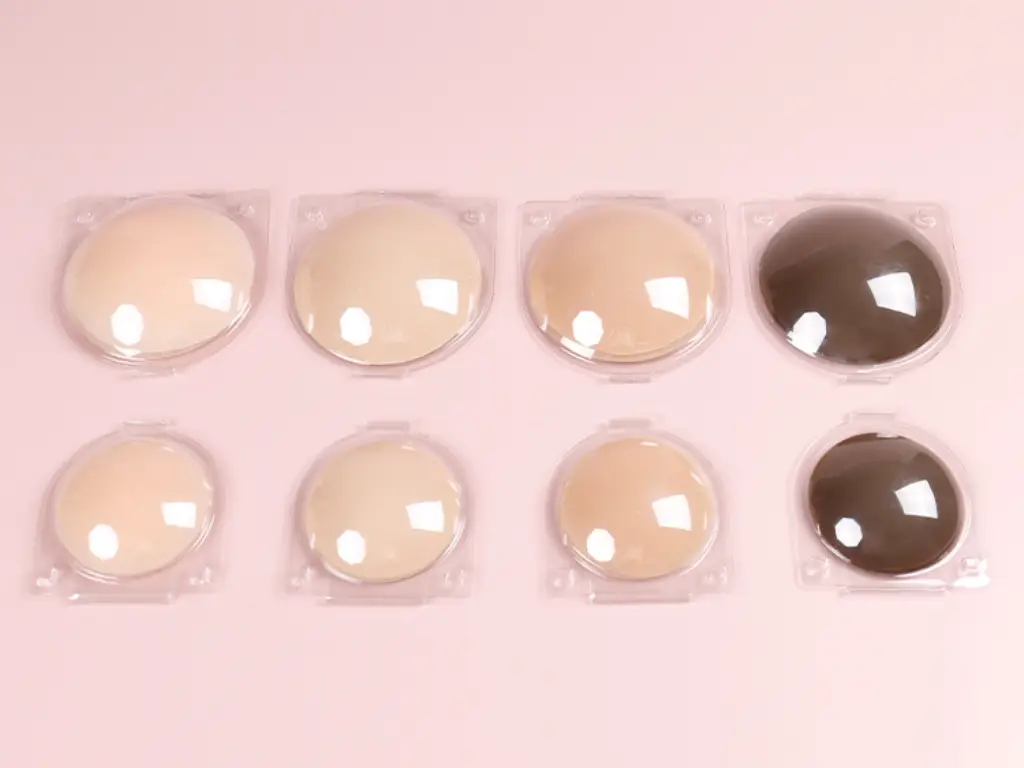
Control is the axis that really separates the tiers, and it decides who owns what. In a stock or private-label program, the factory owns the tooling and the core product; you own the brand and packaging. That means a competitor can walk into the same factory and buy the same cup — you are differentiated only by your box and logo.
In a full-custom program, you specify the geometry, materiali, thickness and adhesive behavior — but exclusivity does not arise automatically; it depends on the written tooling, design-rights and non-use terms described above. The trade-off is responsibility: custom changes generally require additional validation (adatto, adhesion, wear and cleaning testing), and stock and private-label products should also be checked against your intended market, claims, labeling requirements and acceptance criteria. More control is more ownership, and ownership includes proving the product works.
This is where a supplier’s development depth matters. A supplier with in-house R&D may offer existing designs, modifications of current products and new-product development. Xinke states that it has an independent R&D team and design patents (see its customization page), but buyers should still confirm whether a proposed design is a standard catalog model, a modification or a buyer-exclusive development, and whether new tooling is required. The lesson generalizes: a factory with real R&D gives you more starting points to choose from, not just the cheapest one.
The right amount of control is the least that still lets you tell a true differentiation story to your customer.
Which Option Fits Each Stage of Brand Growth?
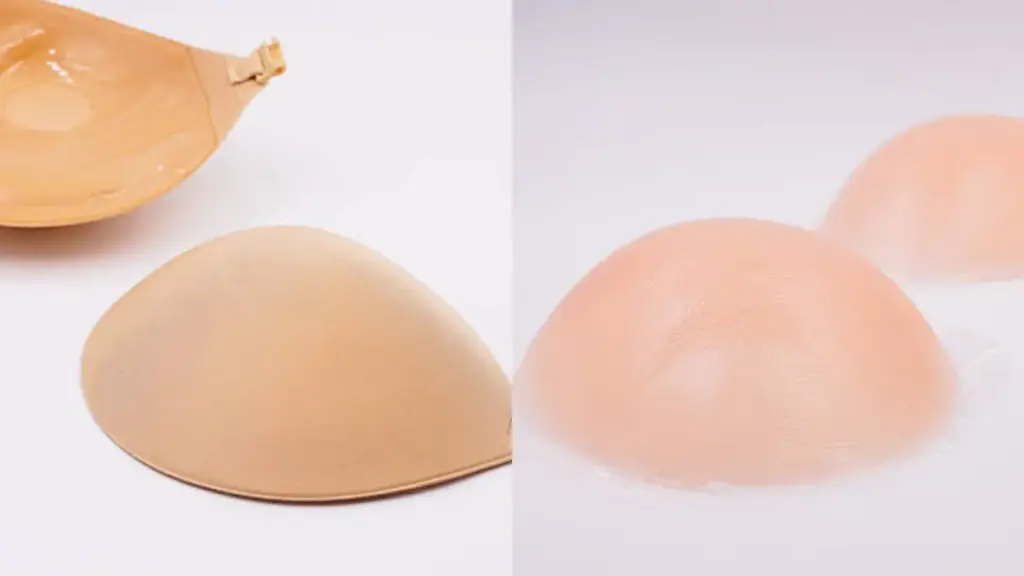
The tiers map naturally to brand stages. Here is the fit, stage by stage.
| Palcoscenico del marchio | Best-Fit Option | Why It May Fit |
|---|---|---|
| Testing demand or launching a first SKU | Azione | Usually requires less development work and can help the brand test demand before investing in customization. |
| Proven seller seeking its own brand presentation | Private label | Adds branded packaging and approved presentation options to an existing product without necessarily changing its structure. |
| Scaling brand that needs structural differentiation | Full custom | Supports changes to product design or construction; any exclusivity must be defined through written ownership, exclusivity, and non-use terms. |
| Established brand managing several product roles | Mixed approach | Combines custom products for differentiation, private-label products for branded range expansion, and stock products for market testing or assortment gaps. |
Mature brands rarely pick one tier forever. A common structure is a few custom hero products that define the brand, a private-label core range for consistent brand presentation, and stock items to fill gaps and test adjacent categories cheaply.
What Should Be Confirmed Before Requesting a Quote?
A quote is only comparable if the scope is pinned down first. Before you ask for pricing, confirm these on every option so you are not comparing a stock price to a custom price and calling it a deal.
- Exactly what changes: is the product itself fixed, or are you modifying geometry, adhesive coverage or construction?
- MOQ basis: per ordine, stile, colore, size or packaging design — written out.
- What the price includes: product only, or packaging, plates, barcodes and set-up fees too.
- Tooling ownership and use: who pays for and owns the tooling, where it will be stored, who may use it, who maintains it, and whether it can be transferred to another factory.
- Who validates the product: for anything you changed, agree who tests fit, adhesion, wear and cleaning.
- Lead-time reference point: does the clock start at inquiry, artwork approval, or design sign-off?
Once scope is fixed, a supplier’s customization capability determines how far you can move up the tiers without changing factories. Ask whether they cover color, misurare, forma, materiale, thickness and packaging under one roof, or whether a custom program means juggling several vendors.
Domande frequenti
What is the difference between private-label and custom adhesive bras?
Private label adds your branding and packaging to an existing product on existing tooling. Custom changes the product itself — geometry, materials or construction — which usually requires a new mold and adds development work.
Can a brand add its logo to an existing adhesive bra?
SÌ. Adding a logo and branded packaging to an existing product is commonly offered as a private-label option. It normally does not require a new product mold, although printing plates, packaging setup fees and minimum packaging quantities may still apply.
Do custom adhesive bras require a new mold?
Changes to cup geometry or construction may require new or revised tooling. The requirement depends on whether the supplier already has a suitable mold and whether the requested change can be made through materials, process settings or existing tooling. Colore, logo and packaging changes alone usually do not. Confirm whether the mold cost is credited against future orders.
Which sourcing option usually has the lowest MOQ?
Stock typically has the lowest minimum because the run already exists. But always confirm the MOQ basis — a low number applied separately per color, size or packaging design can still add up to a large total commitment.
When should a brand move from private label to a custom product?
Move to custom once you have proven volume and a structural reason to differ — a shape, adhesive level or feature competitors lack. Custom’s mold cost needs forecast units to amortize, so prove demand on private label first.
Pensieri finali
Azione, private label and full custom are not interchangeable, and the terms shift meaning between suppliers. The tier you choose sets your cost, your minimums, your lead-time calendar and, most of all, how much of the product you actually control.
Fix your scope first, then request a line-item quote from a manufacturer that can cover all three tiers as you grow.