
Swim retail is where a waterproof claim gets tested fastest. A cover that survives an office day can fail in its first week on a pool deck: the perimeter lifts, water gets under the face, and the wearer takes the product back.
This article stays on the specification layer: three failure routes in water, acceptance conditions for a sample sheet, wet-state edge design, assortment, packaging against humidity, and the order calendar.
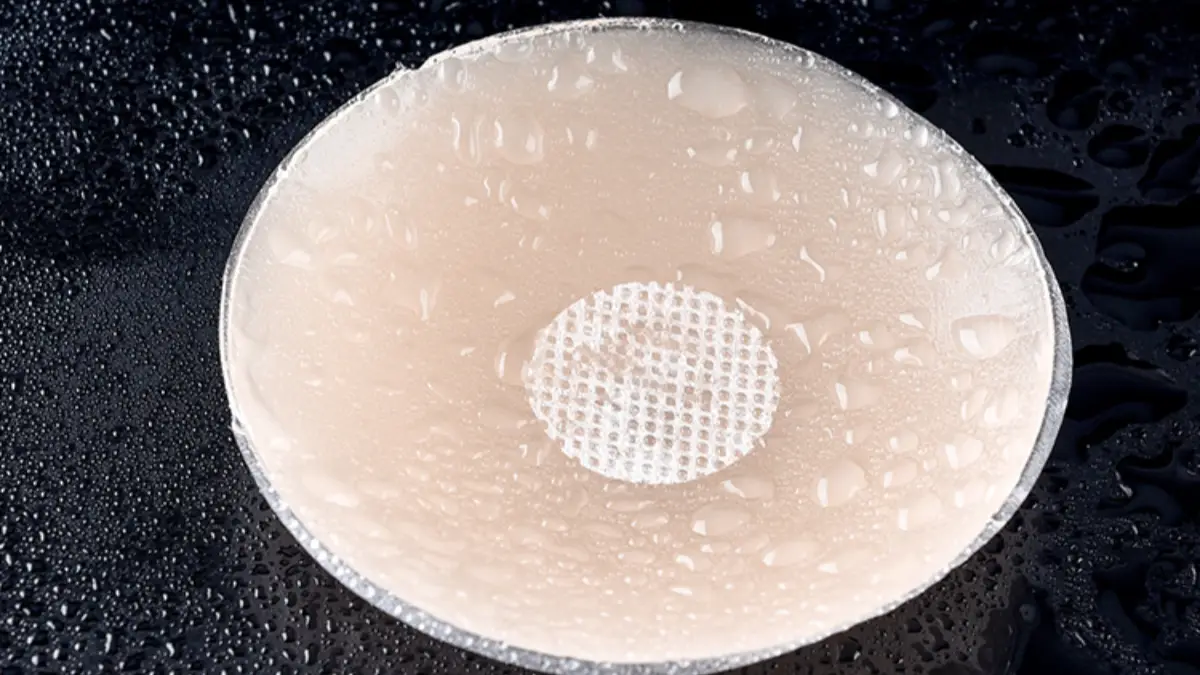
Three Ways Water Breaks the Bond
Immersion attacks one layer of the bond, and the layer differs by water. Public pool codes hold a disinfectant residual continuously, with published free-chlorine limits running from a 1.0 ppm minimum in general pools to a 7.0 ppm maximum in spa and wading pools, as the Indiana pool water chemistry rule states.
Separate the three routes on the sample sheet; each produces a different complaint in the returns pile: an oxidizing residual in pool water, salt and its crystals as a film dries, and sweat and sebum trapped under an occlusive face.
| Failure route | Layer it weakens | Acceptance condition to require | Buyer-controllable parameters |
|---|---|---|---|
| Chlorinated pool water | The adhesive face itself: a maintained oxidizing residual works on the tackifying surface while water sits against the interface. | Time to first edge lift and time to detachment under a static soak in chlorinated water at a stated free-chlorine level and temperature. | Water type and concentration, soak temperature, dwell before first reading, edge thickness, adhesive coverage pattern |
| Salt water | The edge seal: brine wicks under the perimeter by capillary action, then salt crystallizes as it dries and props the lifted edge open. | Edge lift in millimeters and visible residue after one saltwater soak plus one air-dry cycle, on the same substrate used for the baseline. | Taper and footprint of the edge, single-use versus multi-use positioning, whether the pack states a rinse step |
| Sweat and skin-oil film | The skin side of the bond line: warmth plus occlusion traps moisture and sebum under the face and lowers the surface energy it grips. | Grab after a warm occluded dwell, and grab on the first re-application after a soak and dry, recorded as two separate readings. | Stated wear duration, adhesive area versus face area, fine (a glossy face shows oil shine), pack closure |
All three begin at the same place: the edge. A lifted perimeter is both the failure and the route water takes to the sealed interface. The cheapest variables you control are edge geometry and the pack; swim-facing molded shapes sit under the silicone nipple cover category.
Acceptance Criteria to Require on a Swim Sample Sheet
Write these as conditions you require of a sample, not properties you print on a card. Three readings specify a swim SKU: time to first edge lift, time to detachment, and soak-and-dry cycles survived before both numbers fall apart.
State the water instead of assuming it: pool water at a declared free-chlorine level, or a salt mix at a declared concentration, at a stated temperature and substrate, with a defined dwell and reading interval. Record lift in millimeters; a yes-or-no result gives nothing to reorder against.
Define detachment once and reuse it: the piece slides a set distance, the edge opens beyond a set width, or the face separates. Report the outcome as a spread and set the threshold as a percentile of it.
The procedure and how those readings map to published test methods belong to silicone bra adhesion testing standards; this article does not restate them.
Keep the three readings written on your internal sheet, the sample approval, and the reorder decision. Where your own team has no documented figure yet, mark it [待确认] and treat the gap as a sampling task.

Drying Cycles and What Recovery Actually Tells You
After a soak the face must dry before grab returns, and recovery is not uniform across constructions. A molded silicone face with a continuous adhesive layer is the type swim programs re-wear; a thin film or fabric-backed face usually is not, and conflating the two is where complaints start.
Recovery is a positioning decision with evidence attached. Sell a swim SKU as multi-use only when you hold a re-application figure from a tested soak-and-dry cycle, stated on the pack. The care route behind it is documented in how to make an adhesive bra sticky again E, on the cleaning side, In how to wash nipple covers; neither routine is repeated here.
If you cannot evidence a cycle count, position the SKU as single-use and price it that way: the card loses the care instruction and the packaging requirement changes.
Recovery data from dry skin is not recovery data from immersion; ask which condition produced a quoted figure. A self-adhesive face such as the self-adhesive silicone nipple cover is a useful baseline for reading grab before and after a soak.
Edge Design and Visibility Under Wet Fabric
A soaked swimsuit changes the optics: light fabric loses opacity, presses into skin instead of bridging over it, and gloss becomes a highlight. The perimeter is what shows, so waterproof nipple covers that stay invisible are really a matter of edge geometry.
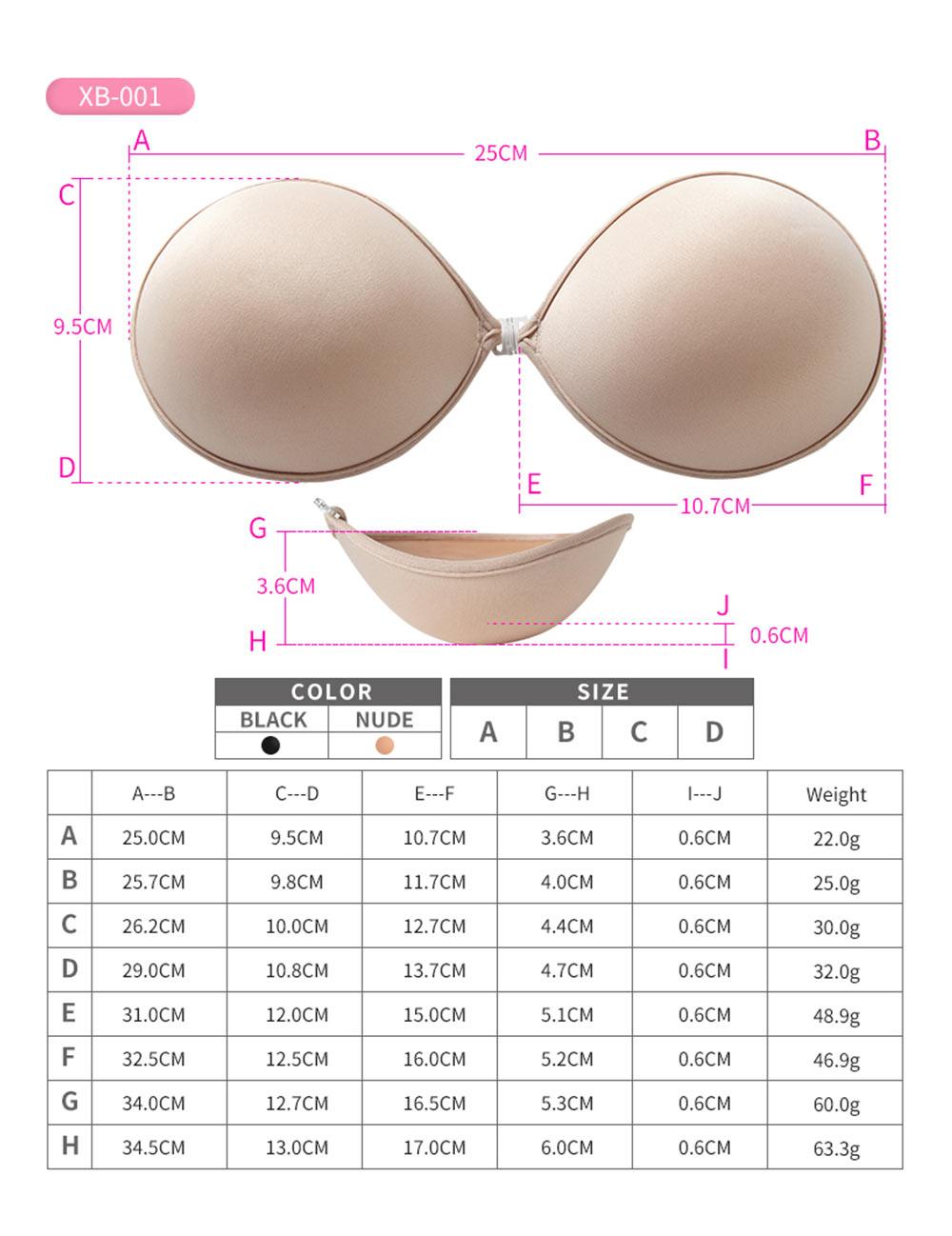
Three items decide the result. Taper: a feathered edge disappears, while a thick edge shows a ridge once fabric sits into it. Finish: matte reads as skin, glossy as a shape. Colore: undertone matching matters more wet than dry. A molded cup such as the invisible classic silicone bra is sold on that edge and colour — seamless, nude and invisible.
Water has a second effect: it changes how much of the underlying areola shows through a thin face, so an opaque molded body with a tapered rim is the safer swim specification; IL solid opaque silicone bra is sold on that opaque, seamless reading. Check perimeter squeeze-out and any embossed mark; both read as print through wet cloth.
Molded silicone holds its shape and resists waterlogging, so it is the construction to specify for immersion; fabric-backed and film faces are lighter and cheaper, and their edges tend to lift first. Form-giving pieces in water are a separate question, handled in bra inserts by application.
Swim Assortment: Copertine, Pasties and Adhesive Bras in One Program
A swim program needs three shelf positions. Small covers move on count for impulse hooks; pasties and film faces carry fashion traffic and are easiest to position as single-use; adhesive bras carry the ticket and need a size ladder, consuming most of your open-to-buy.
Keep each position shallow and complete: one cover in two diameter steps, one adhesive bra in two or three sizes across two skin tones, one pastie line as the fashion entry. Every size step multiplies order lines, and colors do the same to stock: buy the ladder before the palette.
Set use positioning per SKU and keep it consistent with price point and pack: a multi-use bra needs recovery evidence, a care line, and packaging that protects the face between wears; a single-use cover needs unit separation. IL multi-colors strapless adhesive bra sits at the multi-use end; its page lists it reusable ten times, a supplier figure to verify on a soak-and-dry cycle.
One adjacent query looks like swim demand but belongs elsewhere: coverage for a body modification in the water is handled in how to cover a nipple piercing for swimming, and this article does not duplicate it.
Packaging Against Humidity, Heat and a Long Container
For a swim SKU, most damage before the sale happens in the box. A warm container and a humid warehouse push an adhesive face toward two outcomes: migration, where the coating softens, transfers to the liner and leaves skips; and edge pickup, where a corner lifts in transit and arrives compromised.
Both are visible at intake. Note whether units arrived with the perimeter flat or curled in the pocket, and record it against the SKU tested; a pattern across cartons is a specification problem, not a shipping accident.
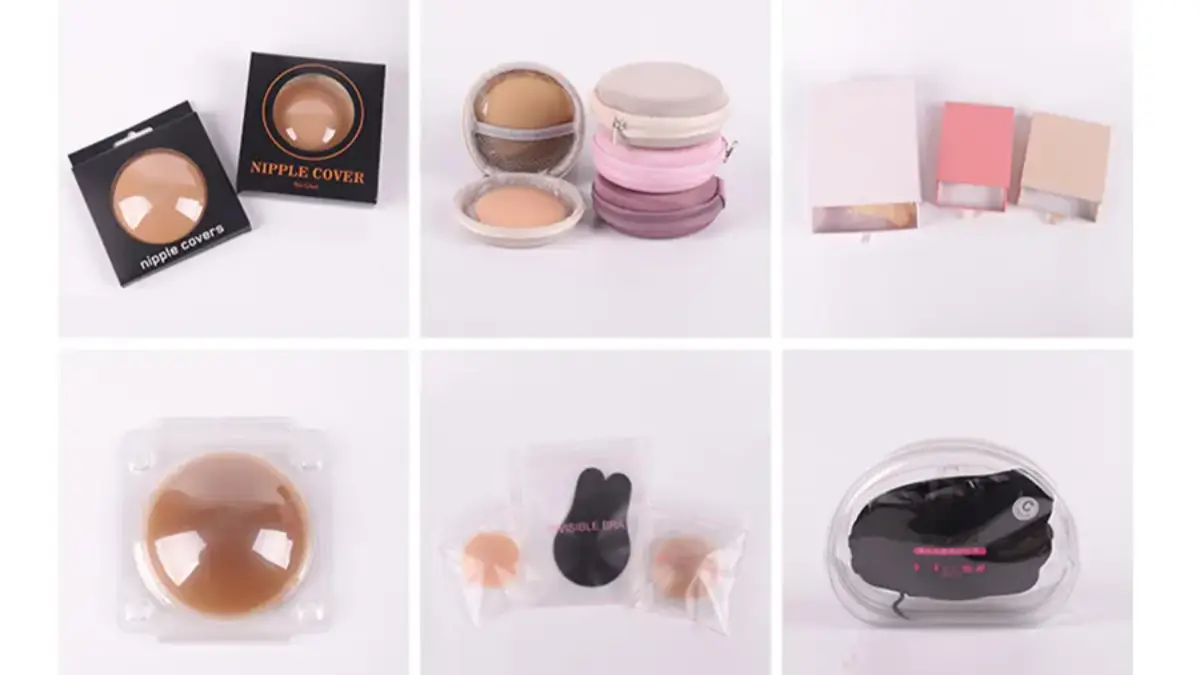
Specify three controls. One release liner per unit, so no two adhesive faces share a pocket and the perimeter stays flat. A moisture-barrier outer bag for units that will see ocean freight. And a storage instruction on your intake paperwork: a pallet parked in a hot yard is not the same product as one in conditioned storage.
Liner material, pouch construction and card stock are covered in custom packaging for silicone nipple covers. What belongs here is the commercial consequence: barrier bags and unit liners add line items and can move your minimum order quantity, so fix the protection level before quoting.
Order Windows and Replenishment Cadence for Swim Retail
Work backwards from the shelf date: subtract the retailer’s inspection and ticketing window, transit, and production, then check whether your specification fits what remains. The detailed lead-time bands for each stage are in custom silicone bra lead time; this section only applies them to a swim calendar.
Northern-hemisphere resort and swim channels place the buy in the cold months for a spring landing, and the reorder conversation happens while the first drop is still selling. Inverted-season markets are a second calendar, not a salvage route for a late order; planning against them keeps an overbuy from becoming a markdown.
Replenish on a short cycle for a reason unrelated to demand: an adhesive face ages in stock and heat accelerates it, so a deep buy carries a quality risk a shallow one does not. Two moderate orders plus a top-up, with the first drop measured on the returns pile, holds margin.
Two questions arrive late: whether the pack text may carry an immersion statement, and what the customer does out of the water. The second belongs to the consumer-side guidance in tips for choosing adhesive silicone bras for swimming; the first is answered by your own acceptance file.
Domande frequenti
Can I wear a sticky bra in the pool?
Molded silicone faces with a continuous adhesive layer and a tapered edge are the type swim programs specify, and whether one holds depends on its immersion acceptance file, not the category name. Fabric-backed and thin film faces lift at the perimeter first.
Are sticky bras waterproof?
The word describes whether water passes through a material, and a silicone face does not absorb much. A swim shopper tests retention instead: the bond line releases at the edge after a soak. A waterproof label therefore says nothing about immersion unless it travels with the three readings above. Xinke does not publish a waterproof rating for its adhesive products, and any wording you put on your own packaging should trace to a test file you hold.
Are pasties waterproof?
Some listings describe pasties in waterproof terms, which is a market wording convention rather than a measured result. Most are thin film or fabric faces with a light coating and a cut perimeter, the least immersion-friendly combination on the shelf. Stock them for a swim channel as single-use, and let the molded covers carry the water wording you can evidence.
Which bra to wear while swimming?
On the category side only: swim programs use self-adhesive molded cups with a tapered, matte perimeter, sized by coverage rather than by band. Constructions around a band, straps, or hook-and-eye closures are specified for clothing wear; their adhesive faces do not get an immersion brief.
Pensieri finali
Water does not fail a swim SKU all at once; it finds the weakest layer of the bond line and works there: the adhesive face under an oxidizing residual, the perimeter under salt and its crystals, the skin side under trapped sweat and oil. Each route has a matching acceptance condition you can require before sample approval.
Build the program around that: one immersion-appropriate construction, three readings on the sample sheet, edge geometry for the wet state, a shallow size and color ladder, packaging that survives the container, and a reorder cycle short enough that nothing ages in stock. That is how adhesive bras for a swim shelf become a repeatable line instead of a seasonal gamble.