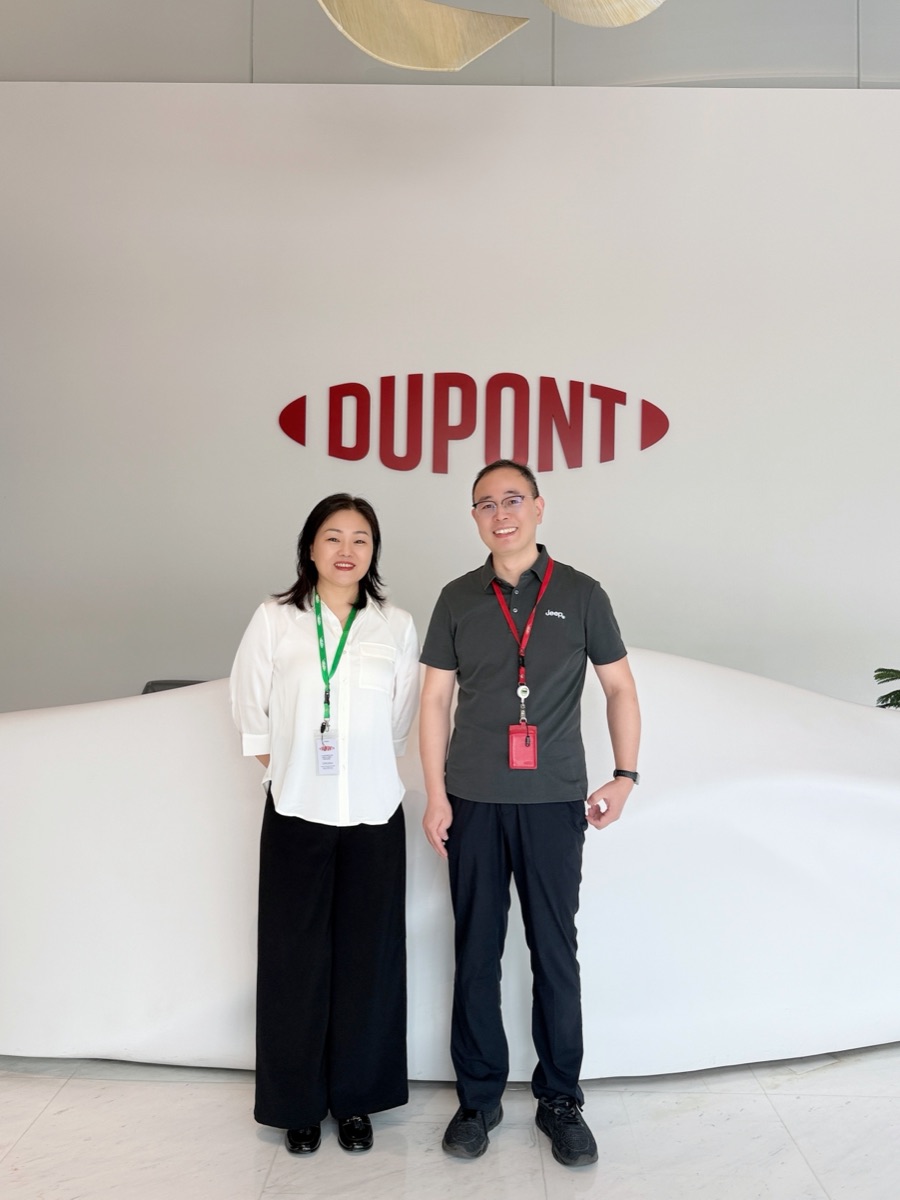
Xinke’s technical and commercial team recently visited DuPont’s Shanghai office for an exchange on material development and application requirements. The meeting focused on material evaluation, specification development and technical support.
Purpose of the Visit
Material selection affects product performance, manufacturing consistency and quality control. Xinke arranged the visit to communicate its application needs directly and better understand how material suppliers approach development and evaluation.
Topics Discussed
The discussion covered several areas relevant to Xinke’s material-review process:
- Converting product requirements into measurable material parameters.
- Comparing materials using appropriate technical information.
- Evaluating samples before approving a material for a specific application.
- Maintaining material consistency and technical support during production.
Next Steps
Following the visit, Xinke will review its material specifications, sample-evaluation requirements and supplier communication process. The aim is to identify where clearer parameters or supporting information are needed before materials enter regular production.
The visit also established a channel for further technical communication with DuPont’s Shanghai team. Future material decisions will continue to be based on specific product requirements, supporting documentation and application-level testing.