Decorative pasties and nipple tassels sell inside a narrow window, and they fail in ways a coverage product never does. A coverage SKU is judged by how little it shows; a decorative SKU is judged by how well it holds while being looked at.
Most buyers do not build a second adhesive platform for this line. They take a base they already trust and hang ornaments, tassels and shade variants off it. The buying question is how to turn one base into visibly different SKUs without multiplying minimum order quantities, test scopes and return reasons.
Two Jobs on One Shelf: Coverage and Decoration
A coverage SKU is evaluated on opacity, edge taper, adhesive area and how long the edge stays down through a working day. A decorative SKU is evaluated on silhouette, ornament retention through a full performance set, colour under venue lighting, and how it reads on a hanging card. Because both share one physical system, a decorative unit inherits the base’s failure modes and adds its own.
The added failures are predictable. Ornament mass shifts the lever arm on the adhesive edge. A stiff quill end or a bead tab pressing against skin creates a local lift point a flat coverage cup never produces, and shedding or adhesive skip under the ornament foot arrives as a return rather than as an adhesion complaint.
So specify one base for both jobs and write two sets of acceptance criteria. Ask for the base as a shared component and the ornament as a line extension, so the same size steps, adhesive face and test scope carry across the families. The dressed and undressed versions sit together under the sexy nipple cover category. Definition and aliases belong to our guide to nipple tassels; this article stays on the product line.
Attachment Methods and What Each One Carries
Five approaches cover almost every decorative SKU offered, each with a different carrying limit. Fix the method before you fix the ornament; that order prevents the usual sample-stage disappointment of a design that looks right on artwork and lifts on the body within a short wear window.
| Attachment method | Ornament it can carry | Failure to test for | Spec to fix before sampling |
|---|---|---|---|
| Self-adhesive base | Feathers, sequin film, light fringe, molded silicone shapes | Edge lift at the ornament foot; adhesive skip under the tab | Base diameter, edge thickness, coverage pattern, mass per pair |
| Fit-only (no adhesive) | Flat, light decorative faces | Slip and gapping on flat chest geometry | Cup depth and rim profile, with realistic wear scenarios |
| Garment hardware | Long tassels, heavy beadwork, metal charms | Clip release; pull marks on delicate fabric | Clip gauge, teeth count, plating, compatible fabric weight |
| Ribbon or tie-on | Novelty and costume packs | Knot slippage; pressure marks from ties | Ribbon width and length; adjustability stated on pack |
| Hybrid (base + removable ornament) | Several looks from one base SKU | Ornament detaching in wear; parts lost in transit | Tab tolerance, retention force, packaging that holds both parts |
The hybrid route — one adhesive base with the ornament as the variable — is the design that best keeps order lines down, but it has to be specified. ال tassel nipple cover listing is not an example of it: there the sequins and tassels are fixed onto the cover, a finished SKU the page marks reusable about ten times, a supplier figure to test. Whether a pack is positioned as single-use or multi-use is your decision; the cleaning and re-tacking procedure sits separately in how to make an adhesive bra sticky again, and this article does not restate it.
Ornament Materials Where Skin Contact Matters
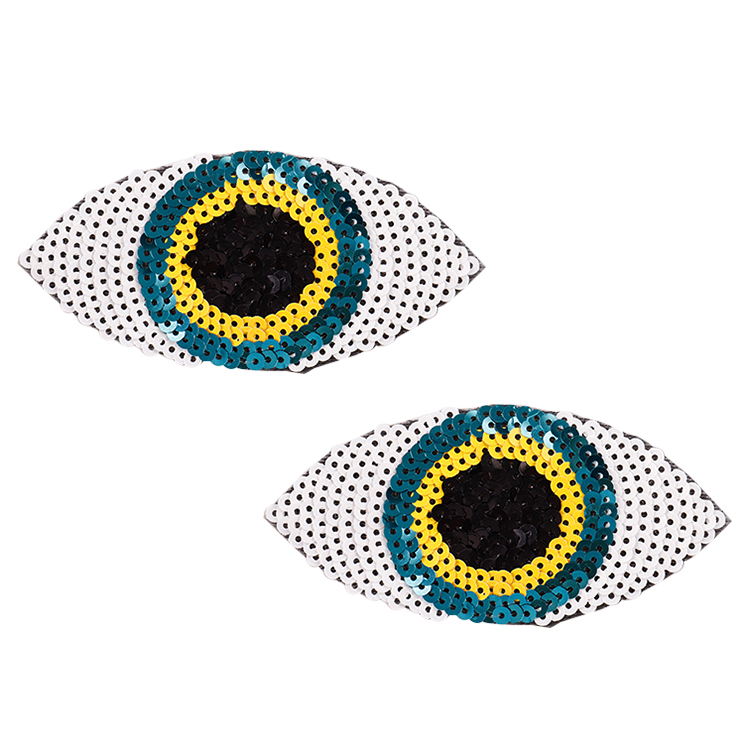
Ornaments are chosen for looks, then constrained by mass, edge behavior and what happens at the skin. Feathers are almost weightless, which is why they are common; their risk is a stiff quill or wire core that reads as a sharp point unless the tip is capped. Hot-fix rhinestones add sparkle for little mass, but the resin glue dot cures hard and uncut edges catch. Laser-cut film gives graphic shapes cheaply; watch cut-edge curl and film memory lifting off the base. Yarn and chenille look soft and are usually the heaviest per square centimeter once they absorb perspiration. Molded silicone ornaments stay compatible with the base because they are the same material family. Metal charms are the exception that needs paperwork.
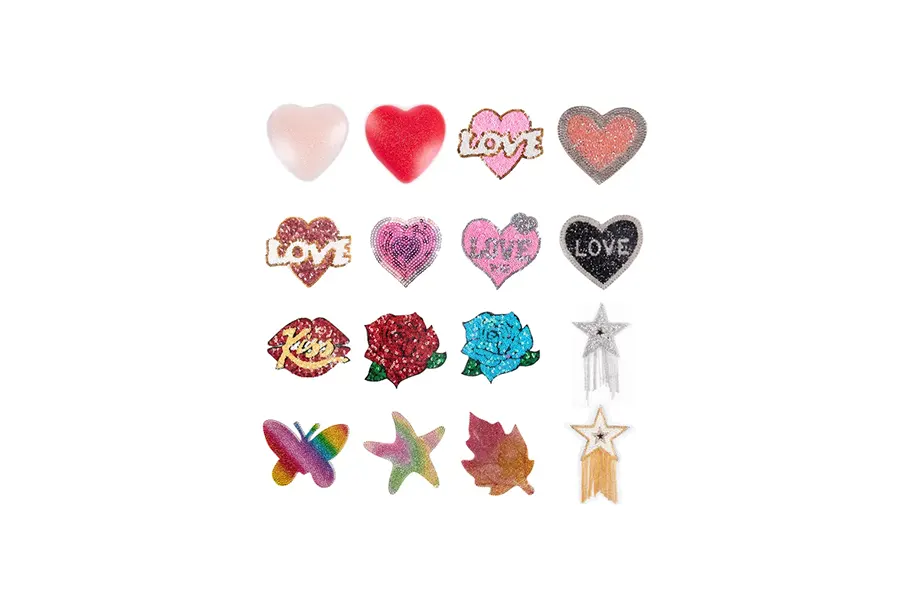
One rule keeps the paperwork manageable: anything touching skin belongs in the same test scope as the base, and a certificate should name the component rather than only the finished product. Schemes such as OEKO-TEX STANDARD 100 publish limits across textile components and accessory parts, which gives you shared language when you ask an ornament supplier for evidence. Do not translate any certificate into a safety or sensitive-skin claim on your own packaging; that wording needs its own test backing. Detachable ornaments also raise a loose-parts and labeling question, so decide at design stage whether an ornament is fixed or removable and let that drive the pack and the warning text. ال rose, mushroom و alien covers show what a fixed ornament looks like once it is set onto a self-adhesive face.
Tassel Geometry You Lock at Sample Stage
Two tassels can share one description and behave completely differently on the body. Record strand length relaxed and under tension, because fringe stretches. Record strand count and filament type, because both set mass per pair, and mass per pair sets the force on the adhesive edge. Record the attachment point, since an offset loop rotates the piece and loads one edge. Record the connection tab footprint, where lift starts, and the tip finish, because fraying tips produce the shed fibers in the return pile.
Then treat length and base size as one decision. A longer tassel on a smaller base increases the moment arm on the same adhesive area, so if length grows, either base area, coverage pattern or intended wear duration has to change. Where a factory holds measured values for base thickness, hardness steps or mass per pair, put them on this sheet as the comparison baseline; where they are not documented, mark them [待确认] rather than estimating.
Which items freeze before bulk production, and what evidence each gate needs, follows the sequence in how to approve adhesive bra samples. For a decorative line the extra gate is the ornament foot: bond strength is tested on the physical sample, not on artwork.
Custom Design Intake for a Decorative Line
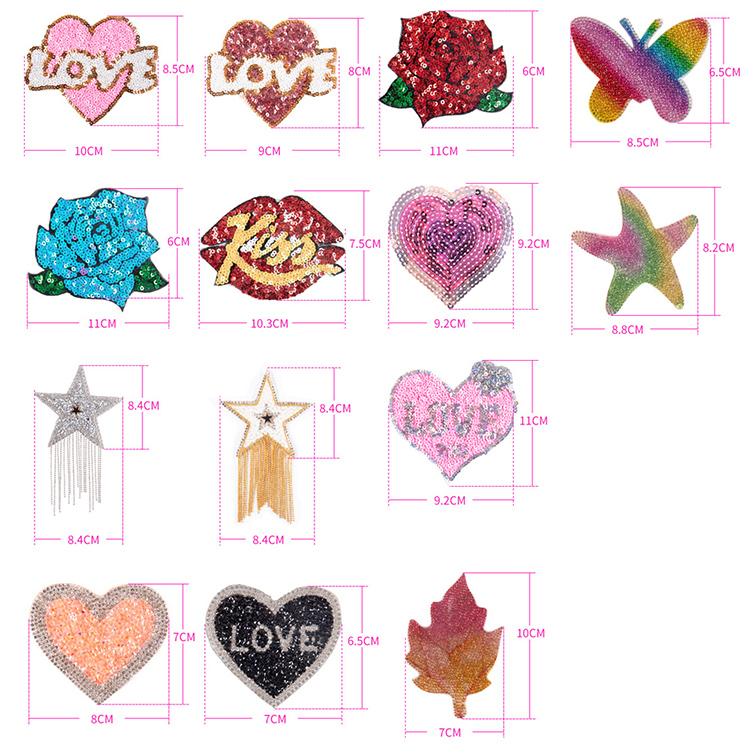
A decorative brief fails as a mood board and works as six supplied items. Send vector artwork with the cut line, because the cut line defines the die. Send an ornament placement map showing where mass sits relative to the base edge. State color count as separated colors, since each separation carries setup. Confirm the base against the mass you are about to hang on it. Specify the attachment type for anything not self-adhesive. Send packaging card artwork in the same round, because card structure changes pack dimensions and carton count.
Two boundaries: print and decoration routes on product, color count and matching tolerance are covered in custom packaging for silicone nipple covers, and the forming and assembly sequence that determines achievable tolerance is in how to customize a silicone bra in a factory. Neither is repeated here.
Seasonal Build Plan Without Dead Stock
Decorative demand arrives in pulses: costume season in autumn, show and gifting demand through winter holidays, and festival and wedding windows in late spring. Each has a retail receive-by date earlier than first-time buyers assume. Work backwards: take the date the shelf needs the product, subtract retail inspection and ticketing, subtract transit, subtract production, then see whether your ornament complexity fits what is left. Plume sorting, stone setting and hand attachment usually drive the tail of that calculation more than the base, because the base repeats something already tooled. The window logic is in custom silicone bra lead time, and a single seasonal design is worked through in custom nipple Santa hats wholesale.
Then set the drop structure. A test drop of one or two designs across a shallow size and color range tells you whether the retention spec survives real wear; a deep buy on one elaborate design is how decorative lines become liquidation stock. Reorder the design that returns least, not the one that photographed best.
One compliance note belongs here. Costume-adjacent items with textile components sold into the US are commonly asked to meet 16 CFR Part 1610, the standard for the flammability of clothing textiles, and buyers request the report for feathered, fringed or film-based ornaments before accepting a Halloween program. Request it against your actual component, and do not convert a third-party test into your own compliance statement. ال حزب و Halloween decorative SKUs are where these requests concentrate.
Merchandising and the Price Ladder
Four formats cover what a boutique, costume shop or adult retailer stocks: single pairs at an impulse position, three-to-five-pair multi-packs as the core SKU, mixed-ornament packs that let a customer try the range, and boxed gift sets whose card carries the brand.
The economics run against intuition. On public wholesale listings, decorative covers and tassels are quoted around US$0.25–0.38 per pair at 100-pair tier levels — a market reference, not a Xinke quotation. At that level the base is a small share of landed cost; ornament work and the card decide margin. That is why multi-packs and gift sets outperform single pairs for a brand: they convert the same base into a higher ticket without changing its specification. Keep the ladder shallow — entry pack, core pack, one gift set — because every extra price point multiplies colorways, and every colorway multiplies order lines.
A program built on your own artwork and card starts at the فطائر اللحم الحلمة المخصصة service page.
الأسئلة المتداولة
What are nipple tassels used for?
Retail-wise they are decorative covers used where the item should be seen rather than hidden: أداء, costume, festival and novelty gifting. Definition and aliases belong to the guide linked in the first section; the line-building decisions start with attachment method and ornament material.
Are decorative pasties reusable?
Treat reuse as a specification decision, not a product property. A silicone base with a maintained adhesive face normally supports several wears when the ornament stays fixed; a fabric or thin-film face with a light coating, or any design where the ornament is detached and re-set, should sell as single-use. Whichever you choose, test against the wear cycles you intend to state and record the result before pack text is final.
What MOQ should I start with for a decorative line?
Start from the number of order lines rather than one figure: one base, two ornaments and two card formats is already four combinations, produced and packed separately. A common first program is one base across a shallow color range with one hero ornament at a low tier quantity, then a reorder concentrated on the combination with the fewest returns. Comparable public listings often begin around the 100-pair tier; confirm the tier structure that applies to your own specification in writing.
الأفكار النهائية
A decorative line is not a coverage line with decorations added at the end. The ornament changes the load on the adhesive edge, the test scope, the sample gates and the return reasons, and each of those has to be written down before you commit to a colorway.
Build it the other way round: one proven base, a few ornaments whose mass and attachment point you can state in grams and millimeters, a hybrid construction where you want variety without multiplying order lines, and a seasonal plan worked backwards from the shelf.