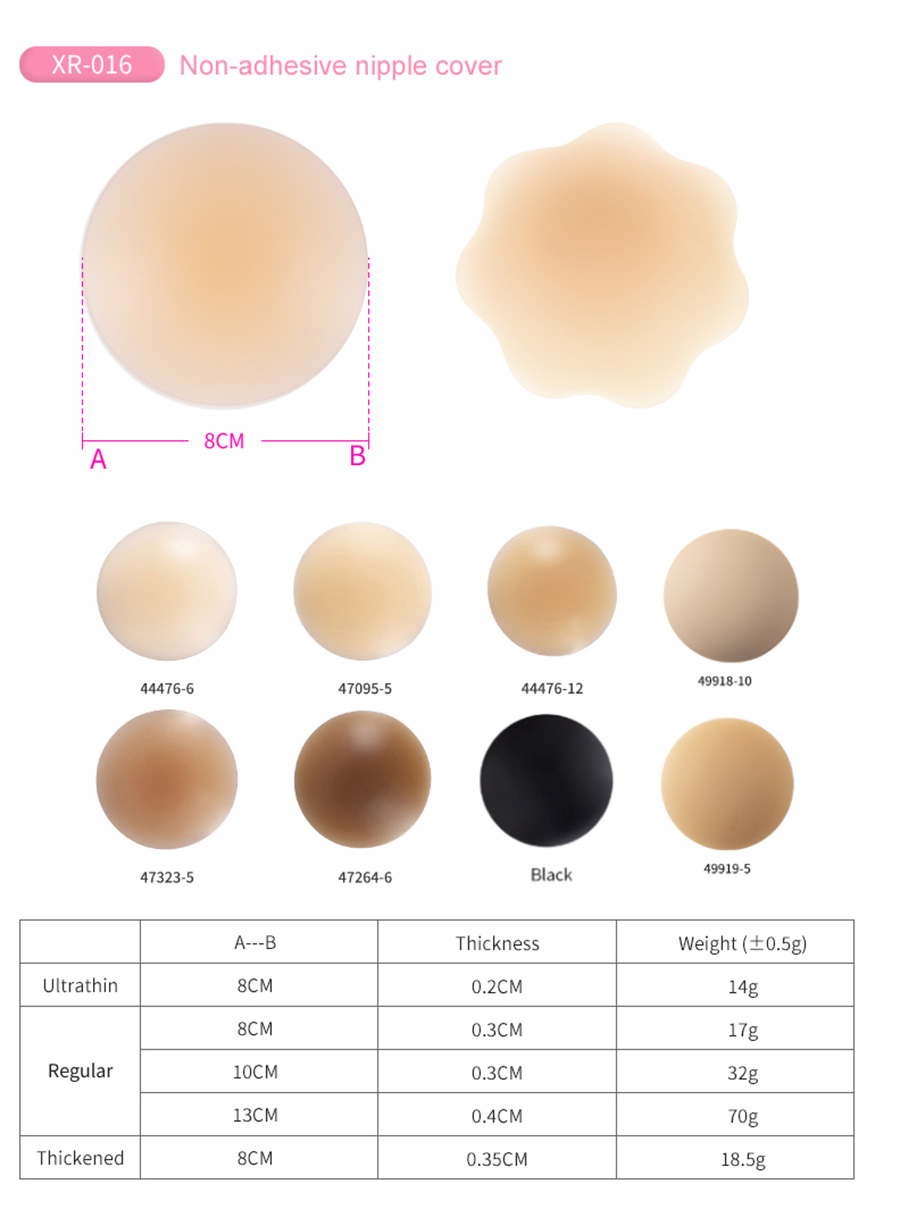
Two forms reach this shelf with different hardware: a shaped silicone pad that sticks to skin, and a panty that carries the volume itself. Separate spec sheets, separate size logic, separate return reasons. Unit prices across them are not comparable.
Six decisions drive the order: pad construction, the three adhesive panty structures, hip grading and placement, shelf-card wording, order quantities by style, and the reuse policy.
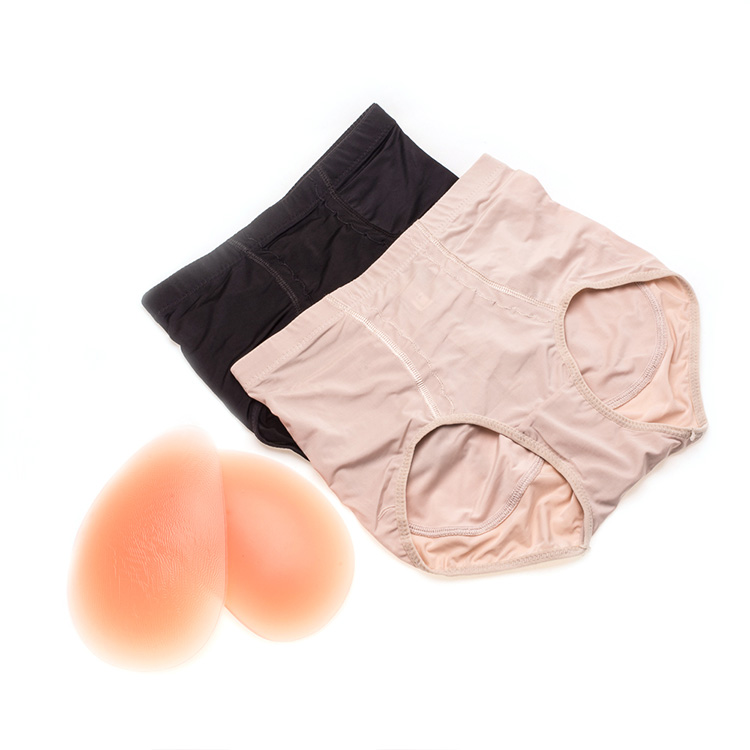
Two Product Forms, One Shelf
A pad has no fabric and no waistband: place it on skin, cover it with any panty. An adhesive panty folds volume into a garment that also supplies retention. That divide makes two documents with separate approval gates.
| Form | Construction parameters to fix | Size logic | Buying decision |
|---|---|---|---|
| Silicone pad, adhesive face | Center thickness, edge taper, adhesive pattern, finish and tone | Contact area and hip curvature only | One tone or a range, one volume step or three |
| Adhesive thong | Rear adhesive coverage, wing placement, front fabric weight | Hip band range plus placement zone | Whether the card states a wear window or only fit |
| High-waisted shorts | Compression panel, pad bonded or pocketed, hem grip | Ordinary apparel grading by waist and hip | Size complaints or hem roll-through, by build |
| Padded brief, removable pad | Pocket opening, seam placement, pad thickness, care label | Garment size multiplied by pad step | One bundled SKU or two linked ones |
Most assortments carry both: pads reach shoppers who keep their own underwear, panties those who want one step and fabric at the waist.
Both forms sit under the butt lift panty category. Split your shelf the same way: one page for the volume component, one for the finished garment, each stating the hip sizes it covers.
Pad Construction: Four Parameters You Freeze Before Sampling
Thickness and volume steps. Public listings state center thickness in millimeters beside a projection description; read those as market reference points, not a Xinke quotation, and only against a named garment. Each volume step adds tooling, Farbabstimmung, and inspection work. Xinke’s own pads listing carries two SKUs, 200G and 300G; which measurement each labels is [待确认].
Edge taper. Taper is how fast the piece thins from center to perimeter, so state the finished edge thickness and the distance over which the thinning happens. Edge lift usually begins where the taper stops, and a blunt rim can print a line through a fitted skirt before the adhesive fails.
Adhesive face. A full-face coating typically gives higher initial grab and a longer wear window but resists repositioning and raises removal friction. A striped or dotted pattern usually converts at lower cost and lets the wearer re-set the piece, but it loads the perimeter and can show lift earlier. Choose against intended wear duration.
Finish and tone count. Gloss reads as shine through thin jersey; matte disappears on camera but picks up lint during packing. Every extra nude tone is another pigment batch, approval round, and inspection standard, so start shallow. Der silicone butt lift pads page lists skin, transparent, or a custom color. Other body areas follow different logic, In bra inserts by application.
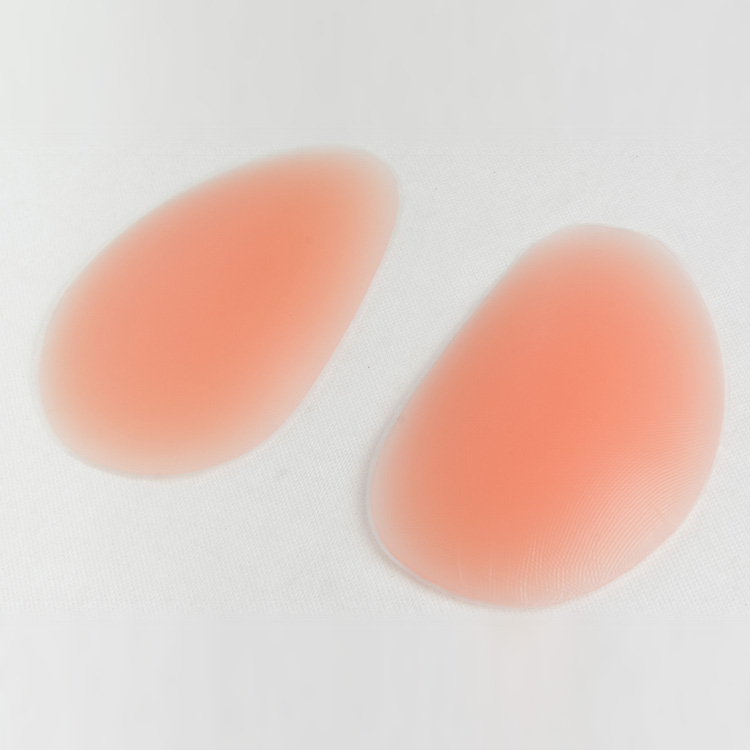
Three Adhesive Panty Structures
Adhesive panties look like one family on a price list and behave like three products. What matters is where holding force comes from: skin adhesive, fabric tension, or a pocket.
Thong-Style Adhesive
A thong has a narrow rear panel and no waistband to lean on, so retention comes from adhesive at the hips or a coated rear panel. It reads cleanest under fitted garments and is the most placement-sensitive; an optimistic wear claim becomes returns fastest here. Der invisible adhesive strapless thong is the minimal-band build.
High-Waisted Shorts
Shorts move the load onto the body instead of glue: fabric body, compression panel, and volume from a molded pad or pocketed insert. They are the most forgiving form for new buyers and easiest to grade as apparel. Watch hem roll under a thin dress, and confirm whether the volume is bonded, pocketed, or fabric only, as in the high waisted butt lifting shorts panty build.
Padded Brief and Three Retention Architectures
Side-wing adhesive puts glue only at the hip points: light and repositionable, but dependent on two small contact areas. Full adhesive lining coats the inner rear panel for stronger hold and a flatter profile, at the cost of residue and fixed positioning. Removable pads in a pocket let the garment launder and the pad be ordered by thickness, adding an assembly step and a pocket inspection.
Where pad position must not move, the bonded padded butt lifter panties construction fixes it at the factory instead of leaving it to the wearer.
Hip Size Runs and Placement Geometry
A hip size run does not derive from bust grading. Hip grading maps a circumference band to a garment pattern and to the contact area a pad needs. Bust grading describes volume inside a strap-supported shell; the hip has neither that band nor that shell.
For pads the real variables are curvature and contact area. The same thickness reads differently on a shallow curve than on a pronounced one, because curvature decides how much tapered perimeter stays in contact as the wearer moves. Keep pad step separate from size step. Internal grading bands are [待确认].
Placement is the third variable: the shelf card controls it. A piece set high adds upper fullness, centered adds projection, low along the fold reads as roundness. A placement shift of two centimeters can read as loudly as a volume step, so publish a placement diagram and name the garment it assumes. Chest-side grading belongs to the bra size chart for manufacturers.
Adjustable constructions move the fit burden from the size run to the wearer. Der adjustable butt lifter padded panty shows the trade: fewer sizes to stock, one more mechanism to inspect, and a fit instruction that must read clearly on pack.

Shelf-Card Wording: What You May Describe and What You May Not
You are buying a fit product and a garment, not a treatment. Anything describing a change to the body needs clinical substantiation a silicone and textile product does not carry; anything you can measure or demonstrate on a sample is fair description.
| Claim area | Wording you may use | Wording to avoid | Evidence to keep |
|---|---|---|---|
| Silhouette | Visual lift under a named garment, Abdeckung, projection measured on sample | Reduces fat, reshapes the body, permanent contour change | Photographed sample with garment and lighting stated |
| Fit | Hip band range in cm and inches, placement, pad step | Einheitsgröße, suits every shape | Measured grading table and per-size fit notes |
| Adhesion | Wear window tied to skin prep and activity; repositionable or fixed | Will not lift, holds through any activity | Wear log in hours across sizes sold |
| Care and reuse | Wear cycles you tested; removable pad and launderable garment where built | Reusable indefinitely, lasts without limits | Cycle test recorded per construction |
| Einhaltung | Component test reports named by lot | Medical, therapeutic, or slimming claims; unearned approval wording | Third-party reports on the actual component |
Garment components sold into the US market are commonly asked to meet 16 CFR Part 1610, the standard for the flammability of clothing textiles, and buyers request the report against the fabric and pad actually shipped. Skin-contact textiles often carry an OEKO-TEX STANDARD 100 ask on dyes and finishes. Ballaststoffgehalt, care symbols, and label gates are covered in lingerie packaging compliance.
Write each claim beside the measurement that supports it. If that column is empty, the sentence does not go on the card. Der butt lifter silicone panty page leads on material, a stated 150% strecken, and an M/L run rather than a body-change statement.
Mindestbestellmenge, Probenahme, and Cost Drivers by Style
Cost moves on different axes for the two forms, so one quote line covers nothing. For pads: tooled shape, volume steps, adhesive conversion, tone count, Verpackung. For panties: fabric lot minimums, grading across sizes, bonded or pocketed pad, and rear-panel sewing operations.
Order quantities key on the same axes. A pad program multiplies by shape, volume step, and tone; each new thickness step is a new tool. A panty program multiplies by style, Farbe, and size run, because factories commonly set a minimum per size. Market listings for comparable hip pads show entry tiers near 10 Zu 50 pieces per style; every hip-line page on this site states 1,000 pairs per item. Plan depth against the higher number.
Sample gates should mirror the sheet rather than the artwork: a measured cross-section for taper and thickness, the adhesive face as a physical swatch, and wear samples on the smallest and largest hip sizes; edge behavior at the extremes is where returns start.
Lead time splits the same way: fabric sourcing and sewing drive the garment tail, tooling and color approval the pad tail. The window arithmetic is in custom silicone bra lead time.

Zurück, Hygiene, and Reuse Expectations
Return reasons cluster in five places, each with a different owner. Edge lift through fabric belongs to the taper specification. Size complaints belong to the hip grading table and how the range reads on the card. Residue or early adhesive fatigue belongs to the face pattern and the wear window you published. Shade mismatch belongs to tone photography, and pad shift to pocket tolerance.
Log the dominant reason per style after the first drop: the fix differs by driver, and the mix tells you which construction to reorder. Which driver dominates for Xinke’s own SKUs is [待确认] pending a style-by-style review.
Hygiene is a packaging decision before it is a retail policy. Adhesive items that contact skin generally ship individually wrapped or tamper-evident, and many intimate channels treat an opened unit as non-returnable, which favors a shallow sealed drop over a deep buy.
Treat reuse as a specification, then test it. A pad with a maintained adhesive face can carry several wears—the adhesive thong page states up to 20 wiederverwendet, a supplier figure to test—while a coated panel needs its own cycle record. Cleaning and re-tacking sit in wie man einen Klebe-BH wieder klebrig macht.
Häufig gestellte Fragen
What is adhesive underwear?
In buying terms, underwear that holds on skin without a waistband or straps for retention: either a silicone piece with a pressure-sensitive face, or a fabric garment with adhesive wings or a coated inner panel. Briefs that stay up on elastic alone are ordinary apparel, not an adhesive item.
What is a strapless thong?
A thong with no waistband and no straps to carry it, held by adhesive at the hip points or a coated rear panel. The label signals three questions before sampling: placement zone, adhesive coverage pattern, and the wear window the pack claims.
Can chicken cutlet pads be used on the hips?
Not as a substitute worth quoting. Chicken cutlet pads are tapered inserts built for a bra shell on the chest, so their curvature and edge profile assume a strap-supported pocket. The hip is a larger, differently curved surface with no shell, so the same geometry tends to lift at the perimeter. Shapes are described in what chicken cutlet bras are.
Do butt lift pads show under tight clothing?
Whether the perimeter reads through fabric depends on finished edge thickness, taper gradient, garment weight, and placement, not on material alone. A longer taper with a thinner finished edge helps, as does a placement zone that keeps the top edge clear of the waistband. Both belong on the sample sheet.
Letzte Gedanken
Treat this category as two lines that share a shelf, not one line with two finishes. The pad line is won on cross-section: thickness step, taper gradient, adhesive pattern, and a tone range to inspect. The panty line is won on structure: where retention comes from, and whether volume is bonded or pocketed.
Write the specification before comparing prices, put every claim beside the measurement that supports it, and log return reasons by style after the first drop. That is how a hip line becomes a repeatable reorder instead of a season of markdowns.