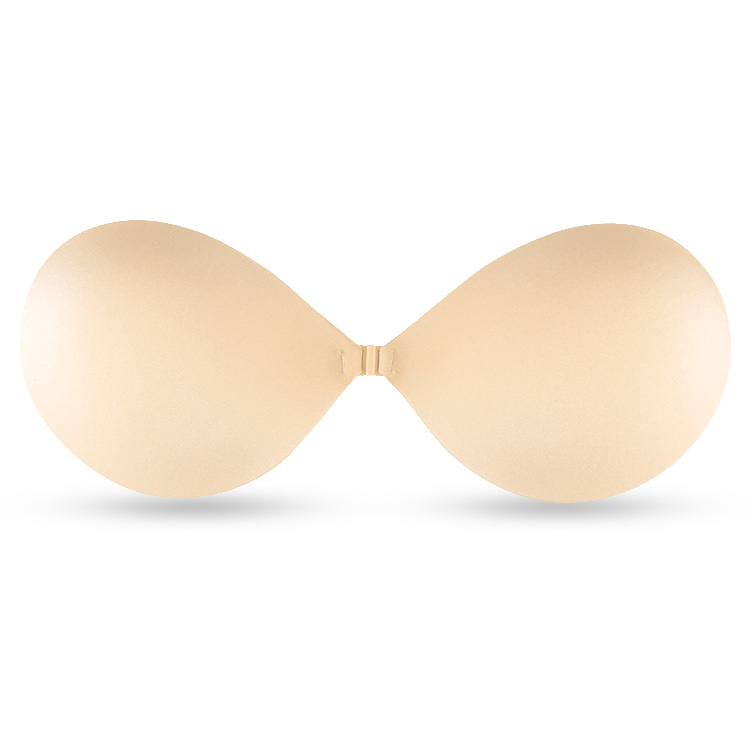
Evaluating silicone nipple cover quality before placing a bulk order can help brands reduce product returns, adhesion complaints, and inconsistent shipments. Buyers should assess the silicone body, Klebeleistung, Kantenkonstruktion, and supporting test reports rather than relying solely on a supplier’s material claims.
This guide explains how to compare factory samples, review relevant skin-contact test reports, conduct wear and wash trials, and identify common manufacturing defects before approving mass production.
Check Silicone Material Quality
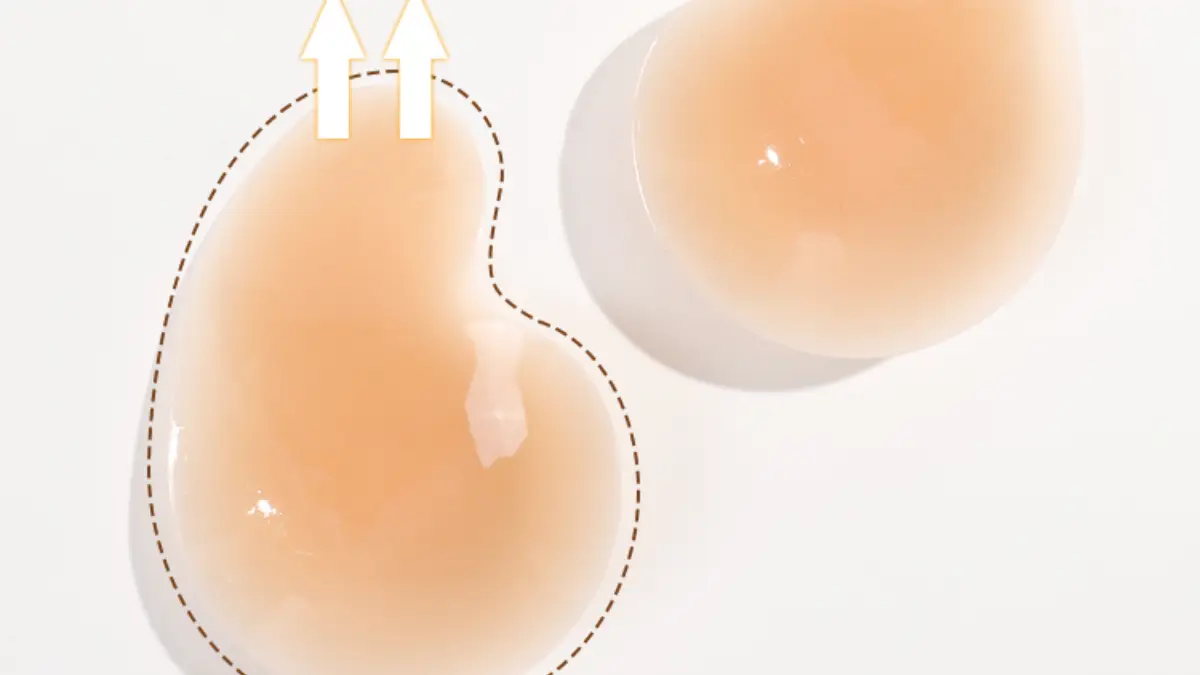
The silicone body affects comfort, Aussehen, Haltbarkeit, and fit. Vor der Freigabe der Produktion, buyers should review the relevant documents and compare finished samples with the agreed specifications. Our guide to medical-grade silicone vs regular silicone explains the material terms and documents buyers may encounter when comparing suppliers.
| Quality Check | What Buyers Should Verify |
|---|---|
| Material Details | Silicone formulation, curing method, hardness, Farbe, and intended skin-contact use. |
| Test Reports | Confirm that relevant reports match the product, Materialcode, Hersteller, Testmethode, and date. |
| Surface Quality | Check for strong odors, oily residue, bubbles, pinholes, black spots, scratches, and uneven color. |
| Shape and Dimensions | Compare diameter, Dicke, dome height, Kantenabschluss, and pair symmetry with the approved sample. |
| Elastic Recovery | Confirm that the silicone returns to its original shape without cracking or permanent deformation. |
| Rückverfolgbarkeit der Batch | Record raw-material batch numbers and compare production units with the approved sample. |
Test reports provide supporting evidence but do not replace finished-product inspection. Use the same documented criteria for sample approval and bulk-production checks.
Develop Reliable Nipple Covers for Your Brand
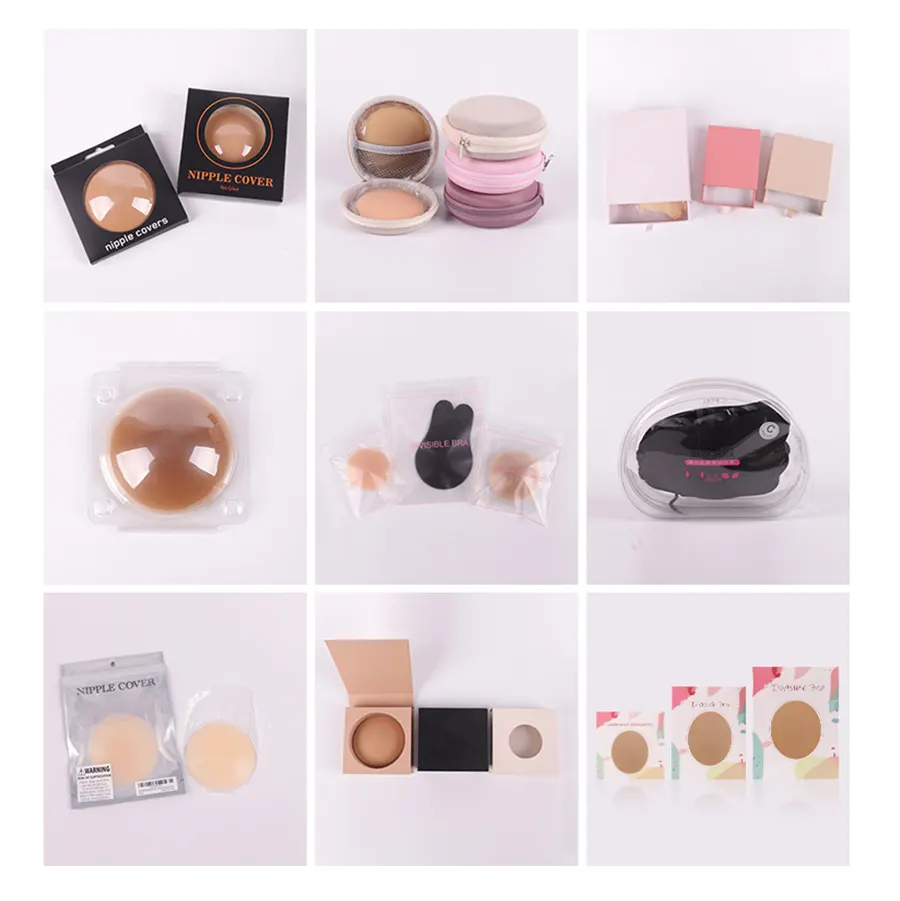
Evaluate Adhesive Performance
A nipple cover adhesive should provide reliable hold without causing excessive discomfort or residue during removal. The required adhesion depends on the product design, intended wear conditions, and whether the cover is reusable or disposable.
| Quality Check | What Buyers Should Evaluate |
|---|---|
| Klebertyp | Silicone gel adhesives are commonly used for reusable covers, while acrylic pressure-sensitive adhesives are often used for disposable or stronger-hold products. Confirm that the formulation suits the intended application. |
| Test Reports | Verify that relevant skin-contact reports match the finished product, adhesive formulation, Hersteller, Testmethode, and intended contact conditions. |
| Peel, Tack, and Shear | Compare removal force, initial grip, and resistance to slipping under documented test conditions. |
| Wear Performance | Check for edge lifting, Verschiebung, Unbehagen, or adhesive residue during movement, Schweiß, Hitze, and clothing friction. |
| Wash Recovery | For reusable covers, evaluate adhesion after an agreed number of cleaning and drying cycles using a documented washing method. |
| Surface Inspection | Look for bubbles, uneven coverage, exposed areas, Kontamination, oily residue, or misaligned protective film. |
Wear time and reuse claims should be based on testing of the specific finished product. For a closer look at peel, wear, and wash-cycle evaluation, see how we test adhesion durability before bulk production.
Inspect Shape and Edge Design
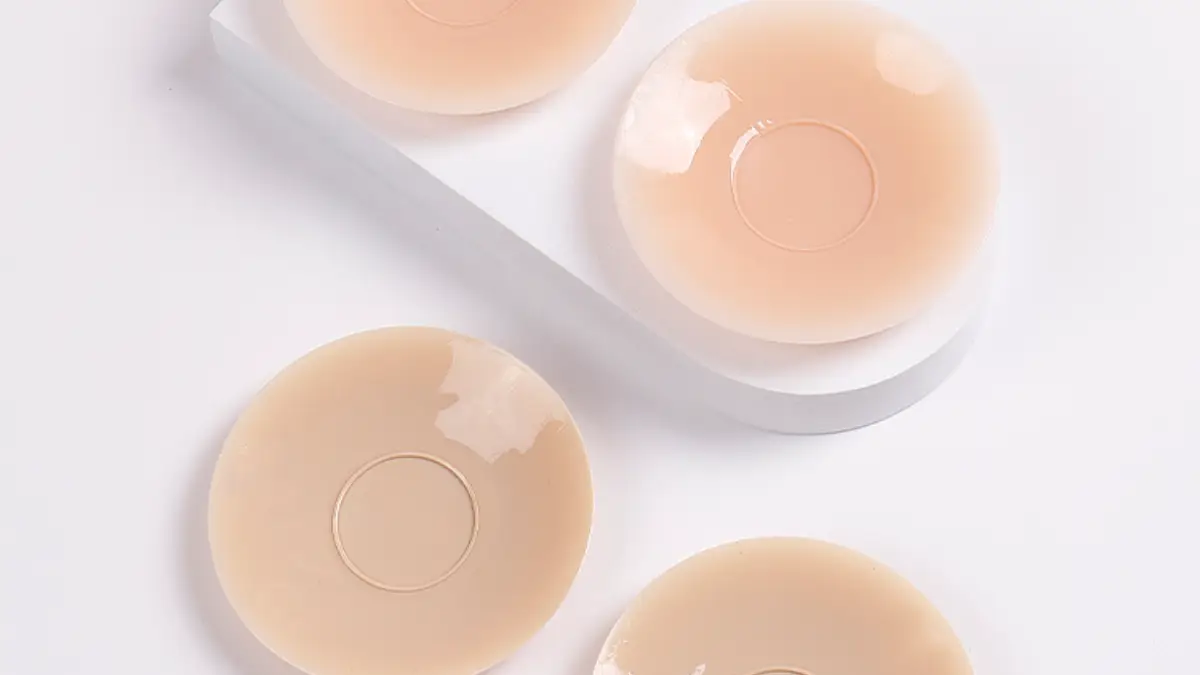
The shape, Dicke, and edge profile affect how well a nipple cover fits the body and remains concealed under clothing. A poorly matched curve may create air pockets or lifting, while thick or uneven edges can remain visible under fitted or lightweight fabrics.
Check Dimensions and Edge Tapering
There is no single set of dimensions suitable for every nipple cover. Diameter, dome height, center thickness, and edge thickness should be defined according to the product design, intended coverage, and target fit.
- Body-Conforming Curve: Check whether the cover follows the intended body contour without creating obvious gaps or excessive pressure.
- Tapered Edge: Confirm that the thickness decreases gradually toward the perimeter. The required edge thickness should be defined in the specification for each model rather than taken from a universal industry benchmark.
- Balanced Dome Profile: The dome should provide sufficient coverage without creating a visible raised area under clothing.
- Pair Consistency: Compare both pieces for differences in diameter, Form, Farbe, dome height, and resting profile.
- Dimensional Tolerances: Record the approved measurements and acceptable variation in the product specification before mass production.
Inspect Edge Quality and Fit
Edge defects can affect comfort, Aussehen, and adhesive contact. Inspection criteria should be based on the approved sample and agreed between the buyer and supplier.
- Perimeter Inspection: Check the entire edge for excessive flashing, burrs, Tränen, notches, rough areas, or inconsistent thickness.
- Edge-Lifting Test: Conduct wear trials under defined conditions to assess lifting during movement, Schweiß, Hitze, and contact with clothing. Set the test duration according to the product’s intended wear claim.
- Dimensional Measurement: Use suitable tools to measure diameter, center thickness, Kantenstärke, and dome height. More advanced systems may be used when tighter tolerances are required.
- Shape-Recovery Test: Gently stretch and compress the sample, then check whether it returns to its original profile without warping or cracking.
- Material and Process Review: Evaluate the finished product rather than assuming that one silicone process automatically produces better edges. Edge quality depends on the formulation, mold design, curing conditions, and process control.
Document the measurements and visual limits of the approved sample so that production batches can be checked against the same criteria.
Review Manufacturing Defects
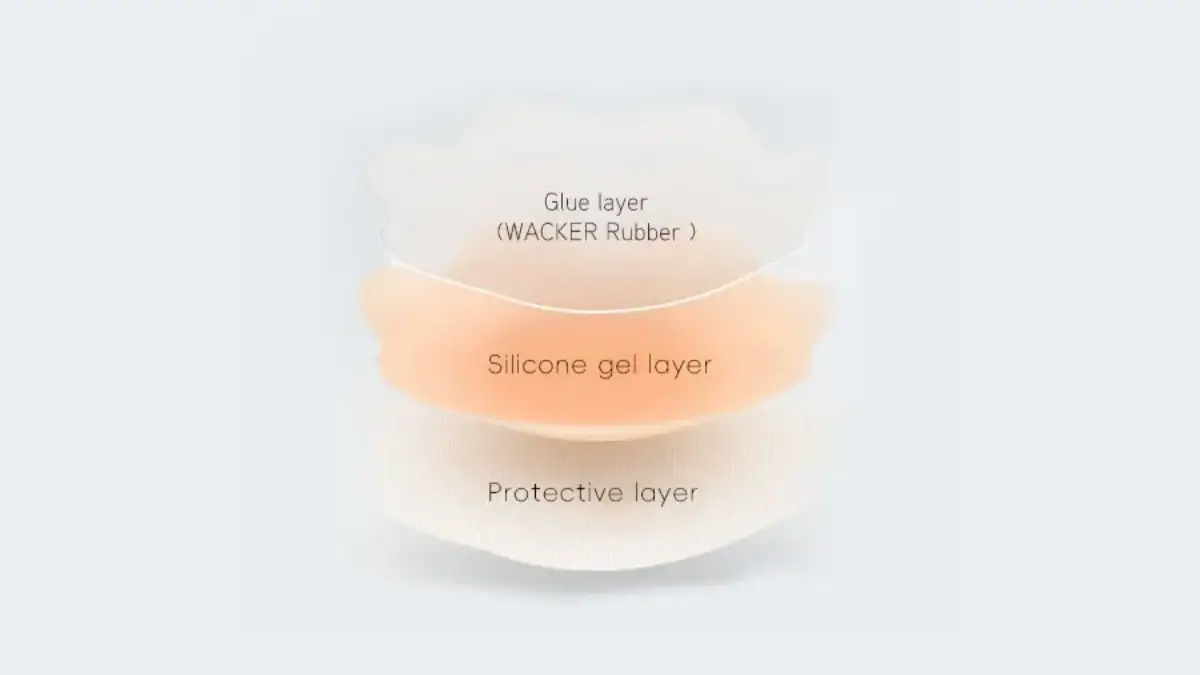
A clear defect standard helps buyers determine whether bulk production matches the approved sample. Inspection requirements should define each defect, its severity, the measurement method, and the agreed acceptance limit before production begins.
Classify Common Product Defects
Defects may affect appearance, fit, adhesion, Haltbarkeit, Hygiene, or user safety. Buyers should include reference photos and measurable limits in the inspection specification wherever possible.
- Adhesive Defects: Uneven adhesive coverage, exposed areas, bubbles, weak or excessive tack, Kontamination, adhesive transfer, and misaligned protective film.
- Silicone Body Defects: Pinholes, trapped bubbles, Tränen, cracks, deformation, inconsistent thickness, excessive mold flashing, and incomplete shape recovery.
- Edge and Dimensional Defects: Rough or damaged edges, inconsistent tapering, incorrect diameter or dome height, and noticeable differences between the two pieces.
- Surface and Color Defects: Black spots, fibers, scratches, oily residue, uneven color, Vergilbung, or unexpected odor.
- Packaging Defects: Missing liners, incorrect labels, damaged containers, mismatched pairs, or contamination introduced during packing.
Classify defects as critical, major, or minor according to their effect on safety, function, Aussehen, and saleability. If an AQL-based inspection is used, the buyer and supplier should agree on the sampling level and acceptance limits for each defect category. These values are commercial inspection criteria, not fixed automatically by an ISO standard.
Investigate Causes and Prevent Recurrence
Defects may result from material preparation, Formen, Heilung, Kleberanwendung, handling, or packaging. The likely cause should be investigated before a rejected batch is reworked or reproduced.
- Material Preparation: Inadequate mixing or degassing may contribute to bubbles, inconsistent curing, or surface defects.
- Molding and Curing: Worn molds, unstable temperatures, incorrect curing conditions, or poor demolding practices may cause flashing, deformation, Tränen, or uneven thickness.
- Klebstoffauftrag: Uncontrolled coating weight, uneven application, Kontamination, or incorrect curing conditions may affect tack and adhesive consistency.
- Handling and Packaging: Staub, fibers, fingerprints, liner misalignment, and surface damage may be introduced after molding if handling controls are insufficient.
- Process Control: Visual inspection, dimensional measurement, adhesion testing, and comparison with an approved reference sample can help identify process variation before shipment.
When a defect is found, record the product model, batch number, defect type, Menge, and production stage. Ask the supplier to document the root cause and corrective action, then verify the improvement with new samples or follow-up inspection. This creates a more reliable quality record than relying only on a final visual check.
Verify Test Reports and Compliance Documents
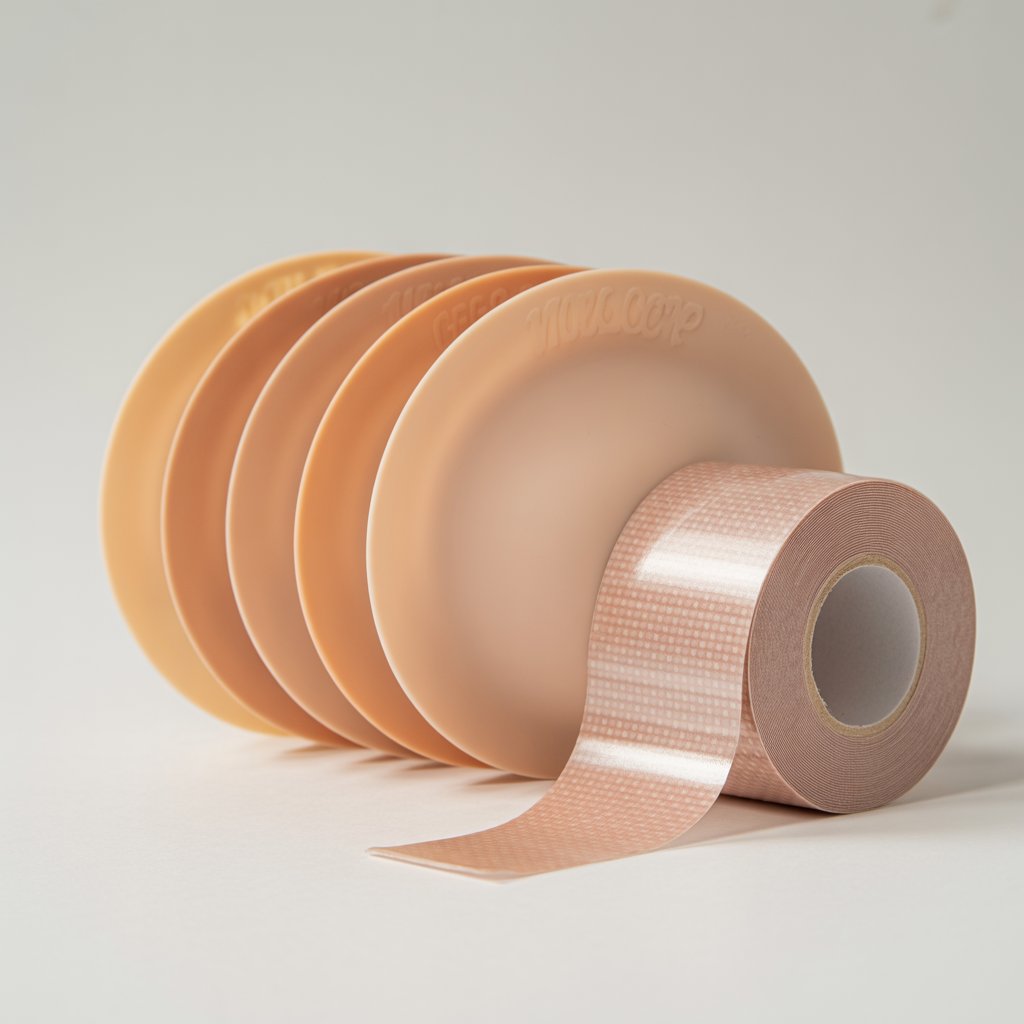
No single certificate proves that a nipple cover is safe, dauerhaft, and compliant in every market. Buyers should understand what each document covers and confirm that it matches the supplied material or finished product.
| Document | What Buyers Should Know |
|---|---|
| ISO 10993 Test Reports | Relevant methods may assess irritation, sensitization, or cytotoxicity. Confirm the tests performed and whether the report covers the finished product. |
| FDA Food-Contact Documents | These may provide information about a silicone raw material but do not prove that the finished nipple cover is FDA-approved or suitable for prolonged skin contact. |
| LFGB Test Reports | These may support food-contact material assessment, particularly in Germany, but are not general EU certifications for nipple covers. |
| REACH Documentation | For EU-bound products, request relevant restricted-substance reports or supplier declarations. REACH is a regulatory framework, not a product certification. |
| OEKO-TEX STANDARD 100 | This may apply to textile backings, fabric layers, or labels. Check that the certificate covers the exact material, Anbieter, and product class. |
| ISO 9001 Certificate | This covers the factory’s quality management system. It does not certify the safety or performance of an individual product. |
When reviewing a document, check the product or material code, applicant, Hersteller, production location, Testmethode, Labor, Berichtsdatum, und Zielmarkt. Incomplete reports, altered files, or mismatched product and factory information should be investigated before bulk approval.
For EU-bound products, buyers can review the European Commission’s REACH overview to understand how chemical restrictions may apply to consumer products.
Sample Testing Checklist
Vor der Genehmigung der Massenproduktion, evaluate finished samples using criteria agreed with the supplier. Acceptance limits should reflect the product specification and intended claims rather than universal industry benchmarks.
| Testing Area | Was zu überprüfen ist | Akzeptanzbasis |
|---|---|---|
| Shape and Surface | Abmessungen, symmetry, Kantenabschluss, bubbles, scratches, Tränen, Rückstand, und sichtbare Verschmutzung. | Approved sample, technical drawing, and agreed defect limits. |
| Material Documents | Silicone details, material codes, batch numbers, and relevant test reports. | Documents must match the supplied product and manufacturer. |
| Klebeleistung | Erster Halt, peel behavior, slipping, Kantenanhebung, Entfernungskomfort, and residue. | Documented test conditions and intended product claims. |
| Wash and Reuse | Adhesion recovery, Formbeständigkeit, edge condition, and surface cleanliness. | Agreed cleaning method and number of test cycles. |
| Verpackung | Correct pairs, clean liners, accurate labels, and undamaged containers. | Approved packaging sample and purchase order. |
| Batch Inspection | Critical, major, and minor defects found in the production lot. | Agreed sampling plan and acceptance limits. |
Record the product model, batch number, test conditions, Ergebnisse, and approval decision. If AQL inspection is used, define the sampling level and acceptance limits before production.
Häufig gestellte Fragen
How can you tell if silicone nipple covers are genuinely medical-grade?
A “medical-grade” claim cannot be verified by appearance or packaging alone. Ask for third-party reports that match the silicone, Klebstoff, Hersteller, und fertiges Produkt. Where relevant, check which ISO 10993 tests were performed, such as irritation or sensitization testing.
How many times can you reuse high-quality silicone nipple covers?
The number of uses depends on the adhesive, cleaning method, storage conditions, and product design. Check the manufacturer’s tested reuse claim rather than relying on a universal number, and replace the covers if they lose adhesion, deform, or cause irritation.
What is the best way to clean and store reusable nipple covers?
Wash them gently with lukewarm water and mild, oil-free soap, then let them air-dry on a clean surface. Einmal trocken, replace the protective liner and store them flat in their original container. Alkohol, Öle, harsh detergents, and lint-producing materials may damage or contaminate the adhesive.
Letzte Gedanken
Nipple cover quality cannot be judged by a “medical-grade” label or a single test report. Buyers should compare finished samples, define measurable requirements, and confirm that bulk production matches the approved design. Checking material documentation, Klebeleistung, edge consistency, wash recovery, and common defects before shipment can reduce avoidable complaints and returns.
Start with a sample order to evaluate our silicone construction, adhesive hold, fit, and edge finish under your intended use conditions. We can also support private-label packaging and adjust product specifications to suit your market. Kontaktieren Sie unser Team to request samples, discuss your requirements, or receive our latest product catalog.