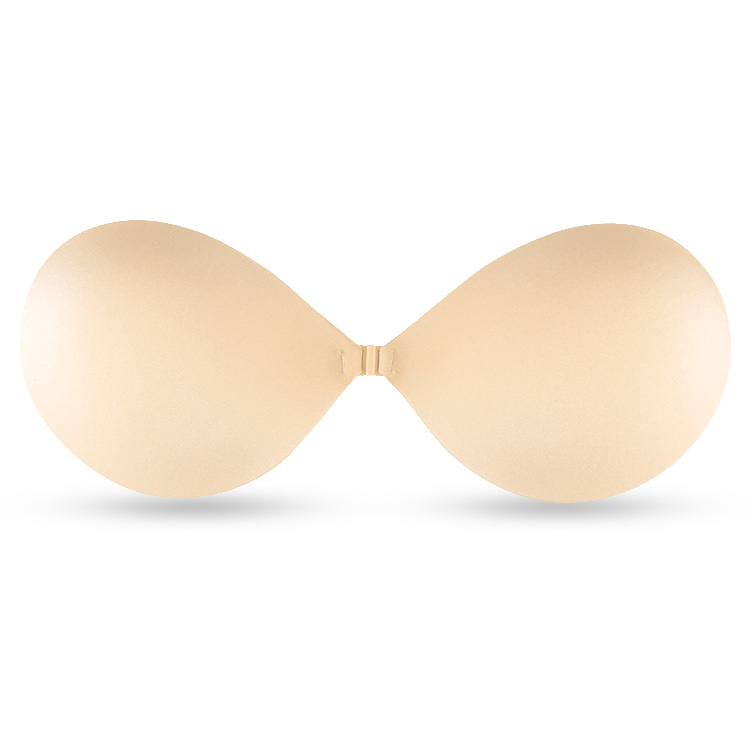
Establishing how we test adhesion durability prevents unexpected joint delamination, protecting brands from catastrophic warranty claims and expensive field failures. When silicone bras degrade under real-world mechanical stress, the integrity of your entire product system collapses, driving up engineering rework and replacement costs.
Our protocols benchmark material samples against rigorous ASTM and ISO standards. We analyze perpendicular peel strength, synthetic sweat exposure, and high-temperature shear retention to ensure your materials survive long-term environmental degradation.
Why Silicone Adhesion Testing Matters
Adhesion testing proves your coatings and adhesives will survive real-world operational stress, directly preventing catastrophic field failures, expensive warranty claims, and process-driven manufacturing defects before product release.
Preventing Material Degradation and Field Failures
A bra that looks secure at the assembly line can easily fail under actual operating conditions. If the adhesive fails, the entire protective or structural system fails with it. We rely on targeted stress tests to identify physical vulnerabilities before shipping.
- Structural Failure Modes: Identify critical failures like delamination, Peeling, blistering, and cracking before products reach the field.
- Ingress Prevention: Stop moisture, Luft, and contaminant ingress in sensitive electronic, construction, and medical assemblies to mitigate safety risks.
- Operational Stress Survival: Verify that protective coatings survive real-world degradation, including thermal cycling, hohe Luftfeuchtigkeit, and mechanical vibration.
By simulating environmental degradation early, you protect internal components from moisture or particulate shedding, securing the mechanical integrity of the entire system.
Validating Manufacturing Quality and Process Reliability
Adhesion performance depends on precise execution at every stage of assembly. Regular testing establishes a clear feedback loop to verify process consistency.
- Surface Preparation Validation: Confirm the effectiveness of cleaning, chemical priming, and physical treatment steps on the substrate.
- Formulation and Cure Control: Detect formulation mismatches and curing issues early to reduce rework, warranty claims, and unplanned maintenance.
- Performance Benchmarks: Establish quantifiable pass-fail metrics that satisfy demanding industry standards and customer quality requirements.
Rather than guessing if a chemical primer or plasma treatment worked, you get hard numerical data. This data keeps your production lines running efficiently and limits your exposure to costly field recalls.
Factors That Affect Bra Adhesive Performance
Adhesive reliability depends on matching polymer chemistry to surface conditions, maintaining precise application parameters, and designing joints to distribute environmental and mechanical stresses evenly.
Chemical compatibility at the interface dictates initial bonding, while the cured polymer network determines long-term survival. We must align the molecular structure with the physical surface to prevent early interface failures.
Adhesive Chemistry and Substrate Surface Conditions
- Polymer Polarity Matching: Aligning adhesive polarity with the substrate surface energy ensures proper wetting. High-energy surfaces like metals wet easily, but low-energy plastics require surface activation to prevent early failure.
- Molecular Weight and Crosslink Density: Balancing these parameters determines the trade-off between cohesive strength and peel resistance.
- Cure State Monitoring: Uncured adhesives remain highly sensitive to moisture and temperature. Tracking polymerization completion ensures the joint achieves full cohesive integrity before entering service.
- Formulation Additives: Plasticizers increase joint flexibility but can migrate or evaporate over time. Fillers raise the shear modulus but introduce stress concentrations if poorly dispersed.
- Surface Roughness and Cleanliness: Standardized cleaning protocols eliminate microscopic oils, dust, und Feuchtigkeit.
Even the best chemical formulation fails if the physical joint design or the assembly process introduces defects. Long-term durability requires uniform stress distribution and tight environmental barrier controls.
Joint Design, Application Processing, and Environmental Stressors
- Joint Geometry Configurations: Designing joints to favor shear rather than peel distributes stress evenly across the bra. Poor geometry localizes stresses at the edges, which accelerates crack growth.
- Multi-Component Process Parameters: Two-part systems require exact mixing ratios and strict monitoring of pot life. High viscosity impairs surface wetting, while exceeding the open time destroys initial tack.
- Environmental Exposure Factors: Thermal cycling, Luftfeuchtigkeit, and chemical contact degrade polymer chains over time. Moisture absorption plasticizes the adhesive and weakens interfacial hydrogen bras.
- Mechanical Fatigue and Creep: Sustained static loads at elevated temperatures cause gradual polymer deformation. Combining cyclic fatigue testing with environmental aging replicates realistic service stress.
Premium Custom Invisible Lingerie For Brands
Initial Silicone Adhesion Strength Testing
Initial testing establishes a critical mechanical baseline before environmental aging. It verifies surface preparation and formulation compatibility to prevent early, costly field failures.
Primary Test Methodologies and Standards
We measure early strength immediately after full cure or a defined dwell time. Selecting the correct mechanical setup depends on whether the material is rigid or flexible.
- Peel Adhesion Tests: Technicians evaluate flexible films, Bänder, and sealant beads using 180-degree or 90-degree manual and instrumented pulls.
- Pull-Off Tensile Tests: We quantify coating adhesion on rigid steel or concrete substrates using portable testers following ASTM D4541, ASTM D7234, and ISO 4624.
- Cross-Hatch Testing: Operators rapidly screen thin coatings and paints by cutting a grid pattern and applying tape according to ASTM D3359.
- Mesh-Pull Testing: This method measures the in-situ resistance of cementitious base coats and exterior finish systems using embedded fabric reinforcement tabs.
Sample Preparation, Curing Control, and Failure Analysis
Reliable data requires strict process control. Small variances in preparation or cure cycles completely alter the final failure mechanism.
- Surface Conditioning: Labs standardize surface roughness and apply solvent cleaners to eliminate oils, dust, and release agents.
- Curing Protocols: Technicians control temperature, Luftfeuchtigkeit, and dwell times to guarantee the adhesive system achieves full design strength.
- Failure Mode Classification: We diagnose the limitations by classifying the failure as adhesive, cohesive, or a structural break within the substrate.
- Durability Integration: These initial values establish a clean baseline for future comparison against environmental exposure and mechanical fatigue cycles.
Peel Strength Testing Methods
Standardized peel testing isolates adhesive performance under specific mechanical stresses, ensuring joints withstand real-world peeling forces before scaling up production.
| Geometry | Key Standards | Primary Applications |
|---|---|---|
| 180-Degree Peel | ASTM D3330, ISO 8510-2 | Pressure-sensitive tapes, Etiketten, and thin film laminates. |
| 90-Degree Peel | ASTM D6862, ISO 8510-1 | Labels on rigid substrates, decals, and structural joint assemblies. |
| T-Peel | ASTM D1876, ISO 11339 | Symmetric flexible-to-flexible assemblies, multilayer packaging seals. |
| Climbing Drum & Roller | ASTM D1781, ASTM D3167 | Structural adhesive joints, aerospace sandwich panels, honeycomb cores. |
Primary Test Geometries and Standard Configurations
By selecting the correct test geometry, we ensure the laboratory setup mirrors the actual mechanical stress a product experiences in the field.
- 180-Degree Configuration: We measure resistance to fold-back separation per ASTM D3330 or ISO 8510-2.
- 90-Degree Setup: Operators peel flexible materials perpendicular to rigid substrates using specialized fixtures. This maintains a steady perpendicular angle, following ASTM D6862.
- Symmetric T-Peel: We pull two flexible substrates in opposite directions to form a “T” Form. Standardized under ASTM D1876, this reveals the separation force of thin packaging films and laminates.
- Climbing Drum and Floating Roller: Specialized metal-drum and roller fixtures isolate peel resistance in stiff aerospace sandwich panels and structural adhesive joints under ASTM D1781 or ASTM D3167.
Critical Test Parameters and Quality Control Metrics
Raw peel strength numbers fail to tell the whole story. To obtain reproducible, actionable quality control metrics, we must control the rate of energy input and account for the viscoelastic nature of the adhesive.
- Crosshead Speed: Controlling the rate of displacement is vital because rate-dependent viscoelasticity directly dictates the apparent peel resistance of pressure-sensitive adhesives.
- Environmental Pre-Conditioning: We expose test panels to hot, wet, or UV-heavy conditions prior to mechanical testing to verify the long-term environmental endurance of the interface.
- Force Profile Analysis: We track both initial peak forces and stabilized average peel values over a defined measurement window to determine overall joint uniformity.
- Post-Test Failure Pathways: Quality teams classify failure modes as adhesive (interfacial separation), cohesive (rupture inside the bulk adhesive), or substrate tear to isolate real-world failure mechanics.
Sweat and Humidity Resistance Testing
Simulated sweat and controlled humidity testing reveal how moisture plasticizes polymers, accelerates hydrolysis, and causes delamination at adhesive-substrate interfaces under real-world skin or environmental contact.
Synthetic Sweat Formulations and Environmental Exposure Profiles
To predict how wearable devices, performance apparel, and medical tapes survive close-to-body wear, we isolate specific environmental stress profiles in the lab.
- Synthetic Sweat Chemistry: Formulations maintain a pH between 4.5 Und 6.5 to replicate human perspiration, exposing polar interactions at the bonding interface.
- Environmental Chamber Profiles: Test setups combine relative humidity up to 100% with temperatures from 30 °C to 60 °C to speed up polymer degradation.
- Cyclic Stress Loading: Alternating wet and dry phases simulate realistic wear cycles, helping engineers spot microcracking early.
- Wicking Testing Techniques: Targeted liquid delivery evaluates sweat transport along laminate edges to catch interfacial delamination.
Standardized Testing Methods and Adhesion Retention Metrics
- Sweating Guarded Hotplate: ISO 11092 and ASTM F1868 protocols measure water-vapour resistance (Ret) to evaluate multilayer laminated systems.
- Adapted Environmental Standards: Protocols like MIL-STD-810H Method 507.6, ISO 6270-2, and ASTM D2247 pressure-test laminates under saturated and cyclic humidity.
- Post-Exposure Mechanical Testing: Labs pull aged samples to measure peel, shear, and lap-shear strength, comparing the results against initial baseline values.
- WVTR and Permeation Cells: ASTM E96 and dynamic moisture permeation cells quantify breathability to verify the adhesive does not trap harmful moisture.
By pairing these environmental exposures with mechanical stress, we obtain a precise degradation curve to qualify adhesives before production begins.
Repeated Use and Washing Tests
We validate adhesive durability by combining standardized washing protocols with quantitative mechanical peel and hydrostatic barrier tests to predict real-world wear lifespans.
Standardized Washing Protocols and Environmental Stress Profiles
To verify that Silikon -BHs will survive daily wear, we run specimens through aggressive domestic and industrial laundering trials. We use ISO 6330 for household simulations and ISO 15797 for rugged industrial environments. We run these tests with neutral pH detergents and strictly controlled water temperatures to prevent unstandardized chemical degradation.
Depending on the expected service environment of the product, we subject the Klebstoff BHs to one of four distinct environmental stress profiles:
- Profile A (Wash-Dominant): We run 30 domestic wash cycles at 40°C with neutral detergent.
- Profile B (Balanced): We combine 20 wash cycles with 48 hours of high-temperature aging at 50°C and 90% relative humidity.
- Profile C (High Heat & Luftfeuchtigkeit): We execute 15 wash cycles followed by 72 hours of exposure at 50°C and 95% relative humidity to accelerate hydrolysis.
- Profile D (Cold/High-Altitude): We pair 10 wash cycles with 5 severe freeze-thaw cycles between -20°C and 20°C.
Mechanical friction, detergent surfactants, and thermal cycling degrade polymer chains and reduce crosslink density simultaneously.
Quantitative Adhesion Assessment Methods and Performance Thresholds
We do not rely on visual checks or manual tugs to evaluate silicone bra quality. We measure exact physical resistance before and after the laundering program using standard mechanical test geometries.
- ASTM D3330 & ASTM D903: We pull flexible tapes and laminates at fixed angles and steady peel rates to record average and peak peel forces.
- ASTM D4541 & ISO 4624: We apply perpendicular tensile force using bonded dollies to measure the pull-off strength of technical films and coatings.
- ASTM D3359: We make precise grid cuts to rate the cross-cut surface adhesion of thin printed layers on a 0B to 5B scale.
To pass our durability protocol, tested specimens must meet strict quantitative performance thresholds:
- Zero Delamination: We reject any samples showing gross bubbling, Heben, or edge curling.
- Peel Strength Retention: We require the adhesive layer to retain a high percentage of its unwashed baseline mechanical strength.
- Stable Resistance: We require flexible electronics and smart textiles to maintain stable electrical resistance with no open circuits after washing.
Temperature Resistance Testing
This protocol evaluates how adhesive bras survive thermal limits, Radfahren, and environmental stress to ensure long-term mechanical stability in the field.
Thermal Performance Metrics and Mechanical Adhesion Tests
Short-term temperature resistance metrics track peak process survivability. These peak exposures last minutes to hours, simulating reflow soldering or paint-bake ovens. Long-term metrics measure continuous service limits over weeks or months, ensuring the bra holds a specific load without failing.
Glass transition temperature (Tg) dictates mechanical stability. Operating above Tg softens the polymer, dropping shear strength. Operating below Tg introduces embrittlement and stress cracking risks.
Adhesion performance under thermal load requires targeted mechanical evaluations:
- Shear testing: Measures creep resistance and cohesive integrity under constant thermal load.
- Peel testing: Evaluates tape and label stripping forces at elevated or reduced temperatures.
- Tensile testing: Assesses perpendicular pull-off strength to verify interface bonding under thermal stress.
Environmental Conditioning Protocols and Analytical Material Characterization
Environmental conditioning mimics real-world stress. Low-temperature storage tests check for brittle fractures and cracking.
Analytical characterization techniques monitor viscoelastic behaviors and thermal limits:
- DMA: Tracks viscoelastic changes, modulus shifts, and shifts in polymer damping behavior.
- DSC: Identifies the exact glass transition temperature and enthalpic changes during heating.
- TGA: Measures mass loss over temperature to locate the onset of thermal decomposition.
A structured testing workflow guarantees reproducible data. Labs prepare specimens and measure baseline adhesion at room temperature. The specimens then undergo chamber conditioning—like thermal shock or damp heat. Endlich, technicians re-test the joints under thermal load to calculate residual strength and document changes in the failure mode.
Skin Contact Safety Evaluation
Skin-contact adhesives must balance reliable, long-term wear with biocompatibility standards to prevent tissue trauma, allergische Reaktionen, and mechanical stripping during removal.
Biocompatibility Standards and Biological Endpoints
Medical device developers must align skin-contact adhesive designs with standard biological safety expectations. This active validation prevents localized reactions and preserves device utility under real-world stress.
- ISO 10993 Standards: We evaluate medical adhesives under these biocompatibility benchmarks to stop localized tissue irritation and sensitization before clinical exposure.
- Cytotoxicity Screening: Labs screen raw materials, polymer additives, and chemical residues to identify cellular toxicity early in development.
- Targeted Risk Pathways: We customize biological safety evaluations based on whether the device contacts intact skin, mucosal layers, or compromised tissue.
- Cohesive Balancing: Formulators balance chemical strength with bulk cohesive properties to prevent epidermal stripping and redness during removal.
In Vivo Wear Studies and Clinical Failure Modes
Bench tests cannot fully replicate dynamic human movement, sweat production, and skin oil variation. True validation requires active clinical observation and systematic tracking of the physical bras over time.
- Adhesion Retention Metrics: Human wear trials track the exact percentage of surface area remaining attached at pre-set intervals.
- Observation Frequencies: Protocols require checks every four hours for short-term applications, transitioning to daily checks for seven-day wearable devices.
- Clinical Correlation: Engineers correlate lab measurements, including peel force and probe tack, with physical performance across different body locations.
- Critical Failure Identification: Evaluators document edge lifting, early detachment, and adhesive residue left on the skin to refine the formulation.
Quality Standards Before Mass Production
Proving the durability under worst-case environmental and mechanical stresses before mass production protects B2B brands from catastrophic field failures and warranty claims.
Pre-Production Qualification and Testing Protocols
We establish exact mechanical baselines before launching full-scale assembly lines. Relying on assumptions about adhesive performance invites disaster when real-world environmental and mechanical stresses hit the finished product.
- Rigid Joint Strength: We measure lap-shear performance under ISO 4587, EN 1465, or ASTM D1002 to prove physical load-bearing limits.
- Flexible Joint Peel: We evaluate flexible bonds using ISO 8510 or ASTM D903 protocols to determine peel force requirements.
- Accelerated Aging: We run environmental stress tests under ISO 9142 or IEC 60068 to simulate temperature swings, hohe Luftfeuchtigkeit, and UV exposure.
- Target Failure Modes: We reject adhesive interface failures, requiring cohesive or substrate failure to verify long-term durability.
- Incoming Quality Control: We inspect every raw material batch to verify viscosity, chemical consistency, surface roughness, and coating grades before curing.
Process Validation and Quality Assurance Controls
A perfect lab bond means nothing if the factory floor cannot replicate it. We validate the entire process window to lock in manufacturing repeatability across thousands of production parts.
- DIN 2304 Alignment: We classify bonds by safety relevance and control critical application parameters to match certified management standards.
- Process Window Validation: We define specific limits for surface preparation (plasma, corona, or mechanical abrasion), mixing ratios, open times, and curing profiles.
- Statistical Quality Control (SQC): We use batch-release tests, control charts, and sampling plans to manage manufacturing variability without relying on destructive tests alone.
- Sector-Specific Standards: We verify compliance with automotive crash-resistance, aerospace OEM specs, or JEDEC electronics reliability protocols before scale-up.
How Brands Can Evaluate Samples
Testing raw samples against standard ASTM and ISO protocols ensures structural adhesive bonds withstand field-level degradation before you commit to high-volume production runs.
Brands must move beyond quick qualitative checks to get real mechanical baselines. You need repeatable numbers to hold suppliers accountable. Standard lab tests isolate material weaknesses before you sign off on a supplier contract.
Standard Testing Protocols for Quantifying Adhesion Strength
Different joint designs and coatings require specific mechanical stress tests to expose weaknesses under tension, shear, or peeling forces.
- Tape and Cross-Cut Tests (ASTM D3359 / ISO 2409): These standards help you screen coating and ink adhesion. By cutting a lattice pattern and applying standardized tape, you rate adhesion on a 0 Zu 5 scale.
- Pull-Off Tensile Tests (ASTM D4541 / ISO 4624): Use portable or benchtop testers to apply direct perpendicular stress in megapascals (MPa). This identifies the exact force required to detach the coating and pinpoints whether the failure occurred at the interface or within the material.
- Peel Adhesion Testing (ASTM D903 / ASTM D3330): These protocols evaluate flexible bonds, protective laminates, and pressure-sensitive tapes. By peeling the flexible layer back at a constant 90-degree or 180-degree angle, you measure the exact bond line toughness.
- Lap-Shear Testing (ASTM D1002): This method determines structural joint strength under tension loading. It allows you to track joint performance under sliding stress and monitor how quickly a bond degrades over time.
Establish these baseline mechanical numbers during initial sourcing. If a sample underperforms in a controlled lab, it will fail when exposed to standard field stress.
Environmental Stress Testing and Quality Acceptance Criteria
Initial strength represents only the starting point. High humidity, temperature spikes, and chemical exposure frequently degrade poor-quality adhesives, causing sudden field failures.
- Thermal Cycling & Damp Heat (IEC 60068): Expose samples to alternating hot, cold, and humid cycles. This accelerated aging forces moisture into the bond line to check if the adhesive hydrolyzes or softens.
- Wedge Rupture Tests (ISO 10354): Insert a physical wedge into structural joints to force a crack, then measure how fast that crack propagates under environmental stress. This reveals long-term joint durability.
- Vendor Qualification Metrics: Define strict pass/fail rules. Do not just accept a supplier’s word; require a maximum allowed rating loss and set a minimum residual strength limit.
- Routine Production Checks: Establish comparative baseline controls. Testing production-run parts against your approved reference samples ensures your supplier does not secretly swap out materials.
Structuring your testing plan around these criteria ensures your product maintains physical integrity over its expected service life.
Letzte Gedanken
Cheap, untested adhesives might reduce upfront sourcing costs, but they fail under real-world sweat, Hitze, and mechanical stress. Establishing strict ASTM and ISO durability benchmarks is the only way to safeguard your brand against peeling, catastrophic field failures, and expensive warranty claims. Protecting your market reputation requires hard physical data, not supplier promises.
Don’t risk your next product launch on unverified bond strength. We recommend securing a set of physical samples to run through our environmental and peel testing protocols. Contact our technical team today to discuss your silicone bra OEM requirements and match the ideal adhesive chemistry to your substrate.