Sourcing silicone bras from China gives brands access to established manufacturing, custom product development, and a wide range of materials and styles. しかし, prices and product photos reveal little about adhesive performance, cup construction, size consistency, or the factory’s ability to reproduce an approved sample.
This guide explains how to compare OEM and ODM options, サプライヤーを確認する, review materials, テストサンプル, and plan production, 梱包, そして発送. It will help you identify the questions to resolve before placing a bulk order.
Why Source Silicone Bras from China
Manufacturing Options and Supply-Chain Access
China has an established supply base for adhesive lingerie, including silicone molding, textile lamination, 接着剤の塗布, mold development, and retail packaging. Working with suppliers that coordinate these processes can simplify product development and reduce the number of vendors involved.
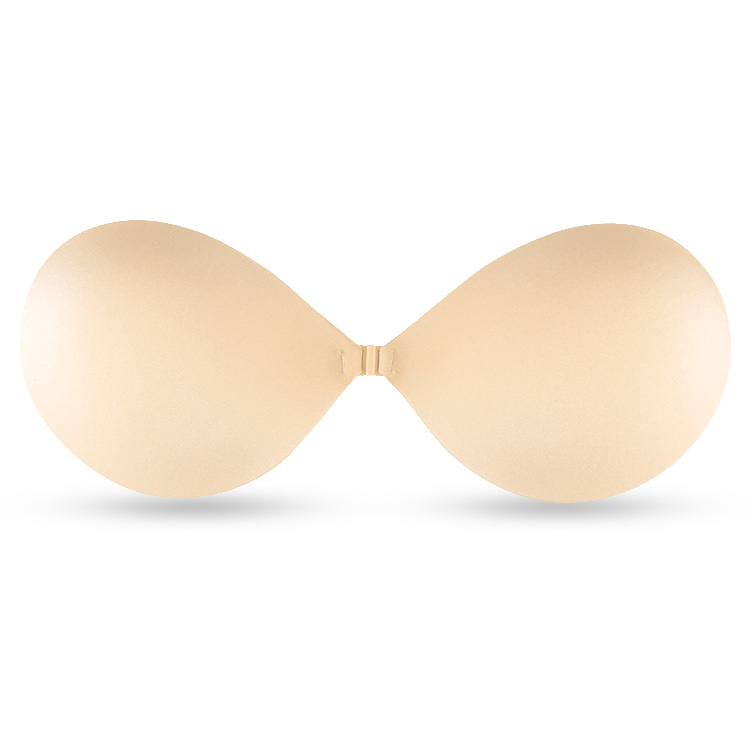
Buyers can choose from ready-made catalog products, private-label options, or fully customized designs. Available styles commonly include strapless, バックレス, 腕立て伏せ, fabric-covered, and reusable silicone bras. Buyers can review our silicone bra designs before deciding whether an existing style, private-label program, or custom OEM project is the better fit for their product line. Pricing and production capacity vary by product structure, order quantity, 材料, and customization level, so each supplier should be evaluated individually.
Product Development and Customization
Experienced manufacturers may support changes to cup shape, 厚さ, 色, adhesive coverage, クラスプ, side wings, と包装. Before approving a supplier, confirm which processes are completed in-house and which are subcontracted.
Cup construction and adhesive selection should reflect the intended garment, 気候, wear conditions, and target price. Buyers can review our guide to choosing adhesive bra materials before confirming the product specification.
Also review the documents that apply to the actual materials and finished product. ISO 9001 relates to a factory’s quality management system, BSCI covers social compliance auditing, およびエコテックス規格 100 may apply to specified textile components. None of these documents alone proves the skin compatibility or performance of a finished silicone bra.
Sample timing should be confirmed in the quotation because it depends on whether the factory uses an existing design or develops new molds, 材料, と包装.
How to Evaluate OEM Factories
Verify the Factory and Its Production Scope
A supplier may manufacture products directly, subcontract certain processes, or coordinate production through partner factories. Before paying a deposit, confirm the legal entity involved in the order and identify where each production stage will take place.
| 確認すべきこと | How to Verify It | Why It Matters |
|---|---|---|
| Business Identity | Compare the company name, registered address, quotation, contract, and payment beneficiary. | Confirms which legal entity is responsible for the order. |
| Production Scope | Ask where molding, 接着剤の塗布, トリミング, 検査, and packaging are completed. | Identifies subcontracted processes and possible quality-control gaps. |
| Factory Operations | Use a scheduled live walkthrough, on-site visit, or independent audit to inspect relevant equipment and production areas. | Shows whether the supplier has the equipment and process control required for the product. |
| Certificate Scope | Check the certificate holder, 工場の住所, covered activities, issue date, and validity. | Prevents unrelated or expired documents from being used as evidence. |
Evaluate Product and Adhesive Performance
Factory documents do not replace finished-product testing. Compare samples using written specifications and test conditions that reflect the intended design, wear claim, and cleaning instructions.
| Test Area | What to Review | Acceptance Basis |
|---|---|---|
| Adhesive Performance | Initial tack, edge lifting, シフトする, removal comfort, 残基, and recovery after cleaning. | Approved sample and buyer-defined wear and wash protocol. |
| Cup Construction | Cup symmetry, 厚さ, weight, edge finish, clasp alignment, and side-wing attachment. | Technical drawing, agreed tolerances, and approved pre-production sample. |
| Size Grading | Dimensions and shape consistency across each cup size in the range. | Approved measurement chart and full-size sample set. |
| Materials and Textiles | Material specifications, batch details, and reports covering the silicone, 接着剤, and fabric components. | Documents must match the supplied material, manufacturer, and finished product. |
Record the results and retain an approved sample for production inspection. Wear duration and wash-cycle targets should be agreed with the supplier rather than treated as universal industry standards.
OEM vs ODM Manufacturing
Compare Development Costs and Design Control
OEM and ODM offer different levels of customization. With OEM, the buyer usually provides a product brief or original design and works with the factory to develop molds, サンプル, 材料, and production specifications. ODM starts with an existing factory design that can be adapted through changes such as color, logo, 梱包, or selected components.
OEM projects may involve mold development, additional sampling, テスト, and longer approval cycles. ODM generally requires less product development, but modification fees and minimum order quantities may still apply. Ask the supplier for a complete quotation covering tooling, サンプル, revisions, テスト, 梱包, and production.
Design and mold ownership must be defined in writing. Paying a tooling fee does not automatically give the buyer ownership or exclusive use. The agreement should specify:
- who owns the product design, CAD files, and molds;
- whether the mold is exclusive to the buyer;
- who is responsible for maintenance and replacement;
- whether the tooling can be transferred to another factory;
- whether the supplier may sell the same or a similar design to other customers.
OEM is better suited to brands that need distinctive cup shapes, サイズ調整, adhesive layouts, or construction details. ODM offers a faster route for testing demand with an existing design, but the level of differentiation is usually more limited.
MOQ, 価格設定, and Lead Times
MOQ, unit price, and lead time depend on the product design and level of customization. To compare suppliers accurately, ask each factory to quote against the same specifications, quantities, packaging requirements, and shipping terms.
| Item | What Buyers Should Confirm | What Can Affect It |
|---|---|---|
| MOQ | Whether the minimum applies per order, スタイル, 色, cup size, pair, or packaging design. | Product availability, material purchasing, production setup, and customization level. |
| 単価 | What the quotation includes and whether prices are EXW, FOB, or based on another Incoterm. | Order quantity, 材料, adhesive system, cup construction, 色, サイズ, と包装. |
| One-Time Costs | Separate fees for molds, サンプル, artwork, テスト, printing plates, and product development. | Use of existing designs versus new tooling and custom components. |
| Sample Lead Time | When sampling begins, how many revisions are included, and who approves the final sample. | New molds, custom colors, material availability, packaging proofs, and revision cycles. |
| Production Lead Time | Whether the schedule starts after payment, material arrival, or final sample approval. | Factory workload, order complexity, quantity, inspection requirements, and peak-season capacity. |
Request quotations at several quantity levels and compare the total order cost rather than the unit price alone. Before placing the order, confirm the payment schedule, sample approval process, production start date, and how delays or specification changes will be handled.
Product Testing and Quality Inspection
Review Materials and Relevant Test Reports
Testing requirements depend on the product construction, intended claims, and destination market. Ask the supplier to identify the silicone, 接着剤, 顔料, 生地, クラスプ, and other components used in the finished bra.
Relevant ISO 10993 test methods may be used to assess biological risks such as cytotoxicity, skin sensitization, and irritation under defined conditions. These reports are supporting evidence rather than a general product certification, and they do not guarantee that every user will remain reaction-free.
For products sold in the EU, review applicable documentation under the REACH Regulation for the silicone, 接着剤, 顔料, textiles, and other materials used in the finished bra. California Proposition 65 should be assessed according to the product’s chemical content and expected exposure rather than described as a universal “free from” test. If textile components are included, request reports or certificates that match the exact fabric, 色, manufacturer, and intended market.
Check each report for the product name, sample description, material code, test method, laboratory, issue date, and manufacturer. Reports from SGS, TÜV, Intertek, or another laboratory are useful only when their scope matches the product being ordered.
Inspect Performance Throughout Production
Use the approved sample and written specifications as the basis for inspection. The testing workflow should cover three stages:
- Before production: Confirm materials, 色, dimensions, cup construction, adhesive layout, クラスプ, side wings, 梱包, and the approved sample.
- During production: Monitor molding or forming conditions, 接着剤の塗布, cup symmetry, edge finish, component attachment, and visible contamination.
- Before shipment: Inspect finished units for dimensions, 外観, 接着性能, shape retention, pair consistency, 梱包, and labeling.
For reusable products, document the wear and cleaning method before testing adhesion recovery. The number of wash cycles and acceptance limits should reflect the product claim agreed with the supplier rather than a universal benchmark.
Test conditions should remain consistent when comparing samples or production batches. This overview of silicone bra adhesion durability testing explains how peel strength, タック, shear resistance, perspiration exposure, and cleaning cycles can be documented.
ISO 9001 may provide evidence that the factory operates a documented quality management system, but it does not certify the safety or performance of an individual silicone bra. ISO 13485 is relevant only when the manufacturer and product fall within an applicable medical-device framework; it is not required simply because a product is intended for sensitive skin.
パッケージング, ブランディング, and Private Label Options
Customize the Product and Protect Its Shape
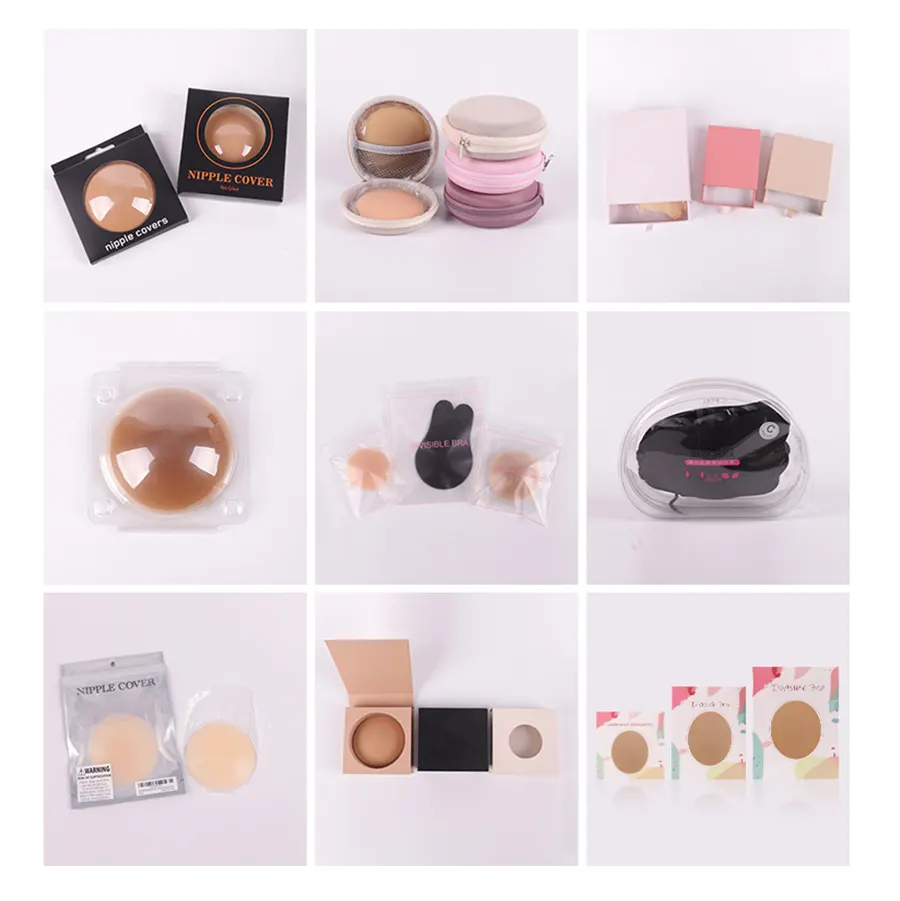
Private-label projects usually begin with an existing factory design and add selected changes such as colors, ロゴ, storage cases, instructions, or retail packaging. Fully customized projects may also involve new cup shapes, 金型, adhesive layouts, クラスプ, and size ranges. Ask the supplier to define which changes are available and whether they affect the MOQ, tooling, 価格, or lead time.
Packaging should protect the cup shape and adhesive surface throughout storage and shipping:
- Inner Support: Use an insert or tray that holds the cups in position without compressing or distorting them.
- Release Liners: Confirm that the liner matches the adhesive area and remains clean, フラット, and easy to remove.
- Outer Packaging: Select a box or container that can withstand stacking and normal transport conditions.
- Material Options: Compare paperboard, molded pulp, and plastic components based on protection, 外観, 料金, and the recycling system in the destination market.
- Storage Instructions: Obtain temperature, 湿度, and shelf-life recommendations from the material or adhesive supplier instead of applying one storage range to every product.
Approve the assembled packaging sample with the product inside it. A printed box may look correct while still allowing the cups, クラスプ, or adhesive liners to move during shipping.
Confirm Labels and Packaging Documents
Labeling requirements vary by destination, product construction, sales channel, and marketing claims. Before printing packaging, confirm the applicable rules with the importer, 小売業者, marketplace, or compliance adviser.
Review the following details:
- product name, スタイル, 色, サイズ, と量;
- country-of-origin marking where required;
- accurate material or fiber information based on the actual construction;
- ケア, storage, and usage instructions;
- warnings supported by the product design and destination-market requirements;
- barcode, importer, manufacturer, or responsible-party information where applicable.
Do not describe the product or a component as “100% silicone” unless the specification supports that claim. Likewise, polybag warnings should follow the rules of the destination market or retailer rather than a single global size threshold.
Ask the supplier to provide relevant packaging specifications, material declarations, test reports, and label artwork for approval. Custom printing, インサート, and packaging tests can affect the production schedule, so confirm their lead times in the final quotation.
配送 & Import Considerations
Choose a Shipping Method and Protect the Product
Choose the shipping method according to the shipment size, delivery deadline, destination, and available budget. Transit estimates should be confirmed with the freight provider because routes, customs clearance, and seasonal capacity can change.
| Shipping Method | Suitable For | What to Confirm |
|---|---|---|
| Express Courier | Samples, replacement items, and small urgent shipments. | Chargeable weight, remote-area fees, customs service, and delivery terms. |
| 航空貨物 | Time-sensitive production orders that are too large for courier shipping. | Airport charges, dimensional weight, customs clearance, and final delivery. |
| Ocean Freight | Larger orders where lower freight cost is more important than speed. | LCL or FCL service, port charges, consolidation fees, 保険, and destination delivery. |
Packaging must prevent the cups from being compressed, folded, or contaminated. Confirm the inner supports, adhesive liners, retail boxes, carton strength, carton dimensions, and stacking method through a packed-sample or transit test. Smaller packaging may reduce freight volume, but it should not distort the product.icone cup is a permanent, unsellable defect.
Confirm Customs Documents and Landed Costs
Import requirements vary by destination and product construction. Review the classification, labeling, and entry requirements with the importer or customs broker before shipment.
| Import Item | 確認すべきこと | Who Should Confirm It |
|---|---|---|
| Commercial Documents | Product description, quantity, 価値, weight, carton count, and shipping terms must be consistent across the invoice, packing list, and transport document. | サプライヤー, buyer, and freight provider. |
| HS Classification | Classify the finished product according to its construction and the destination country’s tariff schedule. | Importer or qualified customs broker. |
| Origin and Labels | Confirm where country-of-origin and other required information must appear. | Importer, 小売業者, marketplace, or compliance adviser. |
| Pre-Shipment Inspection | Define the sample size, defect categories, measurements, performance checks, and packaging inspection before booking the service. | Buyer and inspection provider. |
| Landed Cost | Include product cost, 梱包, inland transport, freight, 保険, duties, brokerage, port or airport charges, and final delivery. | Buyer, freight forwarder, and customs broker. |
Use the supplier’s classification and freight estimate as preliminary information only. Confirm the final HS code, import requirements, duties, and logistics charges with the parties responsible for the destination market before dispatch.
最終的な考え
Sourcing silicone bras from China involves more than comparing catalog styles and unit prices. A reliable decision should consider the supplier’s production scope, 材料, cup construction, 接着性能, sample quality, commercial terms, and ability to reproduce the approved specifications in bulk production.
Start with production-ready samples and evaluate the complete size range, adhesive layout, cup symmetry, edge finish, クラスプ, side wings, 梱包, and wash recovery under documented conditions. 制作チームにお問い合わせください to submit your product brief, discuss OEM or ODM options, and request samples and a detailed quotation.