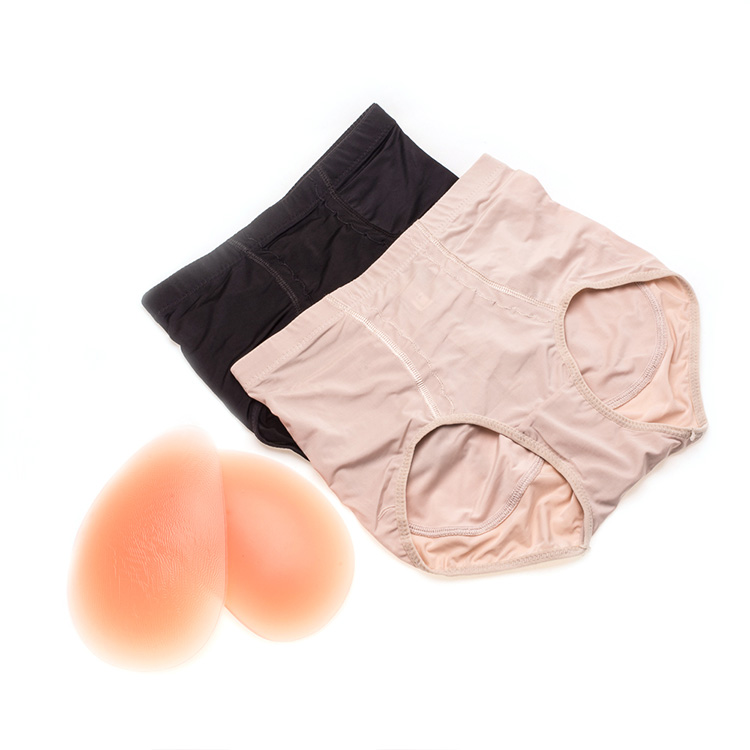
A size run is the costliest decision in an adhesive line and the one buyers plan least carefully. How many steps you launch decides how many order lines you fund, how much of a first drop strands as slow stock, and what share of returns comes back coded as size.
This article stays on that arithmetic: what a size step moves, how shades multiply the grid, and what a size card should state. Ölçüm, cup conversion, and shopper fit advice belong to the pages linked below.

Why Adhesive Intimates Can’t Copy a Band-Cup Size Run
A band and cup size exists because a conventional bra carries two structural variables: a circumference under tension that bears the weight, and a cup volume that encloses tissue, each tooled and graded on its own.
A bonded part has neither. No circumference does structural work, and no volume is enclosed unless the piece is molded with depth. Retention comes from the adhesive face — area, raptiye, and how smoothly the edge meets skin — so the quantities you can specify are footprint, şekil, depth, ve kapsam. The yapışkanlı sütyen kategorisi shows what each dropdown step changes.
Borrowing a letter ladder buys SKUs that match nothing in your tooling: three cup letters on a base tooled at one footprint differ only on the carton. A wrong bonded part reads as edge lift within an hour or an outline through thin fabric.
The Two Sizing Axes Behind Every Adhesive Size Run
Drop the band-cup grid and the category resolves into two axes that consume different resources: one a labeling and artwork question, the other a tooling question. Merge them and you order nine SKUs that behave like four.
Coverage Diameter and Shape Steps
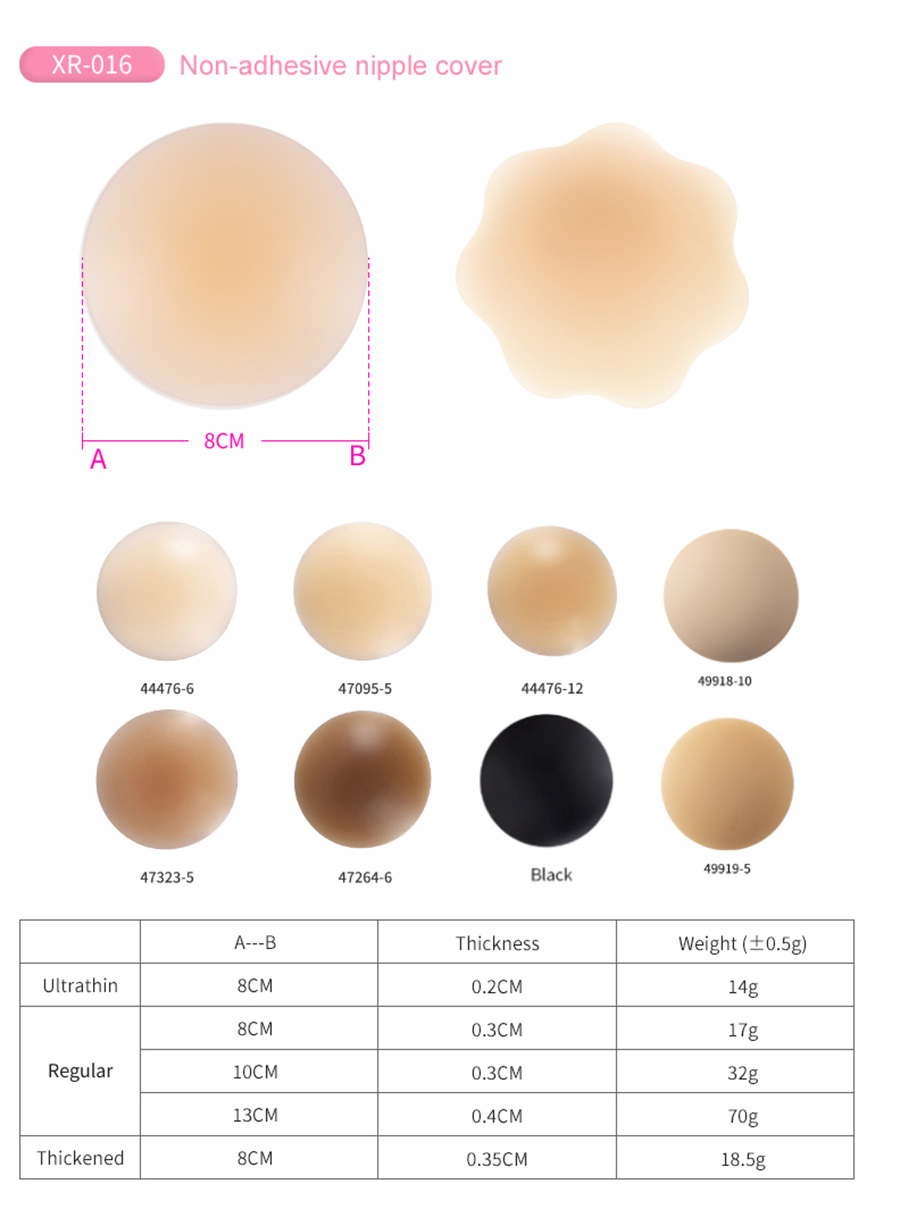
The first axis is footprint — diameter on a round cover, width and length on a wedge, plus the silhouette. It decides coverage and how much outline shows through sheer fabric. Comparable public listings present coverage steps near 7, 8, Ve 10 centimeters — public listing reference points, not an industry standard and not a Xinke specification.
Shape sits on the same axis: a round, a teardrop, and a lifted wedge can share a diameter yet behave as different sizes, so treat a second silhouette as its own size family, like the small-diameter pieces in the silicone nipple cover category.
Load and Capacity Steps
The second axis is load — capacity of the molded form, mass per pair, and the adhesive area holding it. Capacity decides which volumes the form can envelop without floating an edge; mass decides the force on the bonded perimeter when the wearer moves. Comparable listings put unit masses near 16, 20, Ve 32 grams — reference points, not an agreed scale.
The axes interact, and shallow runs fail there: more diameter without a depth step buys area but the same envelope, while more depth without a diameter step pushes the edge onto mobile skin. Ask which axis a quoted step moves — the push up cleavage adhesive bra changes capacity as well as coverage.

How Many Sizes to Put on Your First Order
Conclusion first: launch the fewest steps that keep the gap between adjacent footprints below the tolerance at which an outline becomes visible, then stop until returns say otherwise. Three inputs set that number — channel, units per drop, and return cost.
Channel comes first because it decides whether a wrong size is recoverable. A boutique or department program with a returns desk can carry extra steps, since the shopper exchanges and the retailer restocks. A marketplace or subscription drop has neither, so each added step is stock that can strand.
Units per drop comes second: each step divides a fixed commitment across more lines, and below a workable depth the middle cell runs short within weeks. Return cost is the third input, since without reverse logistics a size return is a write-off plus a review. The plunge push up adhesive bra lists size as a customization item and shows two colours, Beige and Black — a lean run as a buyer sees it.
| Input | Lean run: two to three steps | Deeper run: four to five steps | Consequence to confirm |
|---|---|---|---|
| Channel support | Suits drops with no exchange path. | Only where a returns desk re-sells stock. | Whether a return is restocked or scrapped. |
| Units per drop | Keeps each line deep enough to turn. | Same budget, thinner lines. | Per-line quantity, not the program total. |
| Return exposure | Steps may sit wider than customers tolerate. | Smaller gap; added steps sell least. | Whether each step earns its line. |
| Tooling reality | One footprint is quick to reorder. | Each real depth step can mean another tool. | Mold change, or label change only. |
| Assortment pressure | Reads thin on a shelf facing. | Outer steps usually turn slowest. | Whether the channel scores breadth or turn. |
Planning the Nude Shade Range
Shades behave like sizes in the order book and unlike sizes on the body. Each colorway is another line, another pigment setup, another minimum, so five shades cost what five steps cost. A shade does not reduce a coverage complaint, since the fit is the same in every color.
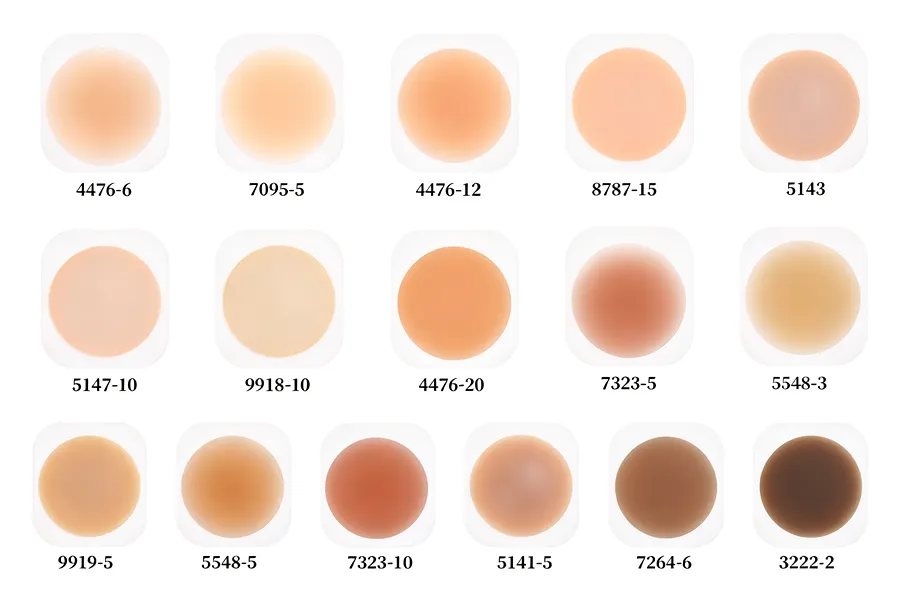
Work in bands rather than depth increments. Three anchors — light, orta, deep — cover most demand, and a fourth earns its line only where the audience documents the need. Where comparable brands list more, the extra positions are undertone variations rather than new darkness levels, which is why five shades can beat five steps on returns.
Two constraints keep the count honest: a shade must hold its appearance across the wear life you claim, and a glossy finish reads lighter than a matte one in the same pigment. Skin-tone positioning and the lab dip discipline sit in silicone lingerie trends and technology, which this article does not restate; borrow its habit of approving shades against specimens on your own base. The multi colors strapless adhesive bra makes that trade-off visible as one line rather than several.
SKU Math: Sizes Times Shades Times MOQ per SKU
SKUs on one base equal size steps multiplied by shade count, and every cell is a separate line to produce, pack, label, and reorder. Commitment is that cell count times the minimum per line — quoted per line, not per program, so widening the grid raises the total instead of splitting it.
The matrix below reads quantities off public wholesale listings for comparable adhesive product: illustrative, based on public listings, not an industry standard and not a Xinke specification. Substitute your supplier’s tier structure before you budget.
| Grid on one base | SKUs | Pairs at an illustrative 500 per line | What the added lines buy |
|---|---|---|---|
| 2 steps x 3 shades | 6 | 3,000 | A defensible first drop: both coverage ends closed, three tone anchors. |
| 2 steps x 5 shades | 10 | 5,000 | Shelf presence through tone breadth, with no change to fit risk. |
| 3 steps x 3 shades | 9 | 4,500 | Only worth it if the third step moves a real dimension. |
| 3 steps x 5 shades | 15 | 7,500 | A full-looking range; the corner cells accumulate slow stock. |
| 4 steps x 5 shades | 20 | 10,000 | Deep single-channel programs only, and only with room for the extremes. |
Two levers keep the grid from running away. Hold one base and let shades be the variable dimension, since a shade line costs less than a tool line. Then skew rather than split: leave corner cells at trial depth and let reorder widen the grid where a cell proved itself.
The private label silicone nipple covers guide lands on a deliberately small launch grid without showing its derivation. That grid is what this arithmetic produces when the three inputs read as a marketplace channel, a fixed budget, and no reverse logistics; answer them differently and the count moves.
Mixed Packs, Replenishment, and the Slow-Moving Edges
A mixed-size pack buys breadth without buying every cell: one SKU, two or three footprints inside. You still fund the same component quantities, and the kit carries only steps you already make. Treat it as a trial instrument.
Replenishment is where the plan earns or loses money. Middle cells move and edge cells stall, yet buyers top up symmetrically. Reorder by measured sell-through per cell; a step with no sell-through and no documented return reason is a label you can retire.
The costliest stock-out is the empty modal cell for a repeat customer who already knows her step, so buffer there rather than across the grid. Edge-visible styles prove it: the thin edge seamless adhesive bra sells on a behavior that is hard to judge on screen, so missing her step costs the repeat, not one sale.
Size-Related Returns and the Fields on a Size Card
A common cause of size-related returns here is a description error. The shopper bought the cell she could interpret, and the part she received had a behavior the listing never stated. Fix that with field design, not advice. Your return reasons and their split belong to your post-mortems; where undocumented, mark it as [待确认] and collect it from the first drop.
Six fields carry most of the work: which axis the step moves; the footprint dimension and silhouette; the edge finish and fabric it disappears under; whether the piece is single-wear or multi-wear; and one chart showing the steps side by side. A visible outline is a coverage complaint filed as a quality one.
Two further fields prevent disputes: what the size label maps to internally, so a retailer can reconcile your chart with hers, and the claim boundary — the card describes the part and promises nothing about a result on a body. Edge lift itself sits in how strapless bras stay up, not on the pack.
Compliance is the layer you should not invent. For textile products sold into the United States, 16 CFR Part 303, the regulation under the Textile Fiber Products Identification Act, sets what a fiber content disclosure must say and how the label attaches. It prescribes no size designation system: the rule governs what a part is made of, while the meaning of the size you print is yours to define. Whether a SKU falls inside the rule at all is a question of construction for your own compliance reviewer to answer.

Sıkça Sorulan Sorular
Nipple cover sizes?
A size step here moves one of two things: a coverage footprint and silhouette, or a capacity and load class. Public listings present footprints as diameter steps and molded styles as depth steps. Confirm which axis each quoted step changes; a step that moves neither is a label.
Silicone bra size chart?
A chart for a bonded part translates body measurements into a footprint and a capacity, which is a different exercise from grading a band. The method and conversion tables belong to the bra size chart guide for manufacturers.
Is it better to go down a size for a strapless bra?
That is a wear question with a shopper-specific answer, and it belongs to the fit pages — see strapless bra size versus regular bra size. The buying side is spacing: keep the steps tight enough that no one falls between two.
How many shades should a first order include?
Start with light, orta, and deep, and add positions only where your channel documents the need. A shade multiplies the grid exactly as a step does: three shades across two steps is six funded lines, five shades is ten.
Son Düşünceler
An adhesive size run is arithmetic — of order lines rather than bodies. Two axes are what you can tool, three inputs decide how many steps to fund, and every shade multiplies that grid the way a step does.
Launch the smallest grid whose steps are real, skew the depth instead of splitting it, and write a card that states what each step moves. That keeps a first program reorderable, so the second order follows sell-through per cell rather than a chart borrowed from a soft-bra line.