Choosing a nipple cover supplier involves more than comparing prices and product photos. Buyers also need to understand the factory’s experience, materiales, adhesive process, customization limits, and quality controls before placing an order.
This guide covers the practical questions to ask about production, test reports, muestras, precios, capacity, and delivery. The answers can help you compare suppliers and identify unresolved risks before approving bulk production.
Questions About Factory Experience
Working with factories that understand skin-safe adhesive assembly prevents costly field failures. Real experience shows in their QC processes, not their sales pitch.
Sourcing skin-contact wearables requires a deep dive into actual manufacturing capabilities. A general garment factory cannot handle specialized silicone curing or adhesive coating. You need to ask targeted questions to separate experienced manufacturers from brokers.
Key Questions to Evaluate Past Production and Team Expertise
Use these direct inquiries during your vetting process to evaluate whether a team possesses the technical skill required for your order:
| What to Check | Questions to Ask | What to Verify |
|---|---|---|
| Manufacturing Experience | How long have you produced silicone or adhesive skin-contact products? | Relevant product history, production records, and similar finished samples. |
| Technical Team | Who will manage production and quality control for the order? | Access to production, engineering, and QC staff—not only the sales contact. |
| Problem Resolution | Can you describe a recent production problem and how it was corrected? | Clear corrective actions, follow-up records, and measures to prevent recurrence. |
| Control de calidad | Which inspections are performed during production? | Incoming material checks, in-process controls, and final inspection procedures. |
Scale Your Brand With Premium Invisible Lingerie
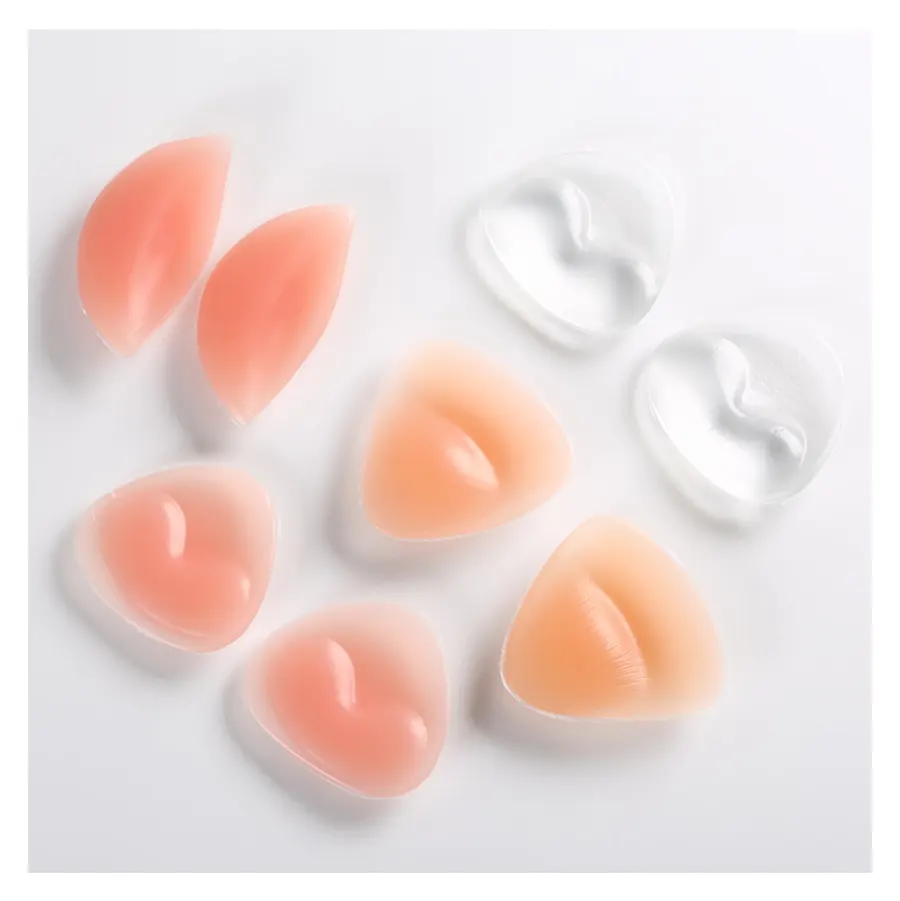
Questions About Materials and Adhesives
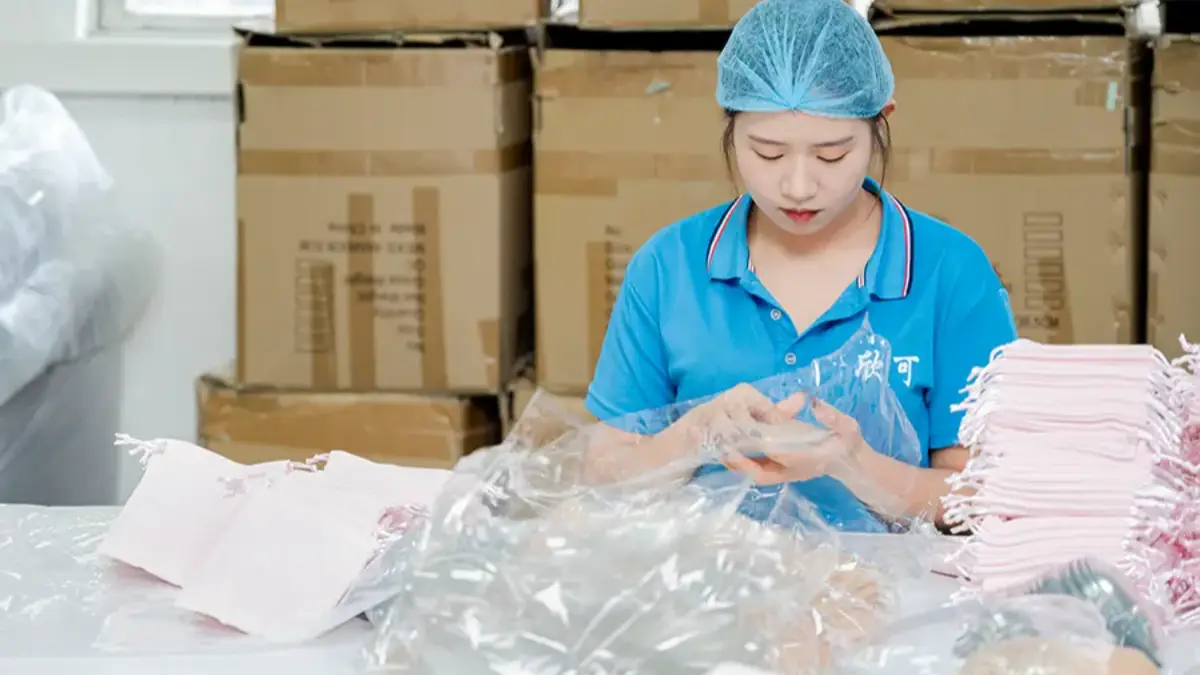
Material specifications, relevant skin-contact test reports, and product-specific wear testing provide a stronger basis for comparing nipple cover samples.
Evaluating Silicone and Adhesive Materials
Ask the supplier to identify the silicone formulation, curing method, hardness, pigments, and adhesive type used in the finished product. Terms such as “medical-grade” or “food-grade” should be supported by material specifications and relevant test reports.
Inspect samples for strong odors, oily residue, bubbles, uneven adhesive coverage, and uncured or unusually sticky areas. If the design has a non-adhesive center, confirm its size and position against the approved specification.
Reviewing Safety and Performance Reports
Request reports that match the finished product, modelo, materiales, and manufacturer. Relevant ISO 10993 tests may include cytotoxicity, skin sensitization, and irritation, but they assess specific biological risks under defined conditions rather than guaranteeing that no user will experience a reaction.
For products sold in the EU, ask the supplier for relevant documentation under the REACH Regulation. Confirm that the reports cover the silicone, adhesivo, pigments, and other materials used in the finished product.
Wear time and reusability should be supported by product-specific wear and wash tests. For EU sales, treat LFGB or food-contact reports only as supporting material information—not proof of finished-product skin compatibility.
Questions About Product Customization
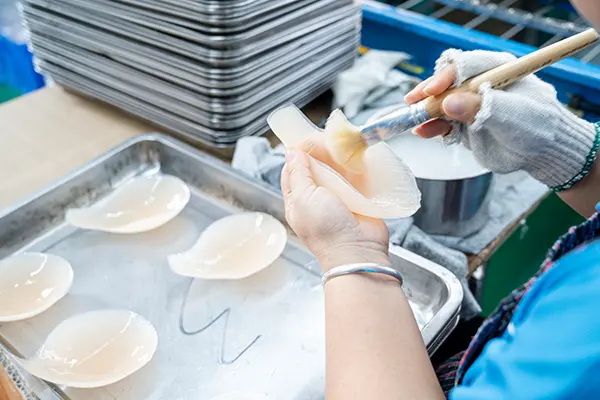
Sourcing customized nipple covers requires auditing technical limits, material grades, and commercial terms to protect margins and avoid skin safety liabilities.
Technical Customization Capabilities and Material Options
Antes de firmar un contrato de fabricación, you must establish where the factory’s technical capabilities end. Vague promises of full customization usually fall apart when you introduce non-standard curvature or unique edge profiles.
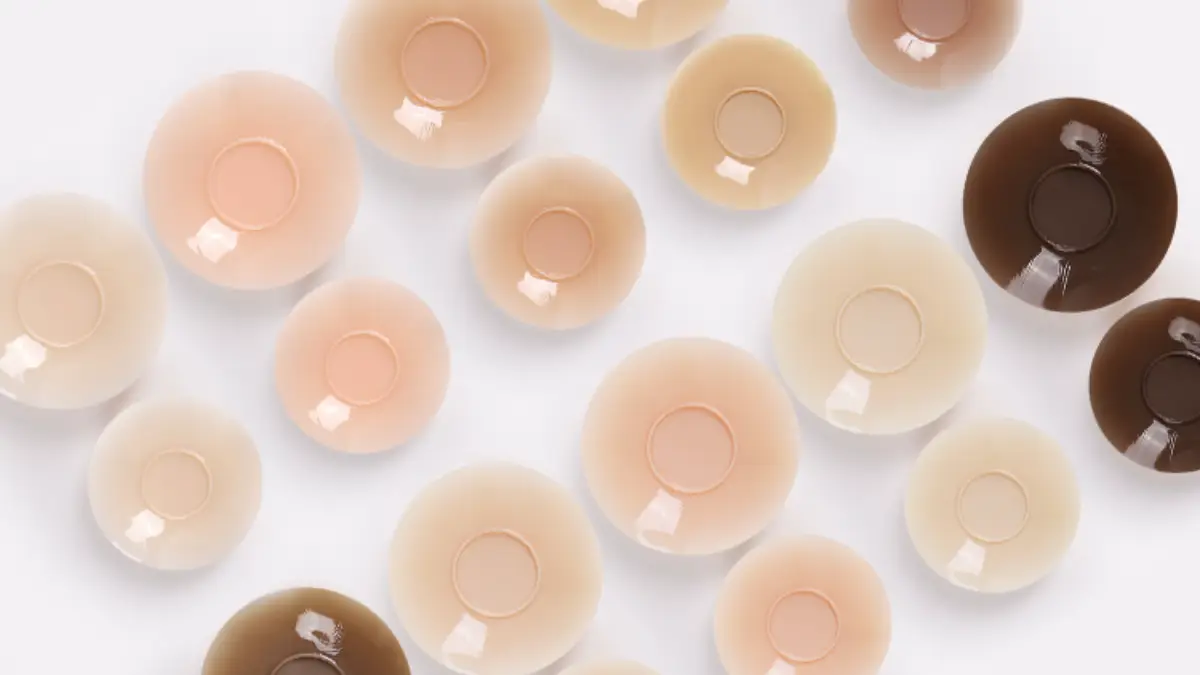
Customization Area What to Ask What to Confirm OEM or ODM Can the factory develop custom molds, or only modify existing products? Design support, tooling ownership, available changes, and development process. Tamaño y forma Which diameters, curves, thicknesses, and edge profiles can be produced? Technical drawings, tolerances, sample measurements, and production limits. Materiales Which silicone, adhesivo, pigment, and fabric options are available? Material specifications and reports that match the finished product. Bandera Are standard shades, Pantone matching, and translucent options available? Color samples, tolerances, minimum quantities, and consistency between pairs. Herrada Can logos be molded, engraved, printed, or added to the packaging? Logo position, durabilidad, artwork format, setup cost, and approved sample.
Packaging can also affect the MOQ, plazo de entrega, and protection required during shipping. Buyers developing retail-ready products can review this guide to custom packaging for silicone nipple covers before confirming inserts, protective liners, boxes, and labeling requirements.
Questions About MOQ and Pricing
MOQ and pricing in nipple cover sourcing scale directly with customization. Stock orders require minimal commitment, while custom runs demand larger volumes to offset setup costs.
Sourcing nipple covers requires a clear understanding of how manufacturing setups dictate minimum order quantities. Your entry point depends on whether you buy off-the-shelf styles or build a custom product from scratch.
Direct Questions for Evaluating Supplier Quotes
Do not accept a surface-level quote at face value. Run every manufacturer proposal through a strict vetting process to expose hidden charges and secure accurate landed cost calculations.
- MOQ Unit Definition: Ask suppliers if they measure MOQ by pairs, piezas, sets, or cartons to avoid calculation errors.
- Setup and Tooling Fees: Inquire about setup and tooling fees for custom molds to identify upfront capital requirements.
- Incoterms: Confirm whether prices reflect EXW, FOB, or other shipping terms to calculate accurate landed costs.
- Quantity Tiers: Request unit pricing across multiple specific quantity tiers to evaluate manufacturing efficiencies.
- Sample Refund Policies: Ask if the supplier refunds sample charges against the first bulk production order.
Standardizing these questions across multiple factories allows you to run a direct, apples-to-apples comparison. It also signals to the supplier that you understand their operational mechanics and will not tolerate hidden fees.
Questions About Production Capacity
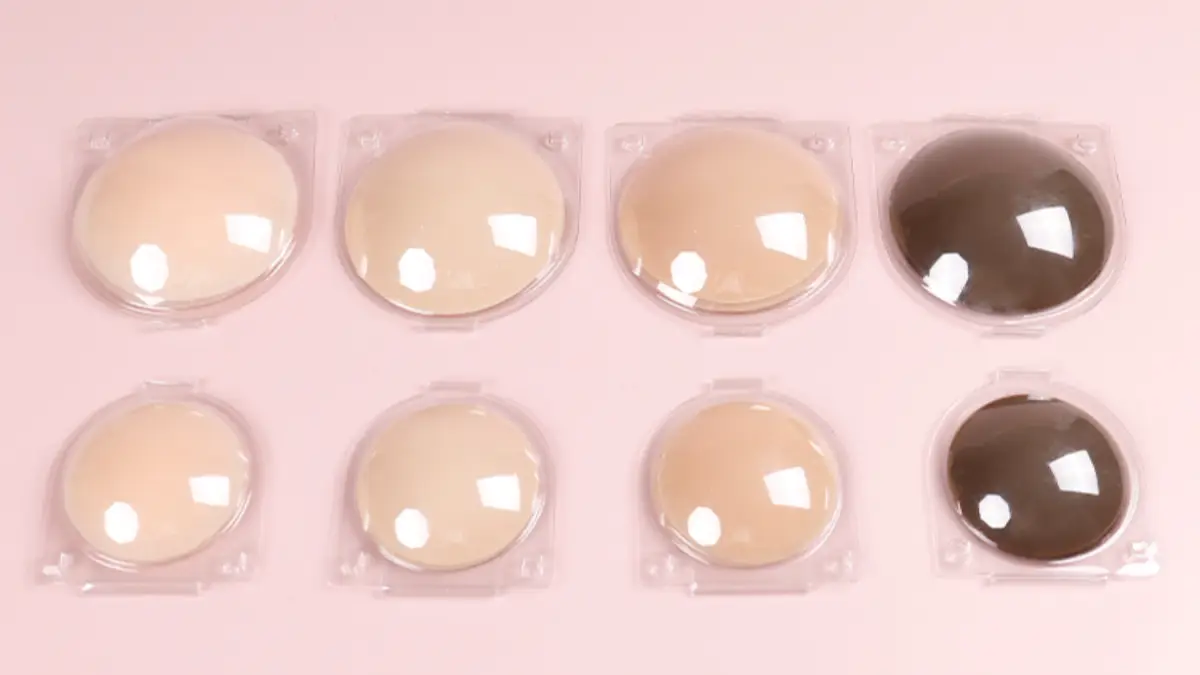
Confirm whether the supplier can meet your order volume and delivery schedule without changing materials, subcontracting key processes, or reducing quality controls.
Verify Capacity and Production Control
Monthly capacity figures are difficult to compare because suppliers may include unrelated products, idle equipment, or outsourced work. Ask how much capacity can actually be allocated to your order and how lead times change during peak seasons.
- Available Equipment: Confirm which molding, aplicación de adhesivo, guarnición, and packaging equipment will be used for your order.
- In-House Production: Identify which processes are completed internally and which are subcontracted.
- Production Schedule: Ask for the normal lead time, peak-season lead time, and current production queue.
- Recent Output: Review production records from similar orders instead of relying only on stated monthly capacity.
- Contingency Planning: Check how the factory handles equipment failures, material delays, urgent repeat orders, and unexpected demand.
- Quality During Peak Periods: Confirm that inspection procedures, curing specifications, and approved materials remain unchanged when production volume increases.
Where practical, verify these claims through a live factory walkthrough, recent production records, or an independent audit. Capacity should be evaluated together with delivery performance and defect records—not as a standalone monthly figure.
Questions About Samples and Testing
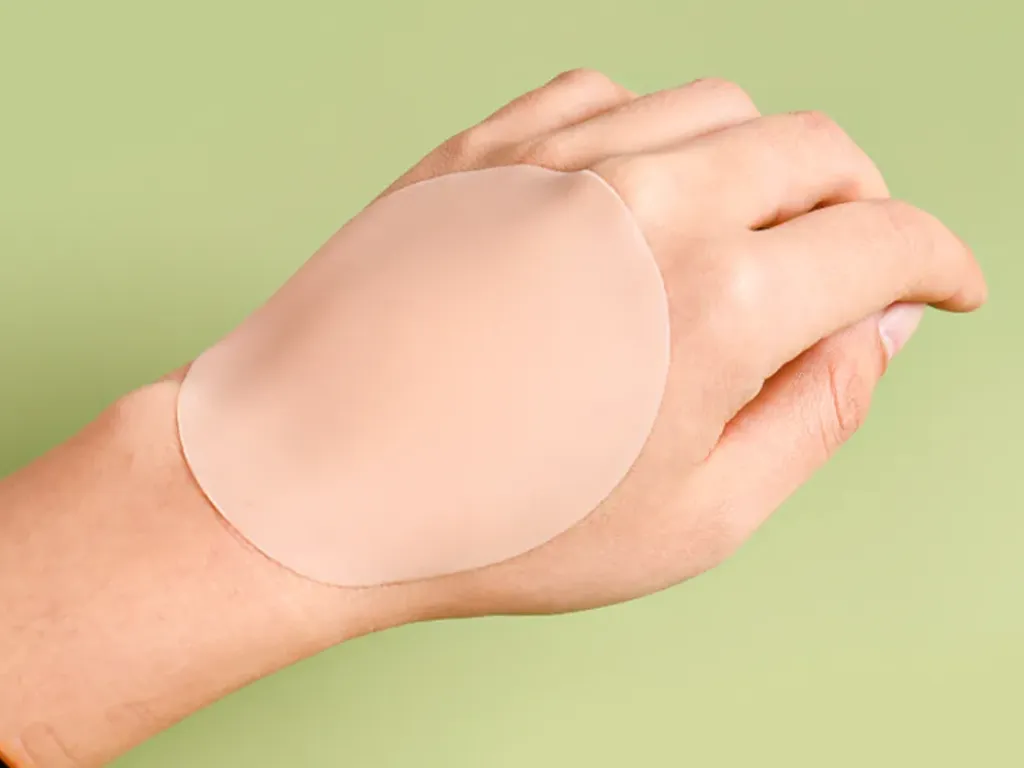
Samples should represent the materials, tooling, and production methods planned for the bulk order. Before requesting them, send the supplier a written specification covering dimensions, color, perfil de borde, adhesive type, embalaje, and intended product claims.
When the samples arrive:
- Measure the diameter, dome height, center thickness, edge thickness, and pair symmetry.
- Inspect the surface and adhesive layer for bubbles, residue, contaminación, or uneven coverage.
- Test fit, visibility, edge lifting, removal comfort, and shape recovery under normal clothing.
- For reusable products, document the cleaning method and compare adhesion after each wash cycle.
- Approve and retain one untouched sample as the reference for production inspection.
Shore hardness should be measured separately from dimensions. For custom products, approve a pre-production sample made with the final mold and materials rather than relying on a standard catalog sample.
Adhesive results depend on the test surface, peel angle, environment, and cleaning method. Our guide to adhesion durability testing explains the main checks buyers can use when comparing reusable product samples.
Final Supplier Evaluation Checklist
Before selecting a supplier, compare the evidence collected during document review, muestreo, and factory verification. The lowest quotation should not outweigh unresolved material, calidad, or delivery risks.
Evaluation Area Evidence to Review Decision Question Factory Experience Similar products, production records, and factory walkthrough. Has the supplier made comparable skin-contact products? Materials and Reports Material specifications, test reports, model details, and batch records. Do the documents match the product being ordered? Sample Quality Measurements, wear results, wash tests, and approved sample. Does the sample meet the agreed specification? Capacity and Delivery Production schedule, available equipment, and subcontracting details. Can the factory meet the required volume and deadline? Commercial Terms Quotation, Cantidad mínima de pedido, tooling ownership, payment terms, and defect remedies. Are responsibilities and costs clearly documented?
Record any unresolved issues and ask the supplier to address them before placing the production order. Keep the approved sample and written specifications as references for the final inspection.
Pensamientos finales
Choosing a nipple cover supplier should come down to verifiable materials, consistent production, and finished samples—not unit price alone. Review the supplier’s test reports, confirm which processes are completed in-house, and agree on clear inspection criteria before production. This gives you a practical basis for reducing quality problems and keeping future orders consistent.
Before placing a bulk order, request production-ready samples and evaluate their fit, edge finish, adhesion, removal, and wash recovery. Contact our production team to discuss your specifications, explore OEM options, or request our latest catalog.