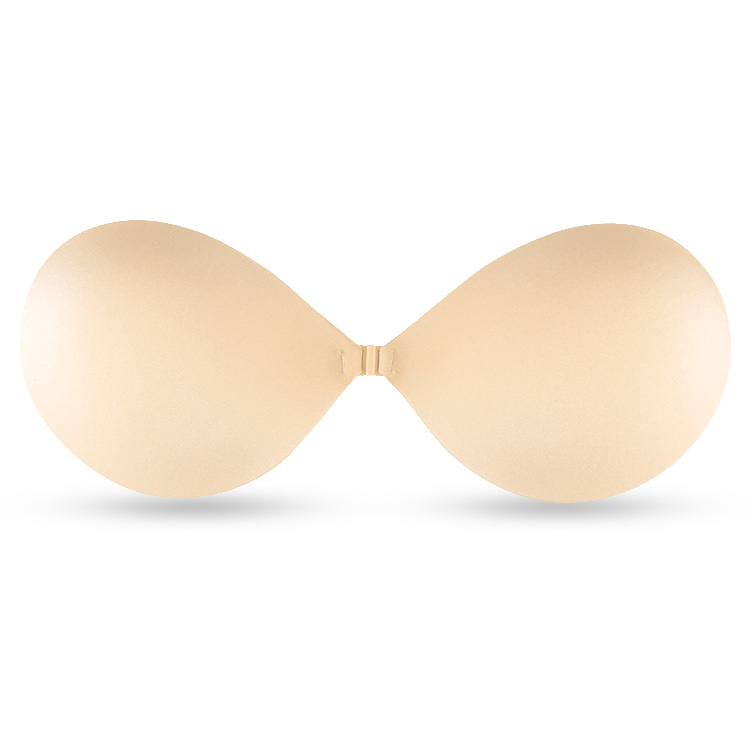
The silicone vs. foam material decision directly impacts unit cost, product lifespan, and brand perception. Choosing incorrectly for a swimwear or activewear line often results in component failure, leading to higher return rates and a direct hit to your profit margins.
This analysis benchmarks silicone against foam across five key apparel categories, from swimwear to activewear. We evaluate each material on performance metrics like water absorption, heat retention, durability against wash cycles, and overall manufacturing cost to clarify which choice protects your brand’s quality promise.
Silicone contre. Inserts de soutien-gorge en mousse: What’s the Core Difference?
Silicone excels where moisture resistance, durabilité, and a realistic feel are critical. Foam dominates when lightweight comfort, respirabilité, and low cost are the priority across garment types.
Apparel Category Silicone Insert Performance Foam Insert Performance Maillot de bain & Bikinis 100% Étanche: Resists chlorine and saltwater without waterlogging. Maintains original weight and shape, delivering a premium drape and strong push-up effect. Ultra-Lightweight: Provides subtle shaping. Cependant, standard open-cell foam acts like a sponge, absorbing water and slowing down dry times. Best for budget lines. Soutiens-gorge de sport & Vêtements de sport Non-Slip Grip: Excellent for localized anti-slip strips on bands/straps as it rejects sweat. Full cup inserts are typically reserved for low-impact athleisure due to density. Industry Standard: Offers optimal breathability and zero added weight for high-intensity movement. Prone to sweat absorption, requiring anti-microbial treatments to prevent odor. Everyday Bras & Lingerie Targeted Enhancement: Mimics natural tissue weight, soft feel, and fluid movement. Optimized for setting-specific volume enhancement rather than extended 12+ hour wear. Daily Comfort: The dominant choice for T-shirt and contour bras. Provides a smooth, predictable silhouette with minimal weight for effortless 8+ hour daily wear. Dos nu & Sans bretelles Self-Adhesive Premier: The tacky surface provides reliable, skin-safe, and reusable adhesion. Stays secure against light body moisture and skin oils. Secondary Adhesion: Requires an additional adhesive coating or perimeter tape. Porous edges can absorb sweat, potentially compromising the bond and causing slippage. De mariée & Occasion Wear Structural Balance: Ideal for correcting asymmetry and anchoring heavy gowns. Adds a realistic silhouette and extra grip inside structured, molded bodices. Delicate Support: Perfect for lightweight, built-in cups that shape a smooth profile without pulling or straining delicate fabrics like premium silk, satin, or lace. Lifespan & Durabilité 12–24 Months: Exceptional shape retention. Resists flattening, compression set, and degradation from repeated sanitizing or washing. 4–6 Months: Limited lifespan. Prone to gradual flattening, creasing, and cell-wall breakdown from consistent friction and wash cycles.
Silicone Bra Inserts: Advantages and Limitations
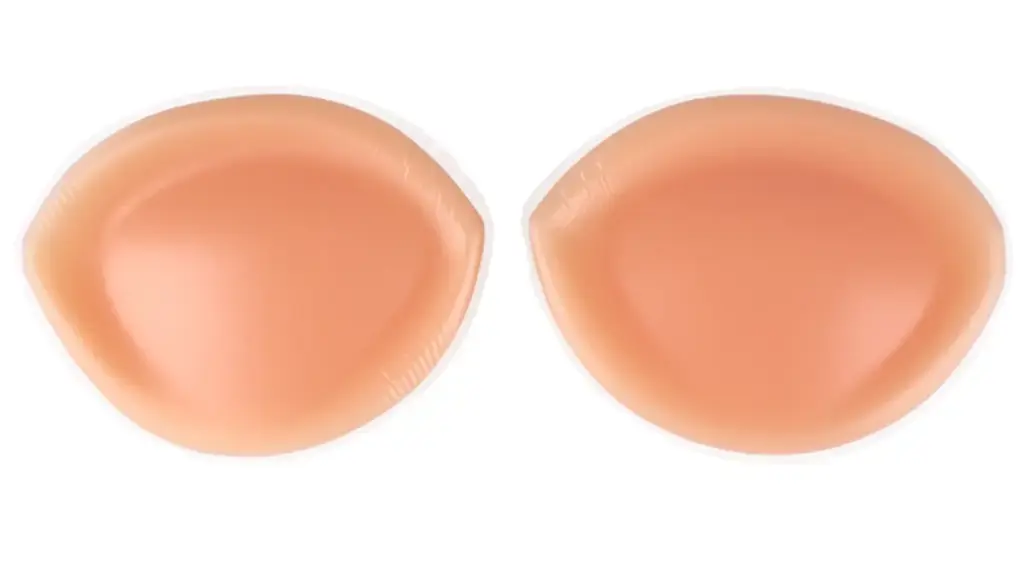
Silicone inserts deliver a realistic look and durable shape, but they are heavier, trap heat, and cost more than foam alternatives.
Key Advantages
- Natural look and feel: Silicone mimics the weight and softness of natural breast tissue, creating a realistic silhouette and fluid movement.
- Enhanced volume and cleavage: The material’s density provides effective structural lift, adding pronounced fullness and deep definition.
- Exceptional 12–24 month lifespan: Silicone resists flattening or creasing. It holds its original shape over time and withstands repeated washing.
- Correcting asymmetry: These inserts easily balance out uneven breast sizes for a stable, highly symmetrical appearance.
Common Limitations
- Heat and moisture retention: The non-porous material traps body heat and sweat, making it less ideal for extended 12+ hour daily wear.
- Heavier weight: The lifelike density feels much heavier than foam, which requires a supportive bra band to avoid shoulder strain.
- Placement dependent: While its weight anchors it inside tight swimwear, it can shift inside loose, pocketless garments without proper support.
- Higher sourcing cost: Premium silicone requires specialized molding equipment, leading to higher upfront tooling and unit expenses.
Inserts de soutien-gorge en mousse: Advantages and Limitations
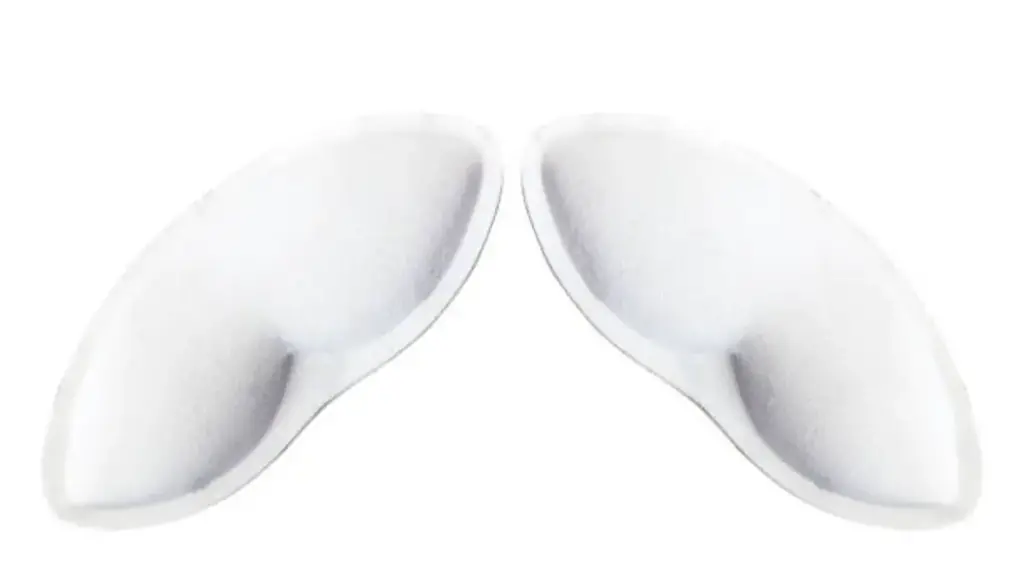
Foam inserts prioritize lightweight comfort for everyday and active use. They are affordable but lack the realistic weight or dramatic volume of silicone.
Key Advantages
- Lightweight comfort: Offers a weightless feel that reduces strain on shoulders, making it ideal for comfortable, 8+ hour daily wear.
- High breathability: The porous, open-cell structure allows air circulation, reducing heat and sweat buildup against the skin.
- Lisse, subtle shaping: Easily molded to provide a consistent, rounded contour and reliable modesty coverage without adding bulk.
- Mass-market cost efficiency: Low raw-material and manufacturing costs allow apparel brands to maintain healthy, profitable margins.
Common Limitations
- Moisture absorption: Foam acts like a sponge, absorbing sweat and water in sports or swimwear, which causes temporary heaviness and slow drying.
- Shorter 4–6 month lifespan: Regular machine washing breaks down the cell walls, causing the foam to permanently flatten, crease, or lose shape.
- Lacks natural realism: It cannot replicate the density, tissue-like softness, or organic movement of natural breast tissue.
- Minimal structural lift: Provides subtle shaping rather than dramatic volume; it relies entirely on the garment for primary lifting support.
Élevez votre marque avec des soutiens-gorge adhésifs personnalisés
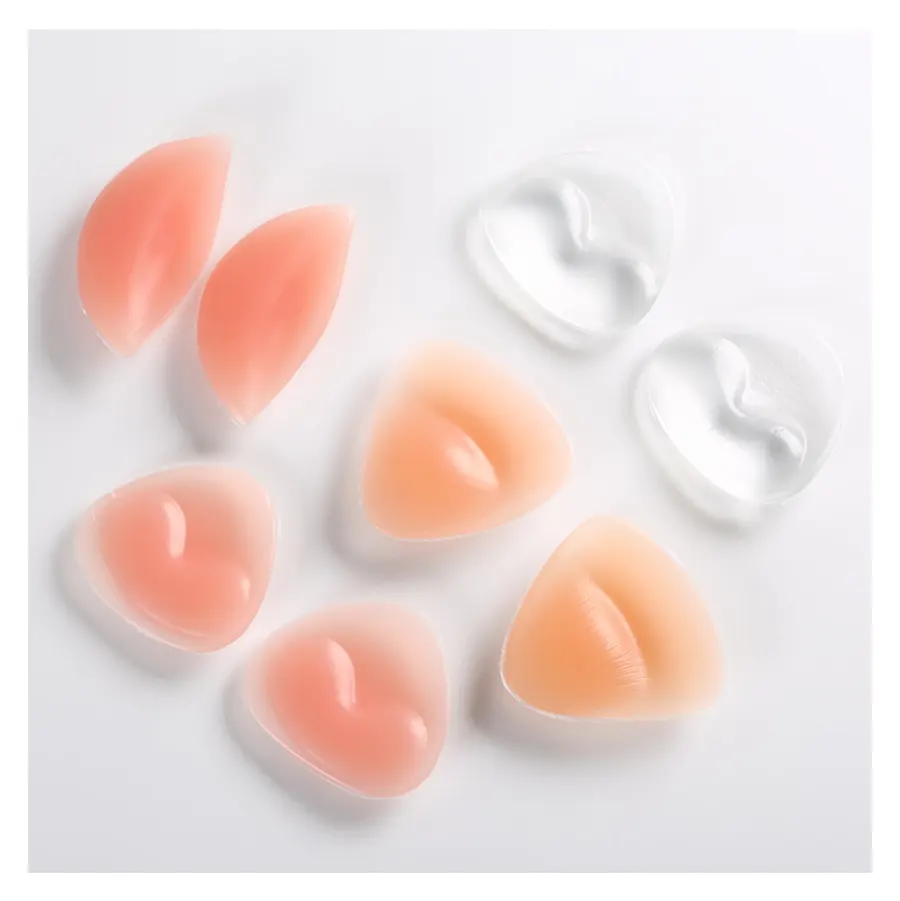
Durability Comparison: Washability, Rétention de forme, and Product Lifespan
Silicone is built for the long haul, easily resisting washes and keeping its shape. Foam is a short-term fix that degrades with cleaning and repeated use.
Washability and Resistance to Cleaning
Silicone inserts are non-porous and chemically stable, which makes them highly resistant to cleaning. You can hand-wash them with mild soap and water repeatedly without causing any real damage. The material doesn’t absorb water, huiles, or detergents, so cleaning is a simple surface-level task that maintains hygiene without degrading the insert.
Foam is a different story. Its porous, sponge-like structure absorbs sweat, huiles, et les détergents. While many foam inserts can handle a gentle machine wash, this process introduces mechanical stress and chemicals that break down the foam’s cell walls over time. Each wash cycle accelerates its loss of firmness and contributes to its breakdown. This makes foam less hygienic in the long run and much more susceptible to wear from cleaning.
Shape Retention and Long-Term Lifespan
Silicone excels at shape retention because of its low compression set. It bounces back to its original form after being squeezed or worn, resisting the permanent indentations and flattening that plague foam. This material integrity means silicone inserts are designed for long-term use. In medical contexts, replacement is often recommended only every two years.
Mousse, especially lower-density types, has poor shape retention. It suffers from high compression set, meaning it gradually loses its loft and becomes permanently flattened with repeated wear and washing. This degradation is why foam inserts have a much shorter lifespan. They often need to be replaced every six months or so as they lose their ability to provide shape and support.
Manufacturing and Cost Considerations for Apparel Brands
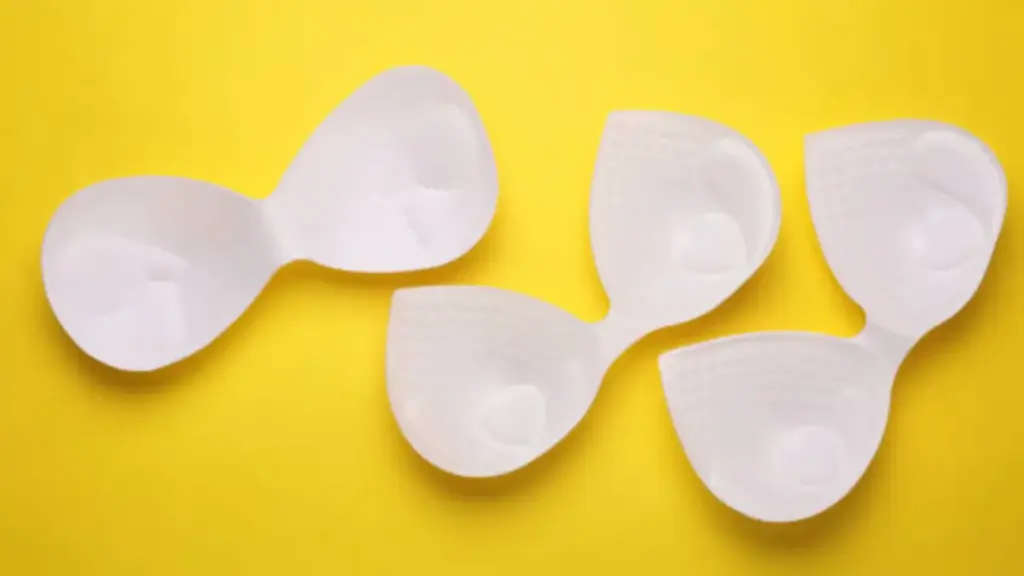
Silicone has a higher unit cost due to specialized manufacturing. Foam is a low-cost commodity that integrates easily, trading long-term durability for upfront savings and speed.
Core Manufacturing Processes and Supply Chain Integration
The choice between silicone and foam fundamentally alters the manufacturing workflow and supply chain. Silicone demands specialized equipment and expertise, while foam leverages existing, standard apparel production capabilities.
For silicone components like pads or grip strips, brands rely on processes that are slow and capital-intensive compared to foam. These include:
- Caoutchouc de silicone liquide (LSR) Moulage par injection: This process creates precise, complex 3D shapes but requires specialized machinery and has slower cycle times due to the chemical curing stage.
- Compression/Transfer Molding: Used for silicone foam or sponge sheets, this involves pressing material in heated molds. It’s effective but still requires dedicated tooling.
- Silicone Printing: Applying liquid silicone as grip patterns on fabric needs specific printing lines and high-temperature curing ovens, adding a complex step to textile finishing.
Integrating these finished silicone parts is also more difficult. Silicone’s low surface energy makes it hard to bond with standard apparel adhesives, often requiring mechanical stitching into pockets or the use of special glues.
Foam manufacturing is much simpler and faster. Factories produce large blocks of foam that can be quickly cut, skived, or die-cut into the required shapes. For components like bra cups, they use thermo-forming, which involves heating and pressing foam sheets into molds—a process with cheaper tooling and faster cycles than silicone molding. These foam parts are easily stitched or laminated into garments using standard factory equipment. This makes foam a commodity material with shorter lead times, lower MOQs, and minimal supply chain risk for most apparel brands.
Upfront vs. Long-Term Cost Analysis
The cost difference is stark. Silicone has a higher price per kilogram, driven by the energy-intensive process of converting silica sand into a polymer. The specialized molding and printing equipment adds significant processing costs and higher tooling expenses. For premium brands requiring medical-grade or hypoallergenic certifications, those regulatory costs add to the final price.
Foam is a widely available commodity with a low raw material cost. High-volume, optimized production lines give it a major cost advantage, especially for the mass market. Cutting and laminating foam requires less energy and simpler equipment, keeping the per-unit cost low even for smaller production runs.
But the analysis changes when you look at the total cost of ownership. Silicone’s durability means it resists flattening, transpirer, and repeated washing far better than foam. For premium sportswear or reusable medical garments, this extends the product’s life and can reduce warranty claims or returns. A longer-lasting component supports a higher retail price and reinforces brand quality.
Foam’s low upfront cost is offset by its shorter lifespan. It absorbs sweat, breaks down with washing, and loses its shape over time. This is acceptable for seasonal, trend-driven fashion where product life is not a priority. For performance or durable goods, a failing foam component can damage the perceived quality of the entire garment, creating a long-term cost to the brand’s reputation.
Which Bra Insert Material Is Best for Your Brand Positioning?
The choice between silicone and foam inserts isn’t just a technical decision; it’s a branding statement. Each material comes with a set of built-in values that customers immediately recognize, shaping their perception of your product’s quality, purpose, and price point.
Silicone for Premium, High-Impact, and Niche Brands
Silicone aligns with brands that sell a transformative or high-performance result. Its defining characteristic is realism. Made from a dense gel, it mimics the weight, sentir, and movement of natural breast tissue. This makes it the go-to for luxury lingerie, premium swimwear, and bridal wear brands promising a “wow” effect or a significant, natural-looking enhancement.
The higher material and manufacturing costs reinforce this premium position. Customers perceive silicone as a more technical, durable, et “investment-grade” component. This also makes it the standard for niche medical-adjacent brands, such as post-mastectomy prostheses, where realistic weight and balance are critical for the user.
Foam for Everyday Comfort and Mass-Market Brands
Foam is the workhorse of the mass market. Its primary advantages are being extremely lightweight, respirant, and low-cost. This positions it perfectly for brands focused on everyday comfort, accessibility, and function. Think athleisure, soutiens-gorge de sport, and T-shirt bras where the goal is subtle shaping, modestie, and all-day wearability without added weight or heat.
Because foam is inexpensive and easy to integrate into garments, it supports value-oriented pricing. Its shorter lifespan—foam tends to compress and degrade faster than silicone—also fits well with seasonal fashion cycles where garments aren’t necessarily expected to last for years. The brand promise here isn’t dramatic transformation, but reliable, low-fuss comfort for daily life.
Pensées finales
While foam inserts reduce upfront costs for mass-market lines, silicone is the only material that protects a premium brand’s reputation. Its durability and realistic feel deliver a customer experience that justifies a higher price point and prevents returns caused by component failure.
Your material choice defines your product’s perceived quality. We recommend verifying this difference firsthand with a sample kit tailored to your apparel line. Contact our specialists to discuss material specifications and OEM production options.
Questions fréquemment posées
Are silicone bra inserts a better choice than foam?
Silicone inserts are generally better for achieving a natural look and feel, as their weight and texture mimic real breast tissue. Foam inserts are a better choice for all-day comfort, as they are lighter and more breathable. Your personal preference for either realism or lightweight comfort will determine which is better for you.
Which type of insert looks the most natural?
Silicone inserts provide the most natural look. They are designed to match the weight, movement, and soft feel of natural breasts, which creates a more realistic shape under clothing compared to the more structured shape of foam.
Which bra insert material is best for swimwear?
Pour les maillots de bain, silicone is ideal if you want to add significant volume and cleavage, as it doesn’t absorb water and its weight helps keep it in place. Foam is a better option for general shaping and comfort, especially during active swimming, because it is much lighter.
How long do foam and silicone inserts last?
Silicone inserts usually last longer, with a typical lifespan of 6 à 12 months with regular use. Foam inserts tend to wear out more quickly from compression, generally lasting around 4 à 9 months before needing to be replaced.
Can I wash foam bra inserts?
Oui, foam inserts are washable. The safest method is to hand wash them with mild soap and let them air dry flat. If you machine wash, use a delicates bag on a gentle cycle with cold water to help them keep their shape.
Is it safe to put silicone inserts in the dryer?
You should not put silicone inserts in the dryer unless the manufacturer’s care instructions specifically say it is safe. High heat can damage the silicone or any attached fabric and adhesives. Air drying is the recommended method.