Nipple covers for men are a shelf-planning problem before they are a product problem. The same flat chest shows up in five places: a general-merch personal-care aisle, a sports retail end-cap, a specialty and performance counter, an inclusive-brand plan, and a reconstructive and clinical-supply counter. Each stocks a different format with its own acceptance test. Get the channel map first, and the diameter and shade decisions below stop being guesswork.
This guide stays on the product line. The scenario-specific how-to is already covered on-site — why male runners need nipple covers, how to prevent nipple chafing when running, and using band-aids as nipple covers own those use cases. What follows is the buyer layer those pages assume: which motive feeds which shelf, why cup-shaped formats fail on flat geometry, and how to build the assortment.
Where the Demand Comes From
Five motives generate nearly all of the men’s and gender-inclusive demand you will be asked to serve, and they land on different shelves. Mapping each motive to its shelf first prevents the usual mistake: stocking one coverage SKU and expecting it to satisfy an activity end-cap, a stage counter, and an inclusive brand plan at once.
Covering a shirt is an everyday tailoring need in personal-care and general-merch. Friction during endurance activity is a retention-and-adhesive-margin need in sports retail. Dress-up, drag, and stage performance buy decorative faces. Inclusive brand positioning is a shade and messaging question. Reconstructive retail and clinical-supply counters are a soft-pad placement question. The scenario detail for each belongs to its own page; the table below maps motive to shelf and format.
A single small-diameter silicone disc can serve the everyday shelf and, with a wider adhesive margin, the activity shelf, but not the decorative line or the soft-pad placement. The silicone nipple cover category groups the coverage formats, so you can price that ladder without mixing it into the decorative or reconstructive lines.
| Demand motive | Retail shelf / channel | SKU format to stock | Buyer’s key spec |
|---|---|---|---|
| Covering a shirt | Personal-care and general-merch | Small-diameter silicone disc | Feathered edge, opacity under woven cloth |
| Friction during endurance activity | Sports and active retail | Silicone disc with a wider adhesive margin | Adhesive coverage pattern, edge lift tested on the body |
| Dress-up, drag, and stage | Specialty, adult, and performance | Decorative and tasselled face on a base | Ornament mass versus base retention |
| Inclusive brand positioning | DTC and boutique | Coverage disc across a skin-tone range | Shade depth and count, not diameter |
| Reconstructive and clinical-supply retail | Medical-supply and reconstructive counters | Soft sponge or fabric-backed pad | Low-adhesive or pocketed placement, light edge |
Coverage Area and Chest Geometry
Conclusion first: on a flat chest, diameter and edge taper decide whether a cover works, while projection-driven specs become irrelevant. There is no breast tissue to seat the piece, so a shape engineered around projection simply floats. This is a coverage problem, not a lift or volume problem.
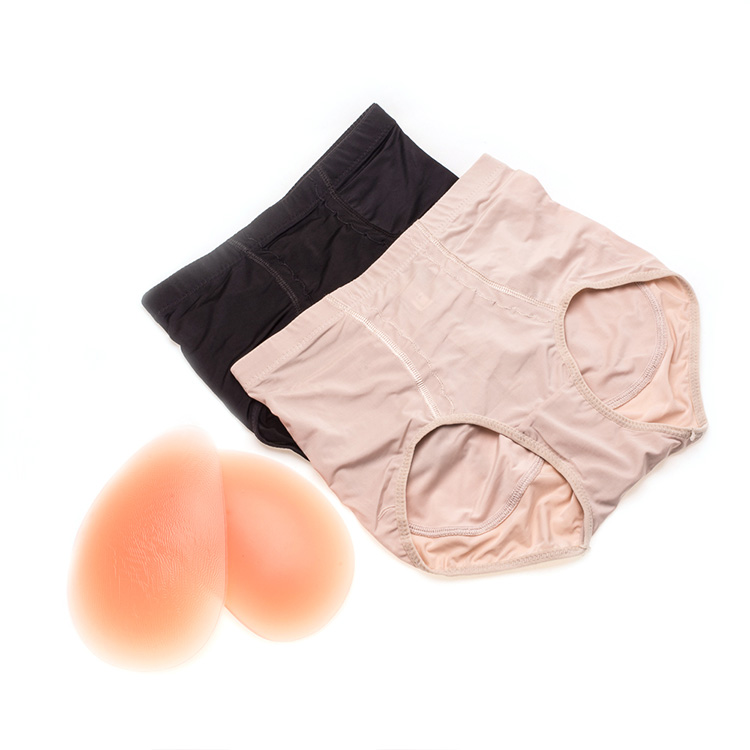
A molded silicone pad that carries a projection, such as the classic silicone bra pad, is built to fill a cup, and a fit-only or suction shape reads as a void on a flat profile. The rim cannot seat, so the edge gapes and lifts.
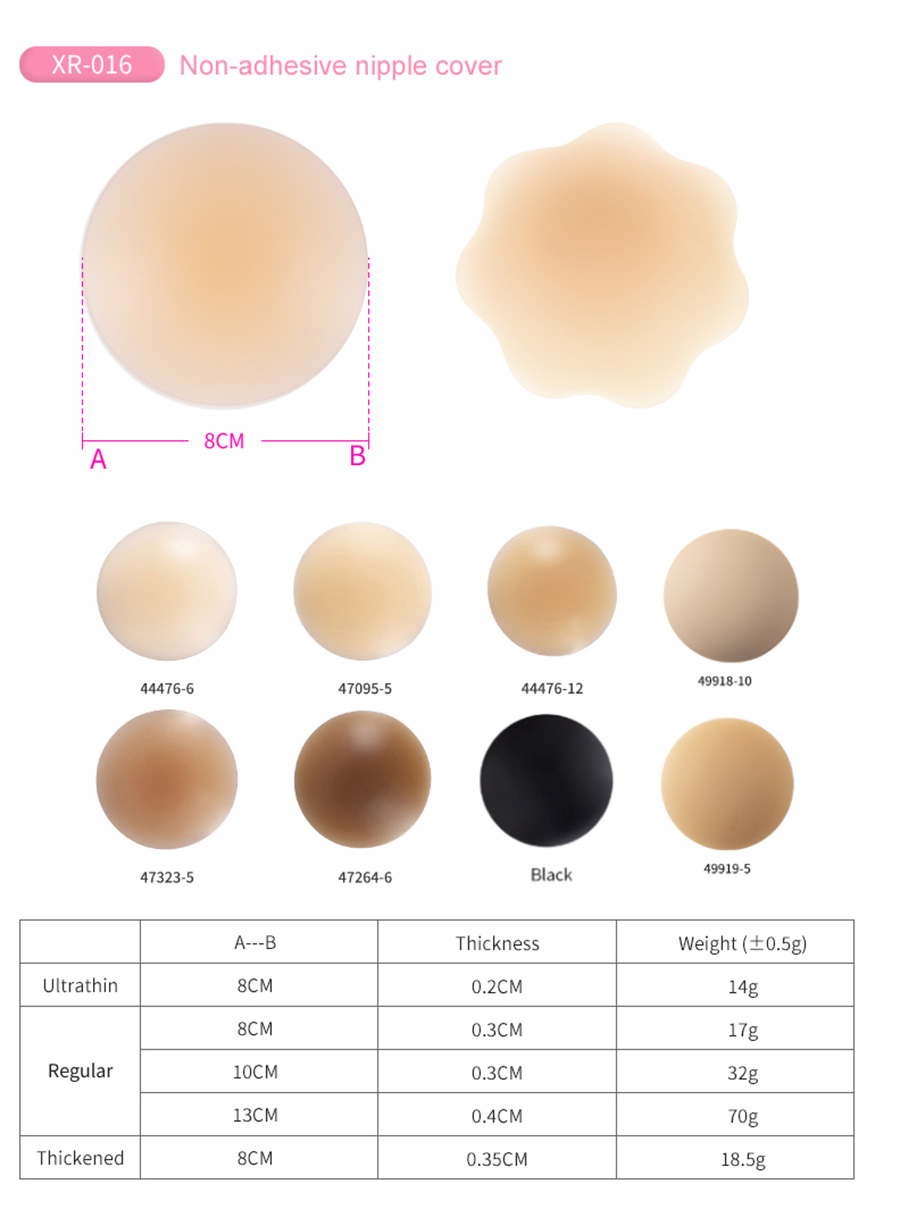
Diameter has to exceed the areola footprint with margin, because on a flat surface the disc is the only thing that reads as opacity; a disc that merely matches the areola shows a visible ring under thin cloth. Edge taper decides whether the boundary disappears: a feathered thin edge diffuses into the skin, a thick rim telegraphs a circle. The measuring and cup-conversion method belongs to the bra size chart for manufacturers.
Formats That Work on Male Chests
Three formats clear the geometry problem, and each answers a different buying motive.
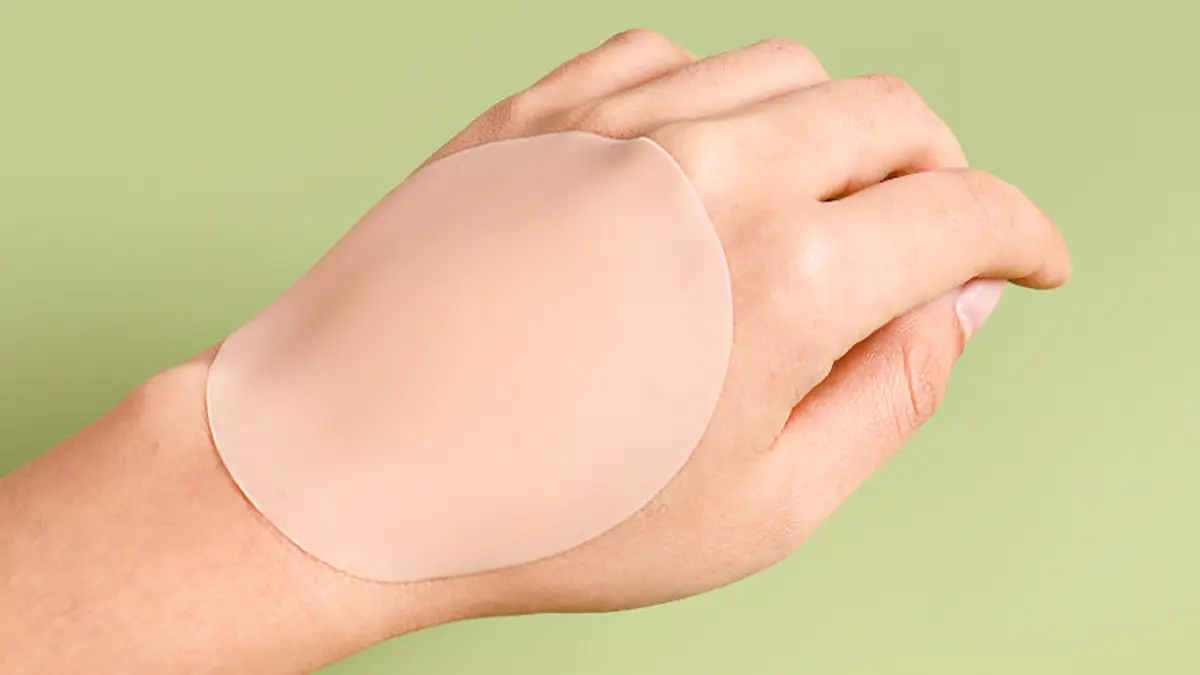
Small-diameter silicone. A flat, feathered-edge disc in a smaller diameter than a standard women’s cover. The small-size silicone nipple cover and the self-adhesive silicone nipple cover are the two reference listings; the difference is adhesive coverage and edge thickness, not shape.
Fabric-backed and sponge adhesive-face patches. A cloth or foam body with an adhesive face sits flatter on a profile with no projection to grip, and removes more gently on a hair-bearing chest. The triangle sponge adhesive pad and the heart sponge adhesive pad show the adhesive-face construction; the foam-versus-silicone trade-off is owned by silicone versus foam bra inserts.
Decorative faces. A base with an ornament is the performance channel’s version of the same geometry problem. The tirangle silicone bra pad illustrates the molded shape families; building a decorative line around them belongs to the tassel nipple cover.
Across all three formats the adhesive is the shared component. Consolidating a men’s line onto one base leaves the diameter and edge choices plus one adhesive spec — one platform with two acceptance tests rather than two unrelated purchases.
Apply and Remove Feel with Body Hair
Removal feel is a function of the adhesive face and the substrate, not a skin claim printed on the pack. On a hair-bearing chest, an adhesive removal pulls at the hair, and the variables you control are adhesive coverage area, tack level, and how gently the disc bends off the skin. That is a specification conversation, and it belongs to the format table above.
Two boundaries to hold. This article makes no medical or dermatological claim about skin response; the wording that governs such claims is set out in the labeling section below. Cleaning and re-tacking are documented in how to wash nipple covers, and how to make an adhesive bra sticky again; at design stage, decide whether the pack is single-use or multi-use, and that choice sets the adhesive class you buy.
A lower-tack adhesive face or a fabric-backed patch changes removal feel on the first wear, worth a separate SKU for a sports end-cap. The method itself is left to the guides linked above.
Shade and Skin-Tone Matching for Men’s SKUs
A men’s SKU that only comes in a light nude fails in the channels that already buy multi-shade: inclusive brand plans and specialty retailers stocking diverse customers. Shade count is a channel-readiness decision — if the inclusive shelf is in your plan, the shade range has to exist from the first order.
The inclusive-skin-tone direction is owned by silicone lingerie trends and technology; this guide does not restate that positioning. The math that converts a trend into a color count and a size run is M8’s subject. For a men’s line, a shallow diameter range should carry more shades than a women’s entry pack of the same SKU count.
One boundary for a buyer: on a flat chest under a shirt, a light-reflecting glossy edge reads as a circle no matter how well the pigment matches. Shade gets you the color; edge taper makes the cover invisible. Spec both.
Concealing vs Decorative: Two Lines, One Shelf
On a men’s and inclusive shelf, coverage and decoration solve opposite problems, and they belong on two line extensions sharing one base rather than a single compromise SKU. A coverage disc is judged by how little it shows; a decorative face by how well it holds while being looked at — different enough to need separate test sheets.
Building the decorative line out — attachment, ornament mass, shelf economics — is a separate discipline that M4 carries. The reference is what nipple tassels are for definitions and the sexy nipple cover category for the dressed formats beside the coverage ones.
For assortment planning: one adhesive platform that passes the flat-chest geometry test, a coverage family that meets that bar, and a decorative family measured on retention and shedding instead of opacity.
Retail Channels and Assortment
Five retail channels carry these SKUs, each with a different assortment and shelf card. A product in stock but on the wrong shelf does not convert. Depth beats breadth: most programs need one coverage SKU across two or three diameters and a shade range, not a wide catalog.
Personal-care and general-merch stock a small coverage range with a diameter guide on the card. Sports and active retail stock the adhesive-margin version and lead with retention; its use case is fully owned in the dedicated friction and retention guide. Specialty and adult retail stock coverage and decorative ranges and can carry a gift set. An inclusive DTC brand leads with shade range and a shallow size ladder.
The everyday and sports card states diameter and edge in millimeters and shows the cover flat, while the decorative card shows the pair on a hang tab with the ornament legible. A reconstructive or clinical-supply counter is a placement-and-softness conversation, so a low-tack or pocketed option should be merchandised as a distinct SKU.
Claim Boundaries and Labeling
The wording on a men’s pack is where a product-line brief turns into a compliance question: this is an apparel-adjacent accessory, and nothing on the pack may imply a medical or therapeutic purpose. The labeling and marketplace rules that govern it are set out in lingerie packaging compliance.
For materials evidence, ask a supplier for an independent test report rather than a verbal assurance. OEKO-TEX STANDARD 100 publishes restricted-substance limits for components in prolonged skin contact, giving you a shared vocabulary when requesting documentation. Keep the wording non-diagnostic: ask for the certificate that names the component, and do not convert it into a skin-safety claim.
A material certificate does not authorize a sensitivity or comfort claim, and an inclusive positioning line does not turn the SKU into a medical product for any reconstructive channel. Where you lack a measured value for a diameter, edge thickness, or adhesive class, mark it for confirmation in the brief rather than estimating it.
Frequently Asked Questions
Why do men wear nipple covers?
The reasons cluster into the five motives in the first section: concealing the outline under a shirt, reducing friction during endurance activity, dress-up and stage wear, supporting an inclusive brand position, and soft-pad placement at a clinical-supply counter. Each points to a different shelf and format.
Nipple covers for men?
A men’s coverage SKU is a small-diameter, feathered-edge disc or a fabric-backed patch selected for diameter and edge taper rather than cup projection. The three formats in the formats section map that geometry to a line you can buy across the five channels.
Why do men put tape on their nipples?
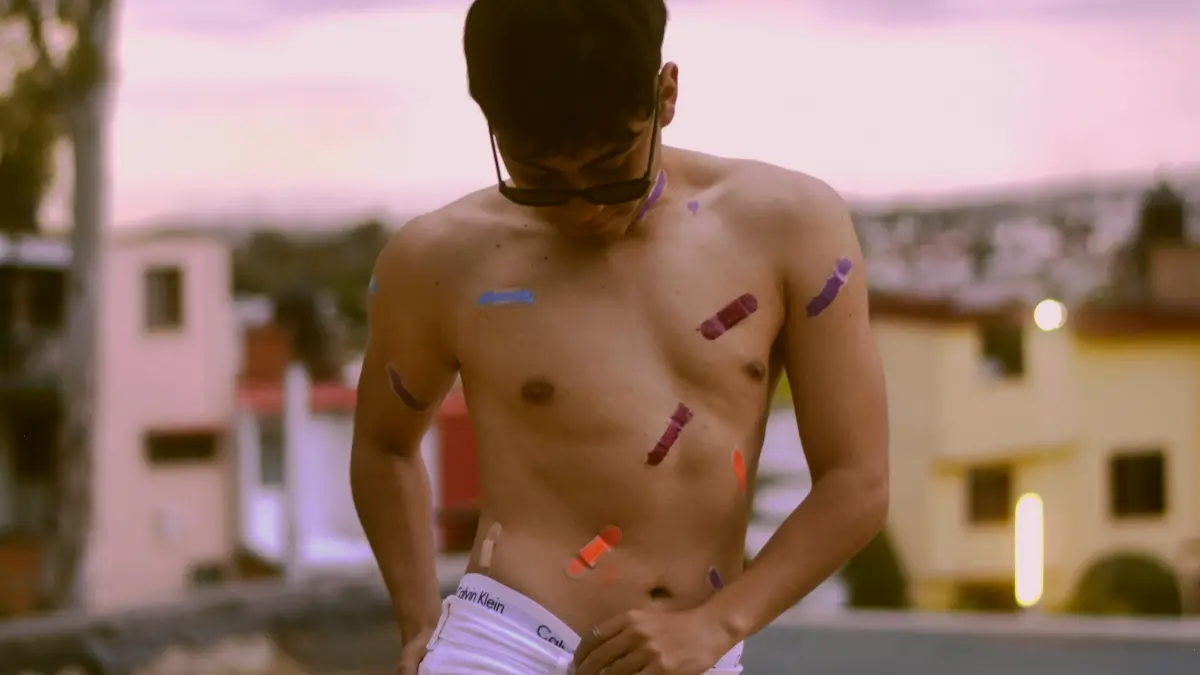
For some of the same motives this guide maps: a low-profile barrier under a shirt, or to hold something flat through long activity. The cover-versus-tape trade-off is settled on its own page, nipple covers versus boob tape; this article keeps to the coverage and decorative line.
Do men’s covers need a different size?
Usually a smaller diameter and a flatter profile than a standard women’s cup-shaped cover, because the deciding dimensions on a flat chest are coverage diameter and edge taper rather than volume. The measurement method belongs to the on-site size-chart guide cited in the geometry section, and the size-count math is M8’s subject.
Final Thoughts
A men’s and gender-inclusive line is a channel-and-geometry problem, not a single hero SKU. Fix the mapping first — which motive feeds which shelf — then let diameter and edge taper drive the format, and keep coverage and decorative as two acceptance tests on one adhesive platform.
Then protect the boundaries: no medical or therapeutic wording on the pack, materials evidence as a component-named report, and cleaning, re-tacking, and fit method left to the on-site pages that own them. Built that way, the assortment answers the real buying question at each shelf instead of carrying dead stock.