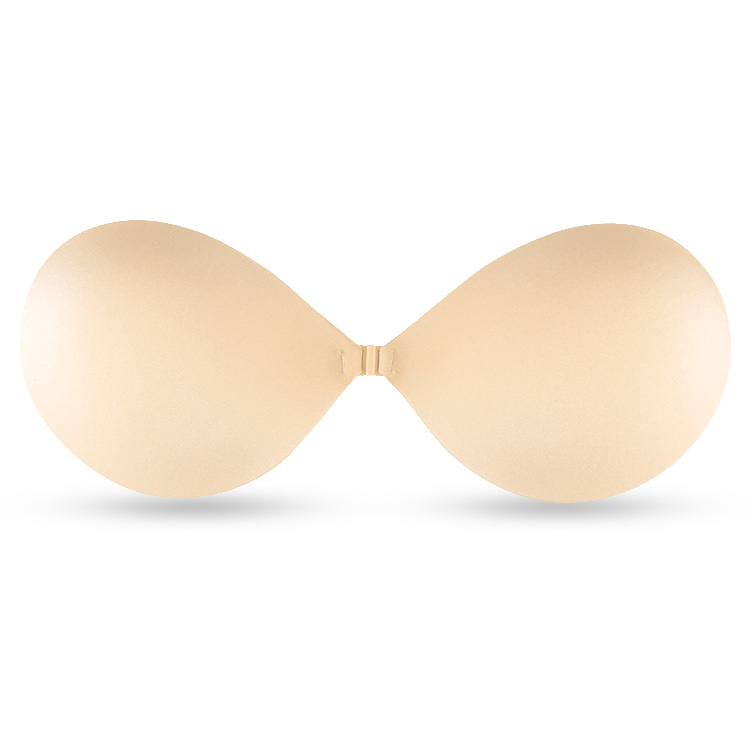
Choosing the right adhesive bra materials starts with understanding how the cup and adhesive work together. Their weight, breathability, grip, and response to heat and moisture all affect how the finished product feels and performs.
This guide compares silicone and fabric cups, explains the main skin-contact adhesive options, and outlines the tests and supplier documents brands should review before approving bulk production.
Adhesive Bra Materials and Their Functions
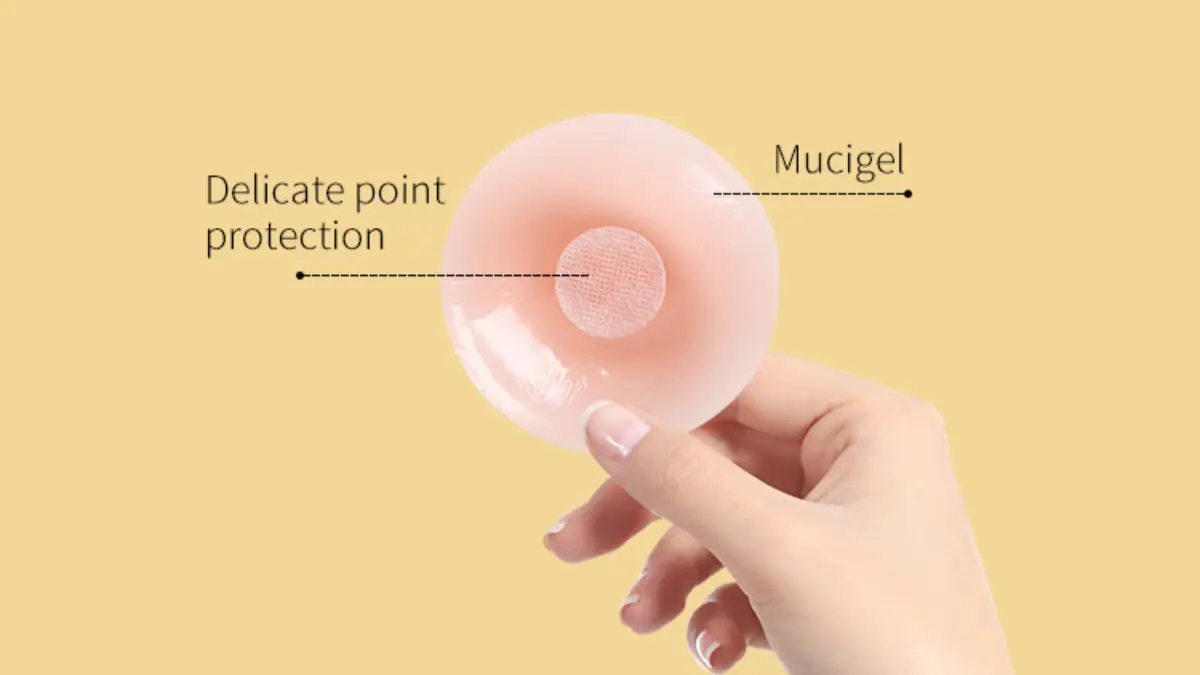
An adhesive bra depends on more than the strength of its glue. The cup material, adhesive layer, edge design, and fabric elasticity must work together. A heavier cup may need more adhesive coverage, while a lightweight fabric cup places greater emphasis on flexibility and breathability.
Heat, perspiration, movement, and cleaning can all affect adhesion. Brands should therefore evaluate the complete product rather than approving the cup and adhesive separately.
| Material or Feature | Role in the Product | What Brands Should Check |
|---|---|---|
| Silicone Cups | Provide a fuller, skin-like feel and close body contact. | Cup weight, thickness, edge profile, heat retention, and support across different sizes. |
| Fabric or Foam Cups | Offer a lighter feel and can improve flexibility and airflow. | Fabric composition, stretch recovery, shrinkage, breathability, and shape retention. |
| Silicone Adhesive | Provides a repositionable skin-contact bond and can be suitable for reusable products. | Peel strength, performance after exposure to sweat, skin-contact test reports, and adhesion after repeated cleaning. |
| Acrylic Adhesive | Can provide strong initial tack at a lower cost, depending on the formulation. | Moisture resistance, intended wear time, residual monomers, removal comfort, and irritation or sensitization data. |
| Tapered Edges | Help the cup sit smoothly under clothing and reduce edge lifting. | Edge thickness, adhesive coverage, visibility under fitted garments, and comfort during movement. |
| Skin-Contact Textiles | Influence softness, moisture management, and comfort during wear. | Valid OEKO-TEX STANDARD 100 Product Class II certification or relevant chemical test reports covering the actual materials supplied. |
Before approving production, test the finished bra under its intended wear conditions. Sample reviews should cover fit, edge lifting, removal comfort, perspiration exposure, and adhesion after the stated number of cleaning cycles.
Grow Your Brand With Premium Adhesive Intimates
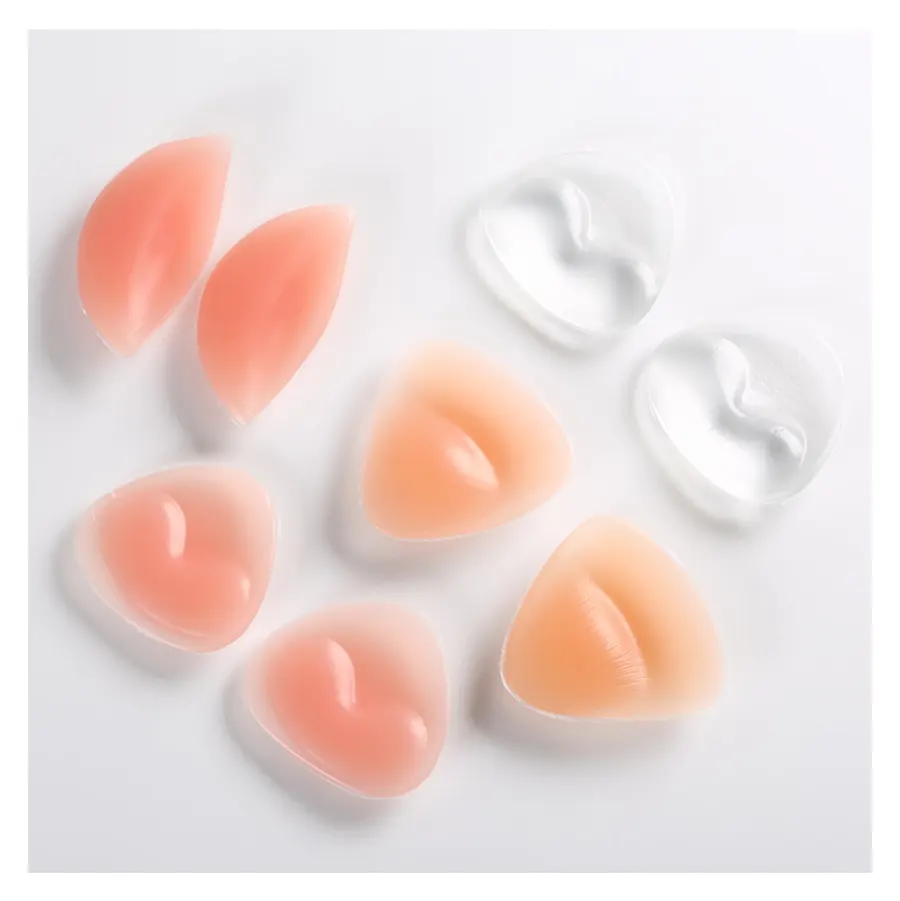
Silicone vs Fabric Adhesive Bras
Silicone and fabric adhesive bras suit different product positions. Silicone cups generally offer a fuller feel and closer body contact, while fabric constructions are usually lighter and provide more flexibility in color, texture, and padding. Actual performance still depends on the cup design, adhesive coverage, edge thickness, and size range.
| Comparison | Silicone Bras | Fabric Bras |
|---|---|---|
| Feel | Fuller and more skin-like | Lighter and softer |
| Shaping | Smooth, rounded contour | More padding and push-up options |
| Comfort | Heavier and may retain heat | Usually cooler and more flexible |
| Best Suited For | Backless dresses and occasionwear | Everyday and warm-weather styles |
Neither construction is automatically better. Brands should select samples based on the intended outfit, climate, wear time, support level, and target price, then test the finished product with representative users before approving production.
Understanding Medical-Grade Silicone
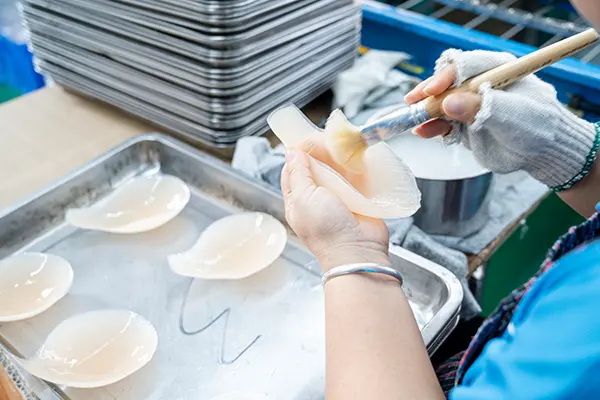
“Medical-grade silicone” is often used to describe silicone intended for controlled skin-contact or medical applications. However, the term alone does not prove that an adhesive bra is safe, comfortable, or suitable for repeated wear. Buyers should understand the practical differences between medical-grade silicone and regular silicone, then check the exact adhesive grade and its supporting test reports before approving the material.
Documents and Safety Evidence to Check
- Material Information: Request the adhesive type, supplier, grade, technical data sheet, and safety data sheet.
- Skin-Contact Testing: Review relevant irritation and sensitization reports, including the tested sample, method, contact duration, laboratory, and results.
- Chemical Testing: Confirm that the reports cover the actual materials used and the restricted substances required in the destination market.
ISO 10993-based data may support a supplier’s skin-contact claims, but ISO 10993 is primarily used for the biological evaluation of medical devices. It should not be presented as a general certification for adhesive bras.
Performance in the Finished Product
The adhesive must be evaluated as part of the finished bra. Its grip and removal comfort can vary with the formulation, coating thickness, cup weight, temperature, perspiration, and skin condition.
- Removal Comfort: Check whether the cup can be removed gradually without excessive pulling or adhesive residue.
- Heat and Perspiration: Test for sliding, edge lifting, and loss of adhesion under the expected wear conditions.
- Cleaning and Reuse: Measure adhesion after the number of cleaning cycles stated in the care instructions.
The “medical-grade” label should not be used as the only basis for material approval. Material records, skin-contact reports, and finished-product testing provide more useful evidence.
Skin-Contact Safety Testing
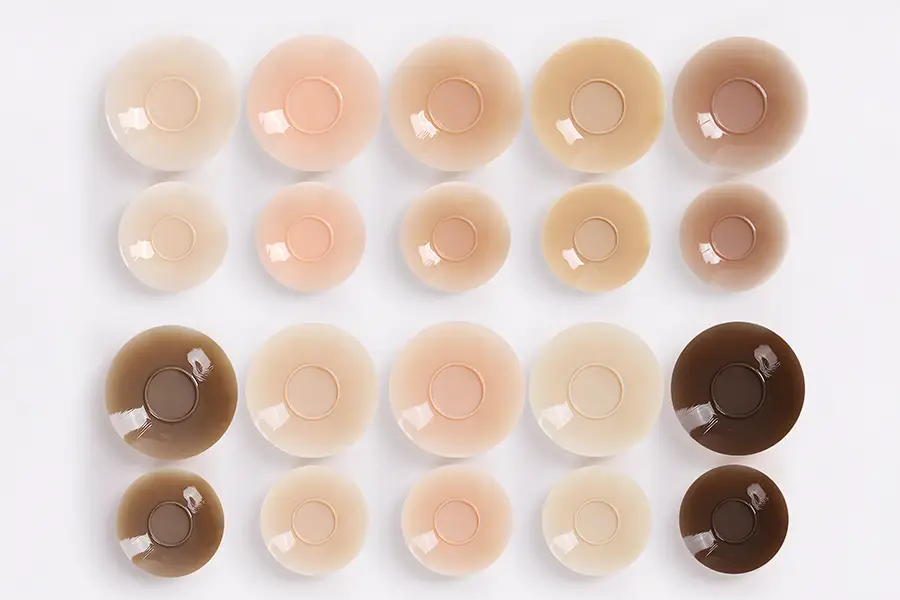
The appropriate test scope depends on the materials, intended wear time, product claims, buyer requirements, and destination market. Before approving bulk production, brands should review the following evidence:
- Irritation and Sensitization: Request relevant skin irritation and sensitization reports. Check the tested sample, method, contact conditions, laboratory, report date, and results.
- Chemical Restrictions: Confirm that testing covers the actual adhesive, textile, film, and other skin-contact materials used in production.
- Production Consistency: Verify that the tested samples match the approved production materials. Changes to the adhesive formulation or material supplier may require further review.
- Product Claims: Claims such as “hypoallergenic,” “latex-free,” or “suitable for sensitive skin” should only be used when supported by appropriate evidence.
Where ISO 10993-based methods are used, skin irritation is addressed under ISO 10993-23 and skin sensitization under ISO 10993-10. ISO 10993-5 cytotoxicity data may also be reviewed when relevant to the material, product claim, or buyer specification. However, ISO 10993 is primarily a biological evaluation framework for medical devices and should not be presented as a general certification required for every adhesive bra.
A passing report supports the product assessment under the stated test conditions, but it cannot guarantee that no wearer will experience irritation. Application instructions, wear-time limits, removal guidance, and warnings should also be reviewed before launch.
Adhesion and Durability Testing
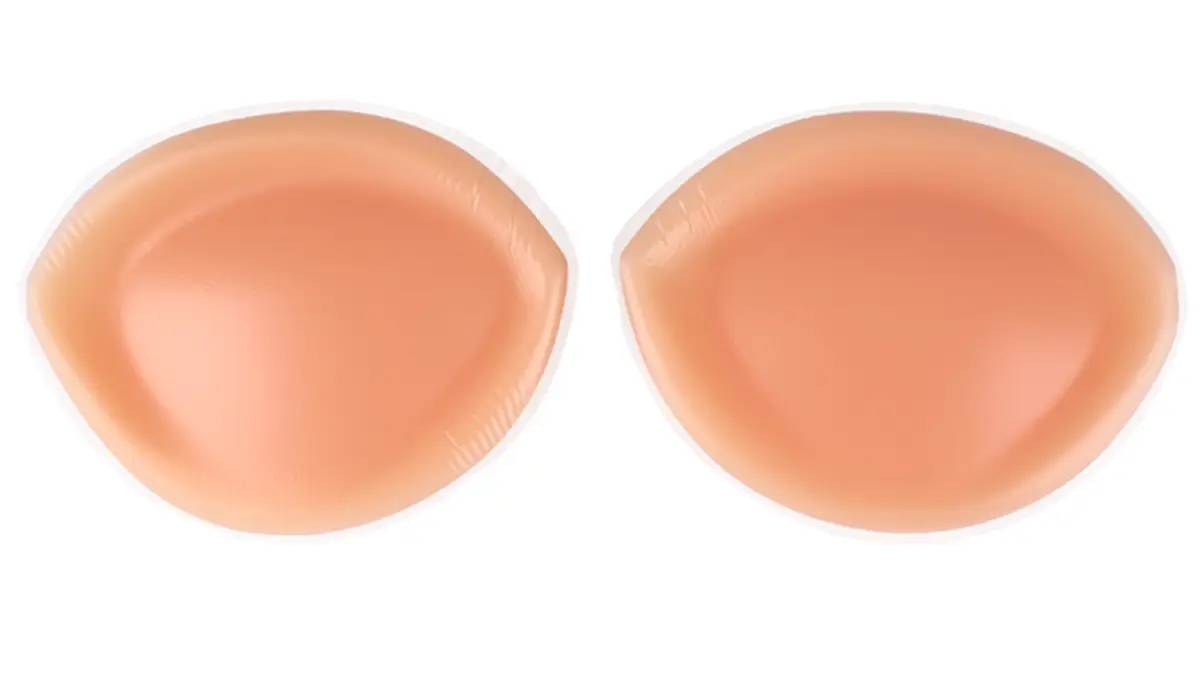
An adhesive bra must provide sufficient grip during its intended wear time without becoming excessively difficult or uncomfortable to remove. Understanding how manufacturers test silicone bra adhesion durability can help brands compare samples and establish measurable production requirements. Laboratory results should still be combined with controlled wear trials because adhesion varies with skin condition, cup weight, movement, temperature, and perspiration.
- Peel Strength: Measures the force required to remove the adhesive from a defined test surface. It helps identify batches that provide insufficient grip or are too difficult to remove.
- Shear Resistance: Measures how well the adhesive resists sliding under a specified vertical load over time.
- Initial Tack: Compares how quickly the adhesive bonds when pressure is first applied.
- Heat and Perspiration Exposure: Checks for sliding, edge lifting, adhesive residue, or loss of tack under expected wear conditions.
- Cleaning Cycles: Measures changes in adhesion after repeated cleaning according to the proposed care instructions.
Laboratory peel, shear, and tack tests usually use a defined test surface rather than human skin. For reliable comparisons, each test should record the test surface, sample size, temperature, humidity, applied load, dwell time, cleaning method, and acceptance limit.
Finished-product wear trials should also assess fit, movement, edge lifting, removal comfort, residue, and adhesion across the intended size range. Test results should support any stated wear-time or reuse claim.
OEM Material Selection Checklist
Before approving an adhesive bra for bulk production, brands should confirm that the proposed materials, test reports, samples, and production specifications all refer to the same product. A supplier’s general material claims are not enough if the tested components differ from those used in the final order.
| Buyer Check | What to Confirm |
|---|---|
| Material Specification | Cup material, adhesive type, film or textile composition, thickness, weight, color, and supplier grade |
| Supporting Documents | Technical data sheets, safety data sheets, material declarations, and relevant chemical test reports |
| Report Scope | Tested sample, test method, laboratory, report date, results, and connection to the production materials |
| Finished Sample | Fit, shaping, edge visibility, grip, removal comfort, residue, and performance under heat and perspiration |
| Reuse Claim | Adhesion after the stated cleaning cycles using the proposed care instructions |
| Production Control | Approved specifications, batch consistency, change-control procedure, inspection criteria, and defect limits |
The approved sample, specification sheet, and purchase order should identify the same materials and performance requirements. Any change to the adhesive formula, cup construction, coating thickness, or material supplier should require written approval before production continues.
Brands should also agree on measurable acceptance criteria before placing the order. These may include permitted edge lifting, adhesive residue, dimensional tolerance, appearance defects, and adhesion after cleaning. Clear specifications make pre-shipment inspection more useful and reduce disputes after delivery.
Final Thoughts
Material selection for adhesive bras should be based on more than labels such as “medical-grade” or “hypoallergenic.” Brands need to confirm that the cup, adhesive, and skin-contact materials work together in the finished product. Relevant test reports, clear specifications, and consistent production controls can help reduce problems such as edge lifting, adhesive residue, uncomfortable removal, and inconsistent performance after cleaning.
Start with a sample order and evaluate the finished bra under its intended wear conditions. Test adhesion, removal comfort, heat and perspiration exposure, and performance after the stated cleaning cycles. Contact our product specialists to request the latest catalog or discuss materials, testing requirements, and custom OEM specifications for your next adhesive bra collection.